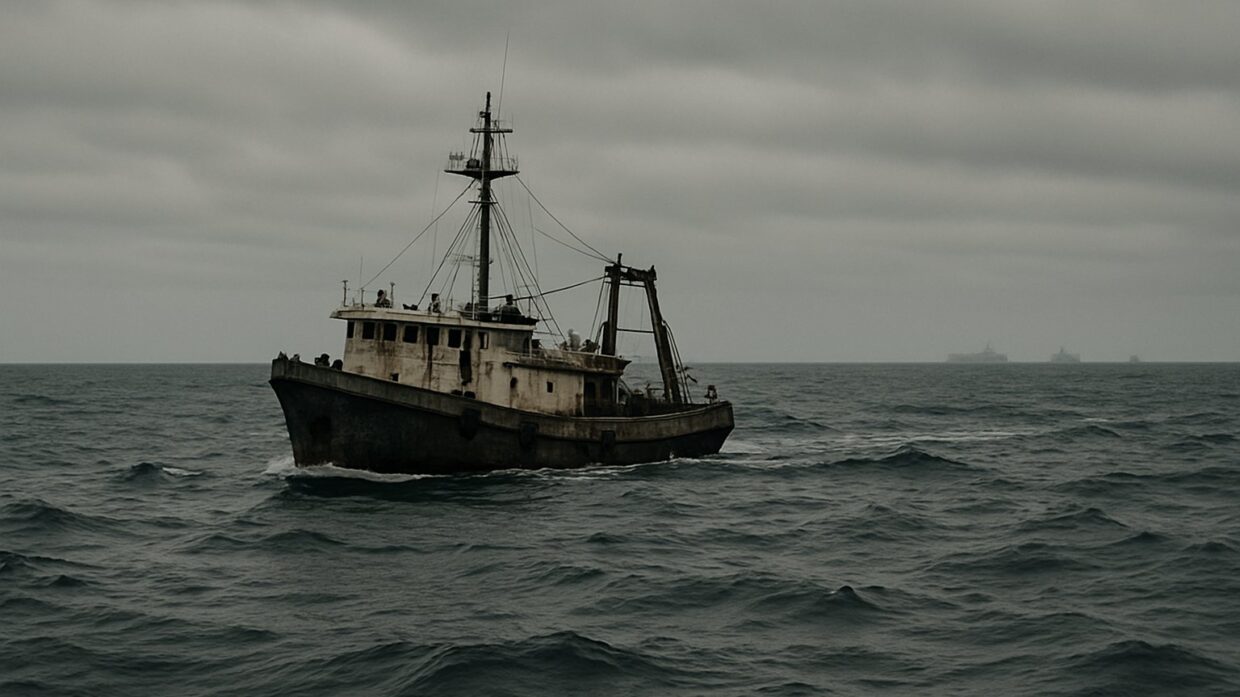
Photo: Well This Is News
Two killed in latest US military strike on alleged drug boat
US military targets narco-terrorist vessel in Eastern Pacific, eliminates threat
US military strikes boat in Eastern Pacific, kills two; officials cite drug trafficking
The Analysis
The U.S. military killed two people in the Eastern Pacific on a boat, and everyone is calling them something different—a deliberate semantic choice that obscures whether these were actual drug traffickers, suspected operatives, or civilians in the wrong place. SOUTHCOM says they were "narco-terrorists." MSNBC calls them alleged drug boat occupants. The difference is not editorial—it's the difference between justified counterterrorism and an extrajudicial killing.
Here is what we actually know: On an unspecified date, Joint Task Force Southern Spear, acting "at the direction" of General Francis L. Donovan (SOUTHCOM's commander), conducted a strike on a vessel in the Eastern Pacific. Two males died. SOUTHCOM claims the boat was on "known narcotrafficking routes." No independent verification of the targets' identities has been provided. No cargo was inventoried in public reporting. No photographs of weapons or contraband were released. The strike happened, two people are dead, and the American public has no way to verify the justification offered.
The left frames this as another opaque U.S. military operation in a region where accountability is thin. MSNBC's language—"alleged drug boat," "said to be involved in drug smuggling"—introduces doubt into SOUTHCOM's characterization without stating why doubt is warranted. This framing suggests the military claims something, but we have no independent reason to believe it. The omission here is specific: no mention of prior civilian casualties in Eastern Pacific strikes, no context about how often "alleged" becomes posthumous assumption, no reporting on whether bodies are recovered for identification. The left's caution reads as skepticism of authority, which polls well with its audience, but it also avoids naming what caution actually means: the U.S. military may have killed people without verifiable evidence they were trafficking drugs.
The right frames this as a necessary tactical victory. Fox uses SOUTHCOM's language directly—"narco-terrorists"—which reframes the dead not as suspected traffickers but as active combatants. The word "eliminates" (not "kills") suggests surgical removal of a threat rather than lethal force against unidentified targets. Fox reports "five alleged narcoterrorists" were killed across strikes, not just two, which inflates the significance of the operation. The omission here is equally specific: no acknowledgment that "narcotrafficking route" is not the same as "narcotrafficker," no reporting on rules of engagement, no context about civilian populations in the region, no mention of prior incidents where SOUTHCOM's characterizations were later contradicted.
Neither side mentions that the U.S. has conducted hundreds of strikes in the Eastern Pacific since the 1980s, that civilian casualties have historically been undercounted or reclassified as combatants, or that there is no treaty or congressional authorization specifically governing these operations. Neither mentions that SOUTHCOM has declassified intelligence showing cartel boats and fishing vessels sometimes use identical routes. Neither mentions that body recovery and identification in international waters is inconsistent, meaning verification of the dead's identities happens, if at all, through SOUTHCOM's own forensic processes.
The real headline: U.S. military killed two unidentified people on a boat and asserted they were drug traffickers, with no public verification mechanism and decades of precedent suggesting such assertions should be treated with skepticism.