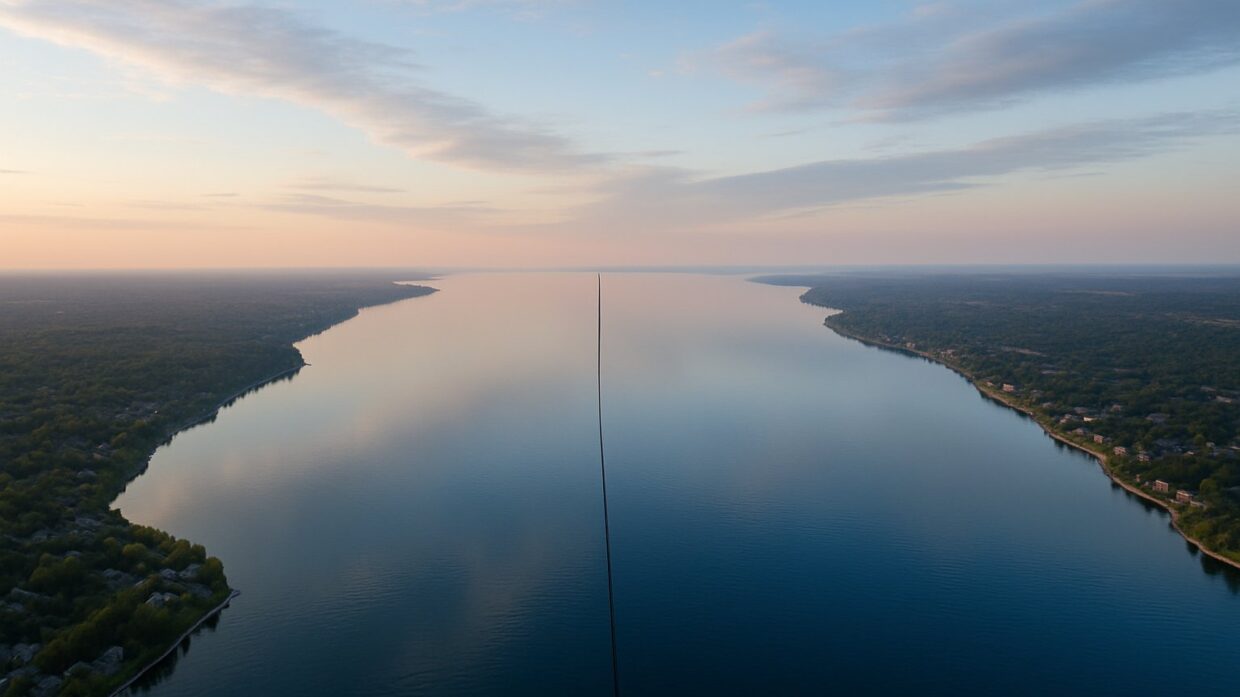
Photo: Well This Is News
Trump renames shared lake to 'Lake America' amid trade war escalation with Canada
Trump officially renames Lake Ontario 'Lake America' as Canada trade dispute intensifies
Trump signs executive order to rename Lake Ontario to Lake America
Key Takeaways
- The order does not establish what legal mechanisms would enforce the rename across state governments, federal agencies, and international usage, leaving unclear what the directive actually accomplishes in practice.
- Lake Ontario is jointly governed under the Great Lakes Water Quality Agreement of 1972 and the Boundary Waters Treaty of 1909, treaties that neither the left nor right coverage addressed as potential obstacles to a unilateral rename.
- No record exists of prior US administrations attempting to unilaterally rename shared international water bodies, and the reporting does not confirm whether the State Department, other federal agencies, or relevant state governments were consulted before the order was signed.
The Analysis
President Trump signed an executive order Thursday renaming Lake Ontario to Lake America, a move the White House framed as recognition of US territorial share, but which arrives during acute trade tensions with Canada that have no clear resolution path. The available reporting does not establish what legal or administrative mechanisms would enforce such a rename across state governments, federal agencies, and international usage.
The documented facts: Trump signed the order in the Oval Office, calling reporters in to witness the announcement. He stated that Canada has been disadvantaging the US in trade historically. The executive order directs the Interior Department to implement the rename. The lake covers approximately 7,340 square miles, with roughly 53 percent of its surface area in US waters and 47 percent in Canadian waters, according to standard geographic reference materials. The lake has been known as Lake Ontario since the 17th century. No prior US administration has attempted to unilaterally rename a shared international water body.
The left framing emphasizes this as nationalist theater during trade negotiations, with language choices that reveal that angle. The Guardian headline uses quotation marks around Lake America and leads with the trade war context, treating the rename as secondary to escalating tensions. MSNBC's coverage similarly subordinates the rename to the broader Canadian dispute, suggesting this move serves primarily a political signaling function rather than practical governance. The left coverage does not foreground the specific mechanisms that would make the rename enforceable or what international precedent exists for unilateral geographic renaming by one party to a shared resource.
The right framing emphasizes Trump's assertion that the US holds most of the lake's volume as a factual basis for the rename. Fox News and the Daily Wire lead with the action itself rather than positioning it as mere symbolism. Washington Examiner quotes Trump directly: Canada has been disadvantaging US trade interests, and the quote appears to justify the rename as part of broader reassessment of cross-border arrangements. The right coverage does not address whether the US majority stake in volume translates to naming authority under international law or treaty, or whether Canada has consented to the change.
What neither framing addresses fully is that Lake Ontario is jointly governed under the Great Lakes Water Quality Agreement of 1972 and the Boundary Waters Treaty of 1909. The public record does not establish whether Trump's order can supersede those agreements or what Canada's response might be. Neither side foregrounds that the Great Lakes remain under shared management with Canada, making unilateral renaming unusual within established international water management protocols. The reporting also does not confirm whether other federal agencies, the State Department, or relevant state governments were consulted before the order was signed.
The underlying question this raises is whether executive orders can alter established international geographic nomenclature or whether such changes require treaty modification. The available evidence suggests Trump's order reflects a deliberate assertion of sovereignty during trade negotiations, but the reporting does not establish enforcement mechanisms or international legal standing for the rename. A more complete picture requires clarity on what the order actually changes in practice versus what it signals symbolically about the administration's approach to cross-border resources and Canadian relations.
Trump's order exposes a gap between executive assertion and enforceable power. Lake Ontario appears on NOAA charts, state maps, university curricula, and international agreements spanning decades. The Interior Department cannot unilaterally change nomenclature embedded in the 1909 Boundary Waters Treaty and the 1972 Great Lakes Water Quality Agreement without Canada's participation. If federal agencies refuse or modify implementation, the order becomes symbolic rather than substantive. If they comply selectively, US credibility on enforcing other international water agreements weakens precisely when resource scarcity makes such treaties more critical. The rename signals an administration willing to challenge established binational frameworks, potentially undermining future cooperation on shared environmental challenges.