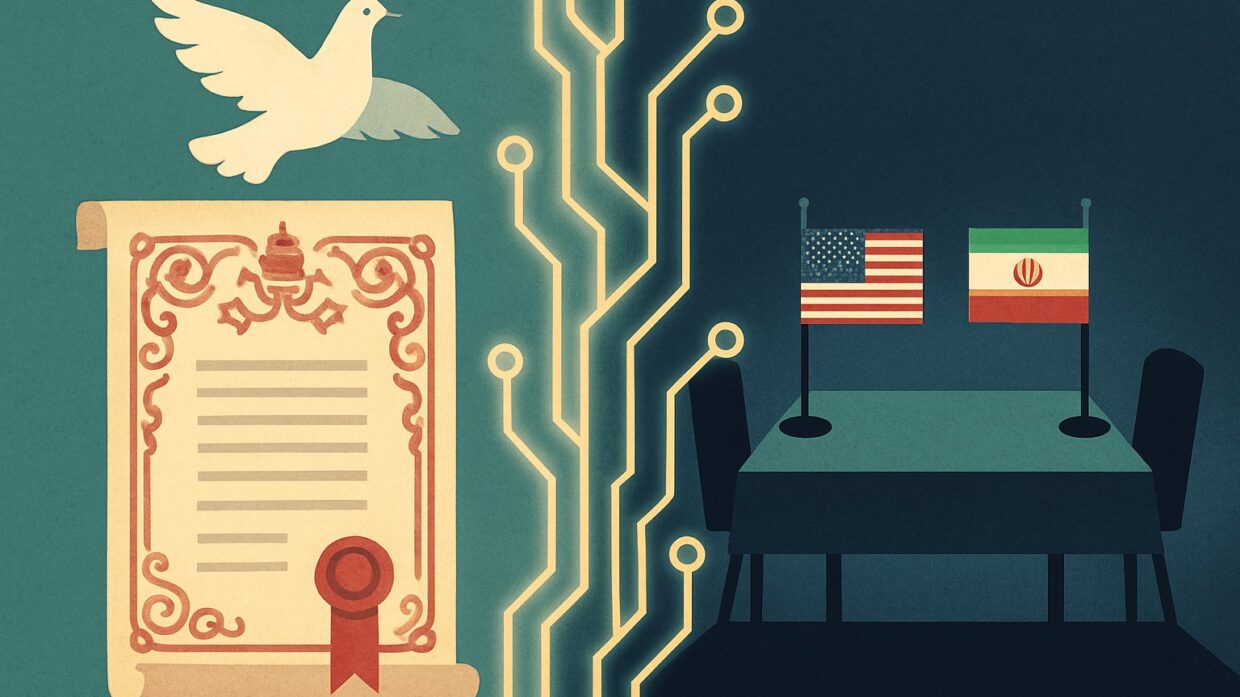
Photo: Well This Is News
Pope Leo XIV sounds alarm on AI regulation while Trump pushes deregulation agenda
Pope calls for AI safeguards; Trump administration pursues pragmatic Iran peace deal
Pope issues AI warning as Trump pursues Iran negotiations
Key Takeaways
- Both Trump and Iran's spokesperson stated independently that no imminent deal exists and negotiations are ongoing, yet media coverage emphasized either Trump's claimed progress or Republican doubts rather than reporting this basic agreement between the two sides.
- The Pope's encyclical never mentions Trump, the Trump administration, or any American policy by name, making the causal link between his AI warnings and Trump's deregulatory stance a product of media juxtaposition rather than explicit papal positioning.
- The Pope distinguished between AI's military and intelligence applications fueling global conflict and the separate question of how to regulate AI development generally, but coverage collapsed these distinct issues into a single narrative of anti-Trump opposition.
The Analysis
Pope Leo XIV's first encyclical and the Trump administration's concurrent Iran negotiations represent two separate developments that media outlets are attempting to bind together as evidence of the Pope's opposition to Trump. What the coverage obscures is that these stories operate on entirely different timelines, involve different actors, and require different factual baselines.
On the Iran negotiation: Trump stated on record that he told negotiators "not to rush into a deal." An Iranian spokesman simultaneously stated, "No one can claim an agreement is about to be signed imminently." Both statements confirm that negotiations are ongoing but neither side claims an imminent agreement exists. The NPR and MSNBC reports headline-emphasized Trump's claim of progress while the Mother Jones reporting emphasized Republican infighting about whether Trump is negotiating in good faith. What neither outlet foregrounds is the elementary fact that both Trump and Iran's spokeswoman said the same thing: talks are happening, no deal is done, and no rush exists.
On AI regulation: Pope Leo XIV's encyclical, titled "Magnifica Humanitas," called for "robust regulatory tools" and urged the world to "slow" AI advances. The Breitbart reporting quoted him accurately. The Mother Jones framing presented this as the Pope "joining the anti-AI resistance," implying organized opposition. The HuffPost headline explicitly called it "a fresh clash with Donald Trump." What the coverage leaves out is that the Pope did not mention Trump, the Trump administration, or any American policy by name. The encyclical addresses "policymakers" and "world leaders" generically. The Trump administration's deregulatory stance on AI is a documented fact, but the Pope's encyclical does not single it out.
The left-leaning outlets created a narrative through juxtaposition: Pope warns about AI; Trump deregulates AI; therefore the Pope is opposing Trump. That framing is editorial construction, not reporting. It takes two independent developments and assigns them a causative relationship that exists only in headline proximity.
The right-leaning coverage (Breitbart) reported the Pope's words accurately but provided no context about Trump administration policy, leaving readers without information necessary to assess whether the Pope's call for regulation actually contradicts Trump's approach.
What neither framing addresses: the Pope's statement that AI is "fueling conflict around the world" is substantively distinct from his call for regulatory oversight. The fueling-conflict claim appears to reference military and intelligence applications of AI technology. The regulatory call is about development and deployment generally. The coverage treats these as interchangeable when they address different problems. Additionally, the Pope's invocation of "human dignity" in the AI context echoes language he has previously used regarding immigration and war policy, suggesting thematic consistency in his papacy rather than a new anti-Trump positioning.
The underlying question is whether the Pope's encyclical represents a deliberate challenge to Trump administration policy or whether media outlets are constructing conflict by narrating unrelated statements as responsive to one another. The available record does not establish that the Pope's timing or language was designed with Trump policy specifically in view. That interpretation is inference, not conclusion.
The media's yoking of Pope Leo XIV's AI encyclical to Trump's Iran negotiations creates a false narrative of coordinated opposition where none exists. The Pope's "Magnifica Humanitas" addresses generic "policymakers" without naming Trump or American policy, while both Trump and Iranian officials simultaneously stated negotiations are ongoing with no imminent deal. Left-leaning outlets constructed causative conflict through headline juxtaposition; right-leaning coverage omitted relevant policy context. The Pope's substantive distinction between AI's military applications and broader regulatory concerns disappeared in reporting that treated them as interchangeable. This matters because it establishes a template for manufacturing institutional conflict: take independent statements separated by timing and audience, assign them reactive relationships, and narrate them as deliberate opposition. When major outlets deploy this method, they degrade public capacity to distinguish actual policy disputes from editorially constructed ones, making future reporting on genuine papal-executive disagreement harder to identify.