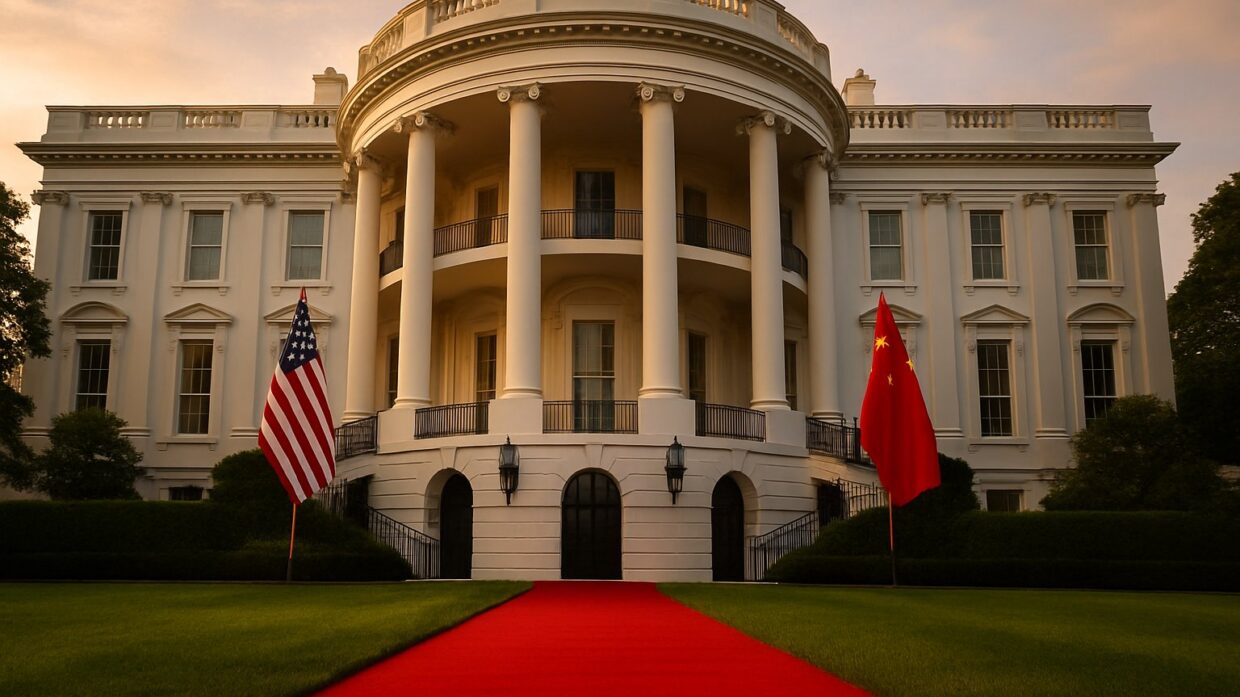
Photo: Well This Is News
Trump swoons over strongman soulmate Xi – are you feeling jealous, Vladimir?
Red carpet for a despot: Trump's lavish Xi welcome collides with GOP anti-communism message
Trump hosts Xi Jinping at White House amid GOP tensions over red carpet diplomacy
Key Takeaways
- Trump's first-term trade war and technology restrictions against China were followed by this ceremonial white-glove reception, but reporting has not established whether this represents a strategic negotiating reset, a reversal of previous policy, or routine diplomatic protocol.
- State visit ceremonial practices like red carpets and military honors are standard diplomatic protocol regardless of a nation's political system, raising the question of whether the reception reflects Trump's personal preferences or normal practice between major powers.
- Trump and Xi discussed unspecified agreements and issues during the visit, but the substance of those negotiations remains undisclosed, leaving unclear whether the ceremonial warmth served a specific strategic purpose on trade, technology, or other concrete interests.
The Analysis
Trump hosted Xi Jinping at the White House with military honors and a red carpet ceremony, a diplomatic gesture that drew criticism from Republican senators over its ceremonial lavishness toward an authoritarian leader. The tension here is straightforward: the same gesture means radically different things depending on what you believe Trump's intentions are toward China and authoritarian governance more broadly.
The documented facts are narrow. Trump extended state visit protocols to Xi, including military honors typically reserved for close allied leaders. The Guardian and allied coverage frames this as evidence of Trump's affinity for authoritarian strongmen, noting that Xi's government imprisons journalists, suppresses dissent, and prohibits independent elections. Fox News and Republican critics acknowledge the red carpet treatment occurred, then argue it contradicts conservative anti-communist positioning and sends the wrong signal about treating China as a strategic adversary.
What the left framing emphasizes is Trump's apparent comfort with authoritarianism itself. The Guardian's headline phrasing, "Trump swoons over strongman soulmate," assigns motivation and emotional state based on the ceremonial reception. The language chosen, "swoons," "soulmate," and "deafening deference," constructs a narrative about Trump's character and preferences. That framing leaves out what remains undisclosed: what Trump and Xi actually discussed, what agreements may have been reached, and whether the ceremonial reception serves a specific strategic negotiating purpose rather than reflecting Trump's ideological alignment with authoritarianism. It also leaves out the separate question of whether ceremonial deference during state visits is standard diplomatic practice regardless of the political character of the visiting leader.
What the right framing emphasizes is the contradiction between Trump's red carpet treatment and Republican anti-communist messaging. Fox News quotes Republican senators expressing concern that the optics undermine criticism of China's political system and human rights record. That framing acknowledges the visit happened and the reception was lavish, then argues it was strategically unwise. What that framing underplays is whether Trump may have deliberately chosen ceremonial warmth as a negotiating tactic toward China on trade, technology, or other specific issues where accommodation signals willingness to deal. It also sidesteps the question of whether the GOP's traditional anti-communist positioning remains coherent in an era when China is primarily a trade and technology competitor, not a Cold War ideological threat.
What neither side fully captures is the prior diplomatic history between Trump and Xi. Trump's first presidency included a significant trade war with China, tariff escalations, technology restrictions, and rhetoric framing China as an unfair trade actor. The sequence of that escalation followed by this white-glove reception raises questions about what changed in Trump's strategic calculation. Has Trump shifted toward engagement? Is the ceremonial reception a reset signaling willingness to negotiate? The reporting does not establish whether this represents a reversal or a tactic. Readers deserve to understand what preceded this moment and what Trump's previous China policy trajectory was before interpreting whether a red carpet ceremony reflects character, strategy, or routine diplomacy.
Trump's red carpet reception for Xi signals a potential reversal in U.S. strategic positioning toward China that will reshape technology policy, trade negotiations, and the credibility of Republican anti-authoritarian rhetoric for years ahead. The ceremonial treatment contradicts Trump's first-term trade war escalation, suggesting either a fundamental shift in his China strategy or a calculated diplomatic reset that subordinates human rights messaging to deal-making. This matters because how the United States signals its relationship with China determines whether American technology companies face restrictions, whether tariffs return, and whether the Republican Party's decades-long anticommunist stance survives Trump's pragmatic realignment with Beijing. The optics also establish a precedent that U.S. state visit protocols reward authoritarian leaders who advance Trump's negotiating interests, potentially inviting similar requests from other regimes and eroding the consistency of American foreign policy messaging across administrations.