Photo: Well This Is News
Amateur Morons: Bolsonaro Son Flees Brazil After Failed Power Grab, Media Mocks 'President-Elect' Delusion
We haven't found a right-leaning take on this story yet.
Breaking stories sometimes publish before every side has covered them. We'd rather show you that than invent a view.
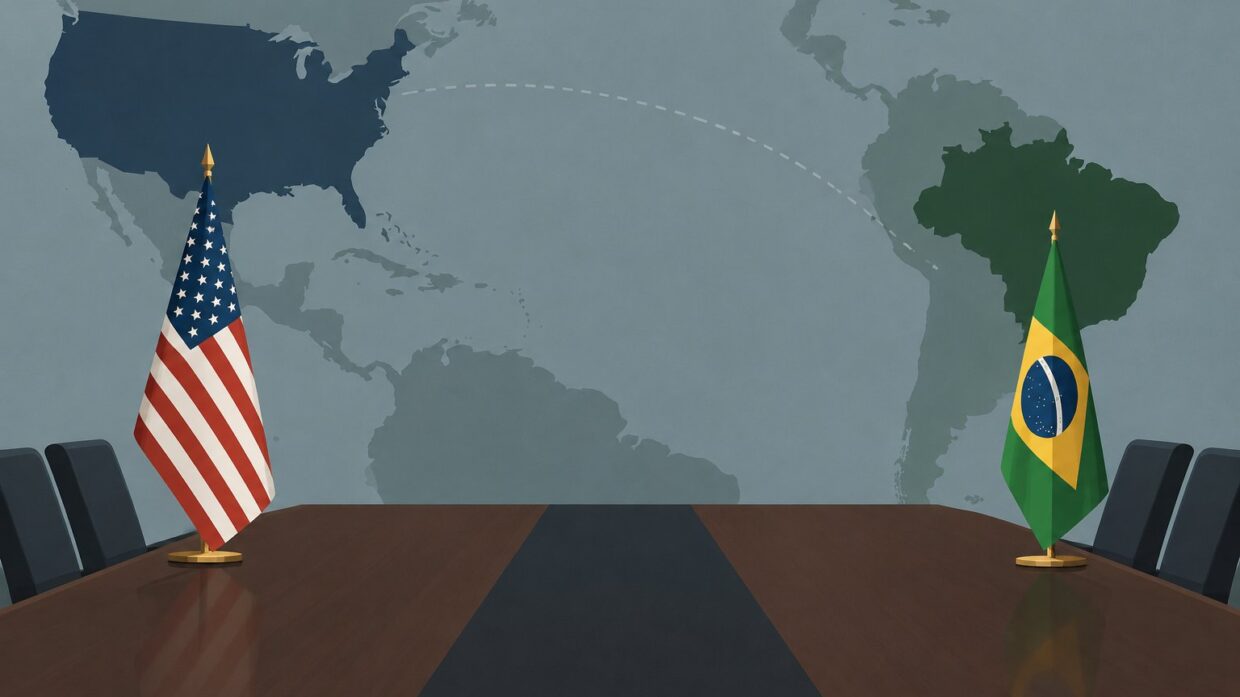
Trump Grants Refuge to Defeated Brazilian Candidate Flávio Bolsonaro; Tensions Rise With Lula Government
Key Takeaways
- The Trump administration granted Bolsonaro refuge without public disclosure of whether he met standard asylum criteria or received an exceptional political favor.
- Brazil's government is escalating this from a bilateral embarrassment into a formal diplomatic dispute, signaling the decision could reshape US-Brazil relations.
- Neither media outlets nor governments have clarified whether Bolsonaro faces actual criminal charges in Brazil or whether his refuge claim invoked credible fear of persecution.
The Analysis
Flávio Bolsonaro lost Brazil's presidential election and subsequently fled to the United States, where the Trump administration provided refuge. The sequence has created measurable diplomatic friction, with Secretary of State Marco Rubio and Brazilian Foreign Minister Mauro Vieira now scheduled to meet within weeks. What neither the celebration of the blunder nor the diplomatic framing captures is the precedent this sets for how the US handles defeated far-right political figures.
The Guardian's account emphasizes Bolsonaro's performative incompetence. The outlet reports that Bolsonaro released a letter claiming the title of "president-elect" despite losing the election, and that this letter bore the wrong presidential coat of arms. Brazilian media ridiculed the move as "shameful" and called Bolsonaro an "amateur moron." The Guardian's framing centers on humiliation and delusion, presenting this as proof that Bolsonaro lacks the discipline or seriousness for high office. The phrase "amateur morons" appears in the headline itself, signaling that the story's primary narrative is one of incompetence on display. What this framing leaves unstated is that incompetence at performance is distinct from powerlessness in consequence. A refugee grant is a refugee grant, regardless of whether the recipient embarrassed himself in the process.
Bloomberg's reporting does not emphasize the comedic elements. Instead, it treats the refuge decision as a political fact with interstate consequences. The outlet names the exact diplomatic response: Rubio and Vieira have agreed to meet. Bloomberg specifies that Trump "granted refuge" to Bolsonaro, using language that frames this as an executive decision, not a procedural inevitability. The reporting notes that the decision "inflamed tensions," using measured language to describe the bilateral strain. Bloomberg's framing centers on institutional consequence and diplomatic machinery, not on personality or performance.
What neither framing adequately captures is the historical context this decision invokes. Brazil's government, led by President Luiz Inácio Lula, won a democratic election. Bolsonaro's son lost that election and then fled the country. The Trump administration's decision to harbor him is consistent with prior US decisions to provide refuge to political figures aligned with US interests, regardless of their standing in their home countries. This includes decisions made during Cold War era interventions and, more recently, decisions involving figures from allied governments. The precedent here is not primarily about Bolsonaro's theatrical failings. It is about whether the US will use refugee and asylum provisions to shield political allies from accountability in their own democracies.
The available reporting does not establish whether Bolsonaro faces criminal charges in Brazil or whether his refuge claim was granted under standard asylum criteria or exceptional procedures. The Guardian does not address this. Bloomberg does not address it. What remains undisclosed is whether the refuge grant was based on a credible fear of persecution by the Lula government, or whether it was a political favor that was then subjected to bureaucratic classification. That distinction matters for understanding what rule has actually been invoked.
The diplomatic meeting between Rubio and Vieira signals that Brazil's government intends to contest this decision at the state level. Neither the mockery nor the diplomatic scheduling explains whether the Trump administration expects Brazil to accept the refugee grant or whether this meeting represents the opening phase of a dispute that could reshape US-Brazil relations.
The Trump administration's refuge grant to Bolsonaro establishes that the US will now use asylum mechanisms to shield political allies from democratic accountability in their home nations. This transforms refugee procedures from humanitarian protection into a tool of foreign policy favoritism. Brazil's Lula government won a legitimate election; Bolsonaro's son fled rather than accept defeat. By harboring him, the US signals it reserves the right to reverse electoral outcomes through sanctuary decisions, a precedent with direct consequences for bilateral trade, security cooperation, and democratic legitimacy across the hemisphere. The Rubio-Vieira meeting is not diplomatic courtesy but the opening salvo of a contest over whether asylum law serves humanitarian purposes or geopolitical interest.