Photo: Well This Is News
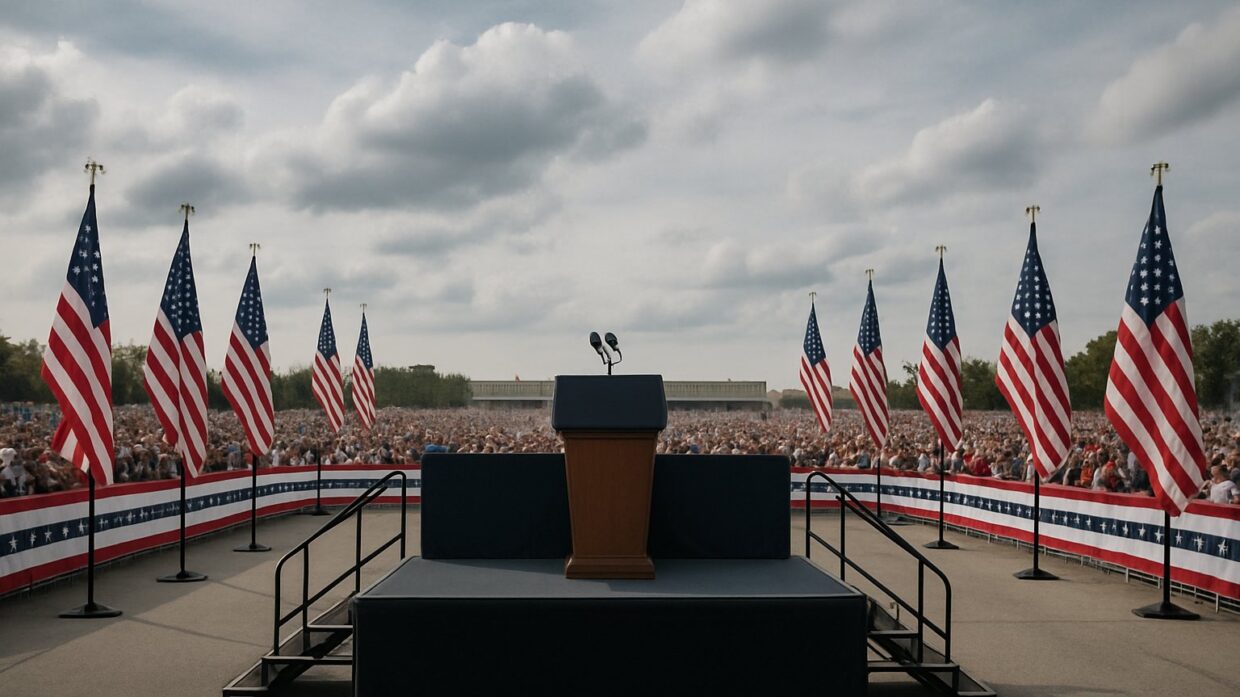
Trump campaigns for Husted and Ramaswamy in Ohio midterm rally
Read More... from Trump campaigns for Husted and Ramaswamy in Ohio midterm rally
WATCH LIVE: Trump rallies for Jon Husted and Vivek Ramaswamy in Ohio
Trump campaigns for Husted and Ramaswamy in Ohio midterm rally
Key Takeaways
- Ohio has shifted from a reliably Republican state to one requiring repeated visits from national GOP figures, but available reporting does not explain why this transformation occurred.
- Trump stated he did not expect to be holding rallies at this stage, yet the strategic reason for his surprise and what it reveals about Republican confidence remains unexplained.
- The rally coverage focuses on event logistics rather than whether Trump's involvement addresses voter turnout problems, candidate weaknesses, or serves primarily as a political messaging event.
The Analysis
Trump returned to Ohio on Monday evening to campaign for Republican Senate candidate Jon Husted and gubernatorial nominee Vivek Ramaswamy, marking his second rally in the state within two weeks. The available reporting focuses on the event logistics and Trump's stated surprise at needing to hold rallies at all, but leaves unexamined the strategic calculation behind Ohio's emergence as a contested battleground and what Trump's personal involvement signals about Republican confidence in these races.
The factual record establishes that Trump traveled to Youngstown, Ohio to appear alongside Husted and Ramaswamy, according to reporting from PBS NewsHour, Washington Examiner, and The Hill. The Hill reports that Vice President Vance had also recently rallied voters in Ohio, indicating a coordinated deployment of Republican national figures. Trump stated in comments to Truth Social followers that he had "never thought" he would need to hold rallies again, a phrase The Hill directly quotes. The reporting confirms this is part of a broader midterm campaign schedule as Republicans attempt to defend seats in what multiple sources characterize as an "unexpected midterm battleground."
What the reporting does not foreground is why Ohio, once considered reliably Republican, now requires this level of national attention. The available articles emphasize the mechanics of the rally and Trump's personal sentiments about campaigning, but do not address the demographic or electoral shifts that have made the state competitive. The Vox article addressing anti-Indian racism related to Ramaswamy suggests there are complicating factors in how his candidacy plays with certain segments of the electorate, but this context does not appear in the live-rally coverage. The emphasis in right-leaning coverage focuses on the event format and attendance opportunity, which serves to frame this as routine campaign activity rather than as an indicator of Republican anxiety about holding ground in a previously secure state.
The neutral coverage from The Hill and PBS NewHour attempts to provide logistical information and direct access to the event itself through live streams. This approach privileges audience participation in real time over analytical framing. However, neither source addresses what the sequence of events actually reveals about the Republican political position heading into the midterms. A reader following only the available rally coverage would not understand whether Trump's repeated Ohio appearances reflect confidence in these specific candidates or concern about the state's overall trajectory.
What neither perspective addresses is the underlying question of whether Ohio's competitiveness signals a structural shift in Midwestern Republican strength, or whether specific candidate vulnerabilities and localized issues drive the need for national reinforcement. The available reporting does not establish whether Trump's personal involvement addresses a turnout problem, a candidate-strength issue, or serves primarily as a messaging event. The absence of pre-rally polling data, internal campaign assessments, or demographic analysis means the reader cannot distinguish between strategic necessity and political theater.
The more complete version of this headline would acknowledge that Trump's Ohio presence reflects uncertainty about retaining terrain that Republicans held comfortably not long ago, and that national figures from both parties now view the state as requiring active, repeated investment. That context matters for understanding what the rally represents about the midterm political landscape.
Trump's repeated deployment to Ohio within two weeks signals Republican internal alarm that a state once reliably Republican now demands constant national reinforcement to hold. The absence of similar intensity in reliably Democratic strongholds reveals which party views its traditional bases as vulnerable. When a former president must personally appear twice in one state to prop up candidates in what should be safe races, it indicates structural erosion in regional support, not routine campaigning. Ohio's transformation into a contested battleground reflects demographic and economic shifts that threaten Republican Midwestern dominance more broadly. If Ohio now requires Trump's direct intervention, Republicans face a 2024 problem larger than any single candidate: the party's grip on industrial Midwestern states has fundamentally weakened, forcing national figures into constant triage mode rather than expansion strategy.