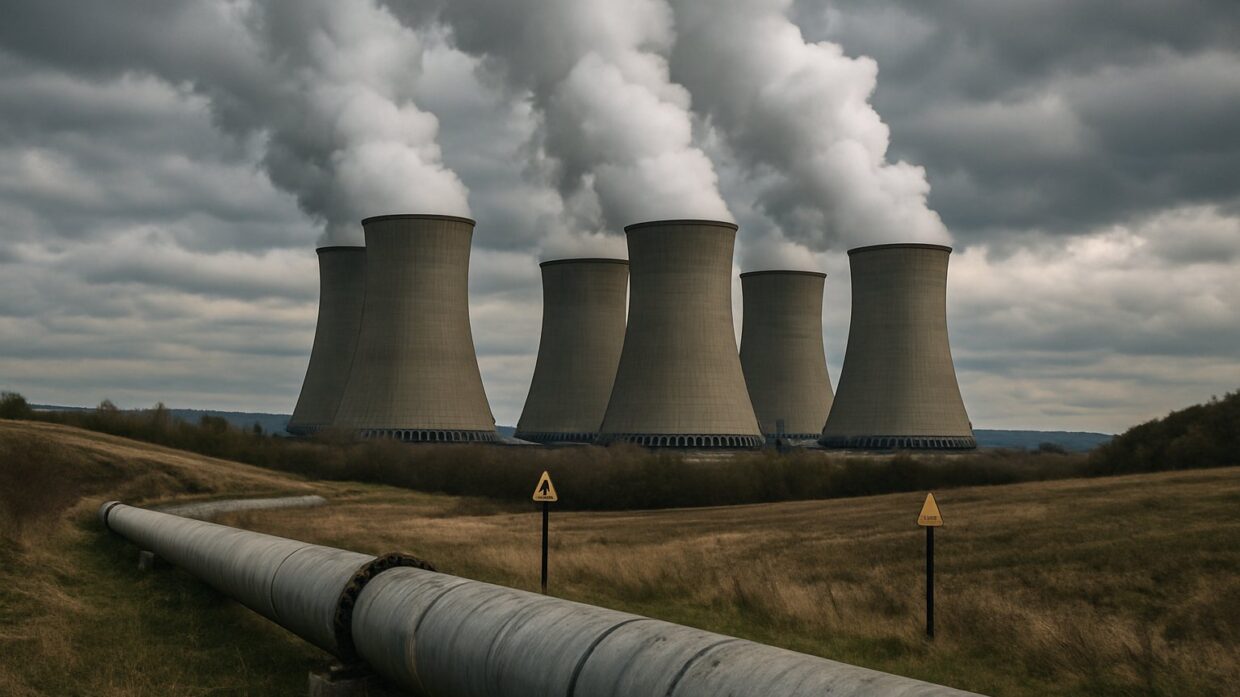
Photo: Well This Is News
North Korea mine blast injures soldiers as diplomatic efforts stall
South Korea commits $54 billion to Alaska LNG pipeline, boosting GOP agenda
South Korea announces $200 billion US investment as border tensions simmer
Key Takeaways
- South Korea announced $200 billion in US energy investments on the same day it formally demanded an apology from North Korea for a border incident, suggesting the two moves may be strategically connected rather than coincidental.
- The Alaska LNG pipeline investment directly supports US energy independence and regional competition with China, making it relevant to South Korea's own strategic calculations in managing its position between the US and North Korea.
- South Korea appears to be simultaneously signaling military alignment with the United States through the energy commitment while asserting security concerns to North Korea, using both announcements as expressions of the same strategic realignment.
The Analysis
South Korea announced approximately $200 billion in US investments on the same day it formally demanded an apology from North Korea for a landmine blast that injured three soldiers near the DMZ. These two stories are being treated as separate narratives by most outlets, but the timing and context reveal what each framing leaves out about South Korean strategic calculations.
The documented facts are straightforward: three South Korean soldiers were injured during a search operation near the border in what Seoul attributes to North Korean mines positioned on the southern side of the demilitarized zone. Simultaneously, South Korea committed to investments in US energy infrastructure, including an estimated $54 billion for an Alaska liquefied natural gas pipeline and additional funding for nuclear plants and power generation facilities. The Trump administration is framing the investment announcement as a major economic victory ahead of midterm elections.
The Guardian's framing emphasizes the security incident and diplomatic breakdown. It focuses on the injury to soldiers and frames the incident as a sign that diplomatic channels are struggling to revive. This narrative foregrounds the military dimension of inter-Korean relations and positions North Korea as the aggressor. What this framing underplays is why South Korea would make this investment announcement at this particular moment, or what Seoul may be signaling about its broader strategic alignment.
The Washington Examiner emphasizes the economic benefit to the Trump administration and the political timing ahead of midterms. It describes the investment as a "significant win" and notes the connection to a vulnerable GOP senator. This framing treats the investment as primarily a domestic US political event. What it does not address is why South Korea would commit this scale of capital to Alaska energy infrastructure specifically, or what strategic calculations drive the timing of the announcement relative to the border incident.
Bloomberg reports both events but does not establish a causal or strategic connection between them. What neither framing addresses is the underlying context: South Korea is simultaneously signaling military solidarity with the United States (through the investment in US energy security) while managing a security incident with North Korea. The investment in Alaska LNG specifically supports US energy independence and has implications for the broader US-China competition in Asia, which directly affects South Korea's strategic position.
The public record does not establish whether Seoul timed these announcements strategically to demonstrate alignment with the US while also asserting its security concerns to North Korea. What the available reporting does not foreground is that South Korea is a middle power managing relationships with a nuclear-armed adversary to its north and increasingly dependent on the US security umbrella. The investment announcement and the military incident should be understood as connected expressions of that calculation, not as separate stories.
What the timing may actually signal is South Korea's effort to strengthen its alignment with the United States during a period of inter-Korean tensions and regional uncertainty. The investment serves Seoul's interest in deepening US-South Korea economic ties while the military incident serves as a reminder that North Korean provocations remain a live threat requiring continued US commitment to the region.
South Korea's $200 billion investment commitment reveals how Seoul uses economic leverage to lock in US security guarantees during periods of heightened North Korean provocation. By announcing massive capital flows to Alaska LNG and American nuclear infrastructure on the same day it formally demanded a North Korean apology for the border incident, Seoul signals that its strategic dependence on the US alliance remains nonnegotiable. This timing matters because it establishes a pattern: South Korea will increase its economic contributions to American strategic priorities whenever it faces military pressure from Pyongyang. The precedent reshapes future negotiations over burden-sharing in the alliance. Once US policymakers recognize that military incidents trigger South Korean economic concessions, the incentive structure changes for how Washington responds to regional provocations. Seoul essentially converts its vulnerability into investment commitments, turning a moment of military weakness into evidence of alliance strength that proves valuable to the Trump administration domestically and provides justification for continued US troop presence in South Korea