Photo: Well This Is News
Xi's Delhi visit signals India-China thaw as BRICS forges unified stance on escalating Middle East crisis
BRICS consensus masks Beijing's military support for Iran as satellite imagery fuels US-China tensions
BRICS nations reach joint statement on Middle East restraint as Iran conflict deepens
Key Takeaways
- The BRICS communique calling for maximum restraint does not clarify whether member nations agreed to cease military support for belligerents or only to use diplomatic language about the conflict.
- Reports of Chinese satellite imagery provision to Iran come from unnamed U.S. intelligence sources and lack confirmation from Chinese officials or Iranian acknowledgment about timing relative to the summit statement.
- BRICS consensus on public messaging may operate independently from member nations' military and intelligence partnerships, leaving open whether the bloc functions as a unified actor or a forum where nations maintain separate strategic alignments.
The Analysis
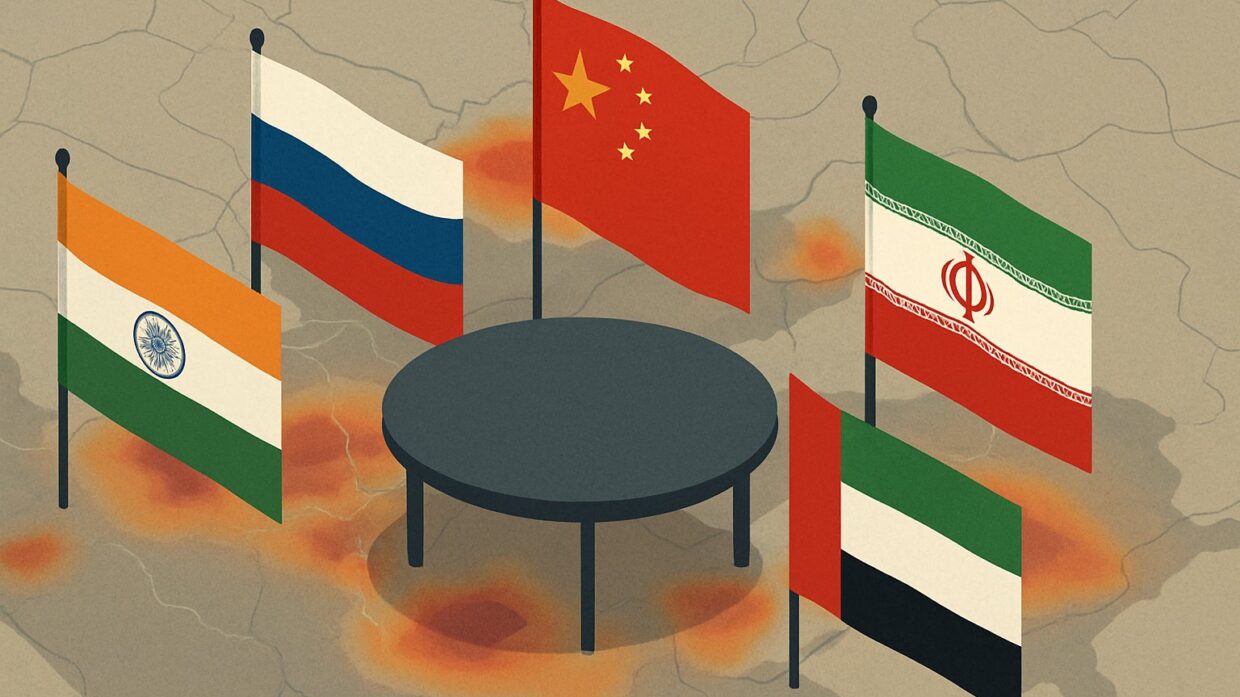
The BRICS summit in New Delhi produced what Indian officials called a consensus communique calling for maximum restraint in the Middle East, yet the agreement masks a deeper contradiction between the bloc's public language and documented military alignments. Xi Jinping's red-carpet reception by India represents a significant diplomatic gesture following the 2020 border clash that killed 20 Indian soldiers and 4 Chinese troops, but the consensus statement itself obscures precisely where each member nation stands on Iran's escalating military actions.
The verified facts are these: BRICS issued a joint statement on Saturday expressing deep concern over Middle East tensions and urging all parties to exercise restraint. Both Iran and the UAE, represented at the summit, endorsed this language. Simultaneously, according to reporting from U.S. intelligence sources cited by the Washington Examiner, China provided Iran with high-resolution satellite imagery of a U.S. military base in Jordan shortly before an Iranian attack that killed three American service members. The timing is not coincidental with the summit framing of restraint. Bloomberg reported that Modi pulled off an apparent diplomatic coup by steering nations with opposing positions toward shared language.
The left framing emphasizes reconciliation and institutional unity. The Guardian headlines Xi's reception as a thaw in India-China relations, using ceremonial language (red-carpet welcome) to suggest warming ties. NPR frames the summit around Modi hosting rival leaders and forging consensus on trade and investment. This framing leaves out what the bloc actually disagrees about: Iran's military posture. It also omits the asymmetry between public language and reported private military support flowing from Beijing to Tehran. The emphasis on diplomatic pageantry obscures operational alignment.
The right framing emphasizes the contradiction between rhetoric and action. The Washington Examiner leads with intelligence suggesting China supplied targeting intelligence to Iran, framing the BRICS summit consensus as cover for behavior that directly contradicts the stated message of restraint. This framing leaves out Modi's genuine achievement in producing a joint statement at all, given the competing interests, and it does not establish whether the satellite imagery provision was approved at leadership level or occurred through separate channels.
What neither framing establishes is the actual scope of what the BRICS consensus covers. The communique called for restraint, but the available reporting does not disclose whether it addressed Iran's specific military actions, condemned attacks on U.S. targets, or contained language that would require member nations to cease providing military support to belligerents. The Washington Examiner's report of satellite provision comes from unnamed U.S. intelligence sources, not Chinese officials or Iranian acknowledgment. The reporting does not confirm whether this occurred before or after the summit statement was drafted, or whether it represents standing policy or a discrete incident.
The underlying question is whether BRICS consensus on public messaging carries meaningful institutional weight when member nations' military and intelligence partnerships may operate on separate tracks. Modi achieved agreement on language emphasizing maximum restraint. Bloomberg documents this as noteworthy given divergent positions. What the reporting does not establish is whether Chinese satellite imagery provision to Iran constitutes a violation of that consensus, or whether it preceded and therefore exists outside the bloc's framing entirely.
BRICS has created a public commitment to Middle Eastern restraint that will now become a benchmark against which member nations' military actions are measured, regardless of whether the statement contained enforcement mechanisms. If China provided Iran with targeting intelligence before or after this summit, it establishes that the bloc's consensus language carries no institutional teeth and functions purely as diplomatic theater. India's Modi cannot credibly claim consensus governance if member states simultaneously supply hostile actors with military assistance under the same roof where restraint was pledged. The contradiction will undermine BRICS' credibility in future crisis negotiations and signal to regional powers that the bloc's institutional statements need not constrain member behavior, reducing the organization's leverage to shape outcomes in areas where members claim shared interest.