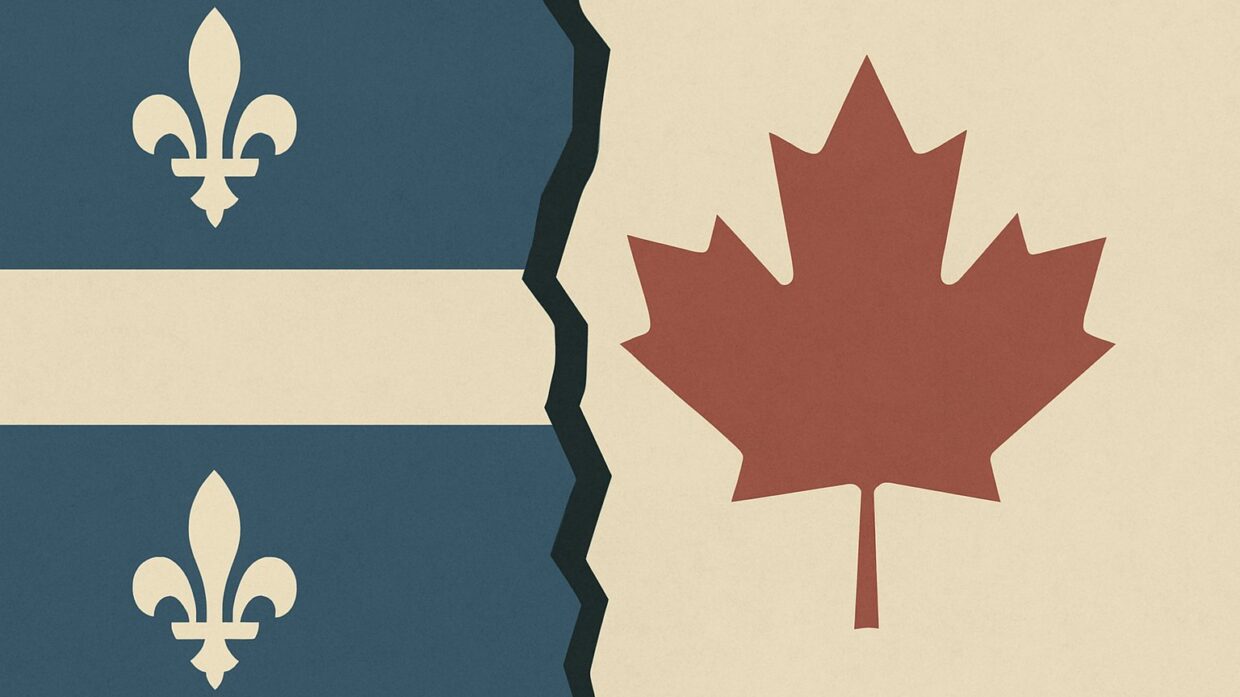
Photo: Well This Is News
Quebec Voters Reject Federalism, Elect Separatist Government for First Time Since 2012
Separatist Victory Threatens Canadian Unity as Carney Faces Constitutional Crisis
Quebec Separatists Win Election, Setting Stage for Independence Referendum
Key Takeaways
- The constitutional mechanism for calling and recognizing a Quebec referendum remains legally undefined, leaving unclear whether Carney's government will challenge, negotiate, or accept the referendum process.
- Previous separatist referendums in 1980 and 1995 both failed, with the 1995 vote margin less than one percentage point, suggesting the path from election to separation is contested rather than inevitable.
- The reporting lacks disclosure of the PQ's legislative seat count, majority status, and coalition dynamics, which would determine whether the party can actually call a referendum or faces constraints.
The Analysis
Quebec voters elected the Parti Québécois to provincial power for the first time since 2012, ending a 12-year federalist governance period and placing a separatist government in a position to call a referendum on Quebec independence. The available reporting does not yet disclose the PQ's margin of victory or seat count, but the outcome is clear enough to reshape Canada's constitutional politics.
What the record establishes: The Parti Québécois ran on a platform that includes a binding referendum on Quebec sovereignty. The party had been out of power since 2012, when the federalist Quebec Liberal Party defeated the separatist incumbent. Prime Minister Mark Carney, who took office after Justin Trudeau's departure, now governs a country where the second-largest province is led by a party that opposes the constitutional framework Carney represents. The Bloomberg reporting frames this as a "challenge" to Carney's government, which is accurate but does not yet specify what mechanisms exist to constrain a provincial referendum or what federal leverage remains available.
The left-leaning framing emphasizes democratic legitimacy and national self-determination. This frame cites Quebec's distinct language, culture, and historical grievances as justification for independence, and treats the PQ victory as an expression of francophone electoral will. The language used centers autonomy: voters "rejected federalism," Quebec has a "distinct national identity," and separation represents democratic assertion. What this framing does not foreground is the institutional complexity of Canadian constitutional amendment, the economic interdependencies that would require negotiation even in a separation scenario, or the fact that previous separatist referendums in 1980 and 1995 both failed, with the 1995 vote margin at less than one percentage point. The omission of referendum history is politically convenient: it treats current separatism as inevitable rather than contested.
The right-leaning framing treats separatism as a threat to Canadian unity and constitutional order. This frame emphasizes economic risk, capital flight, and what it calls institutional "paralysis" resulting from conflict between Quebec and Ottawa. The language used is crisis-focused: the election poses a "threat," triggers "uncertainty," and creates a "constitutional crisis." What this framing underplays is that Quebec separatism has existed as an organized political movement for decades, that democratic elections producing separatist governments do not automatically trigger dissolution, and that mechanisms for negotiating constitutional questions exist even when both parties disagree fundamentally. The omission of institutional procedure is also politically convenient: it treats separation as more imminent than the constitutional process suggests.
What neither side fully addresses is the specific mechanism for what comes next. The Parti Québécois holds power in a provincial legislature, not a sovereign state. Calling a referendum requires navigating federal law, provincial law, and constitutional precedent. The 1995 referendum occurred under a different legal framework than would exist today. The reporting does not establish whether Carney's government plans to challenge a referendum legislatively, negotiate its terms, or defer to Quebec's democratic process. It does not disclose whether the PQ has secured a legislative majority or what coalition dynamics might constrain its ability to call a vote. The economic data in the secondary sources shows Canada's trade surplus widening and purchasing manager sentiment declining, but neither outlet connects these indicators to the political risk that separatism might create for Canadian economic stability or investor confidence.
The underlying question is whether a provincial election result automatically triggers a path to separation or whether it opens a negotiation whose outcome remains undetermined. The record establishes the election outcome. It does not yet establish what happens next.
Quebec's separatist government now controls the levers to call a binding independence referendum, forcing Ottawa to choose between accepting a constitutional vote that could dissolve the country or intervening to block a democratic exercise in Canada's second-largest province. Either path fractures the federation. If Carney's government permits the referendum and separation wins, Canada loses half its GDP and access to Atlantic shipping routes while managing the collapse of federal pension obligations to millions of Quebec residents. If Ottawa blocks the vote, it delegitimizes its own democratic pretense and validates separatist claims that Quebec cannot achieve sovereignty through institutional channels, radicalizing the movement beyond electoral politics. The 1995 referendum nearly passed with 49.4 percent support; demographic and economic conditions have shifted since then, and no polling yet indicates whether separatism has widened or narrowed its base. The constitutional framework governing such a vote remains contested, meaning the mechanism for resolving this crisis does not yet exist