Photo: Well This Is News
Sánchez forces election as right-wing parties block housing relief during crisis
Socialist PM dissolves parliament after legislative defeat on housing legislation
Spain's Sánchez calls snap election after parliament rejects housing emergency measures
Key Takeaways
- The housing measure was rejected on procedural grounds, not because parliament rejected the goal of addressing the crisis, leaving unclear what specific policy disagreements existed.
- Sánchez chose to dissolve parliament three days after a legislative defeat, but reporting does not establish whether his coalition faced impossible math or whether he strategically converted a setback into an election opportunity.
- Spain's housing affordability crisis has escalated from a policy issue to a political emergency severe enough to trigger government dissolution, signaling the issue's intensity across the political spectrum.
The Analysis
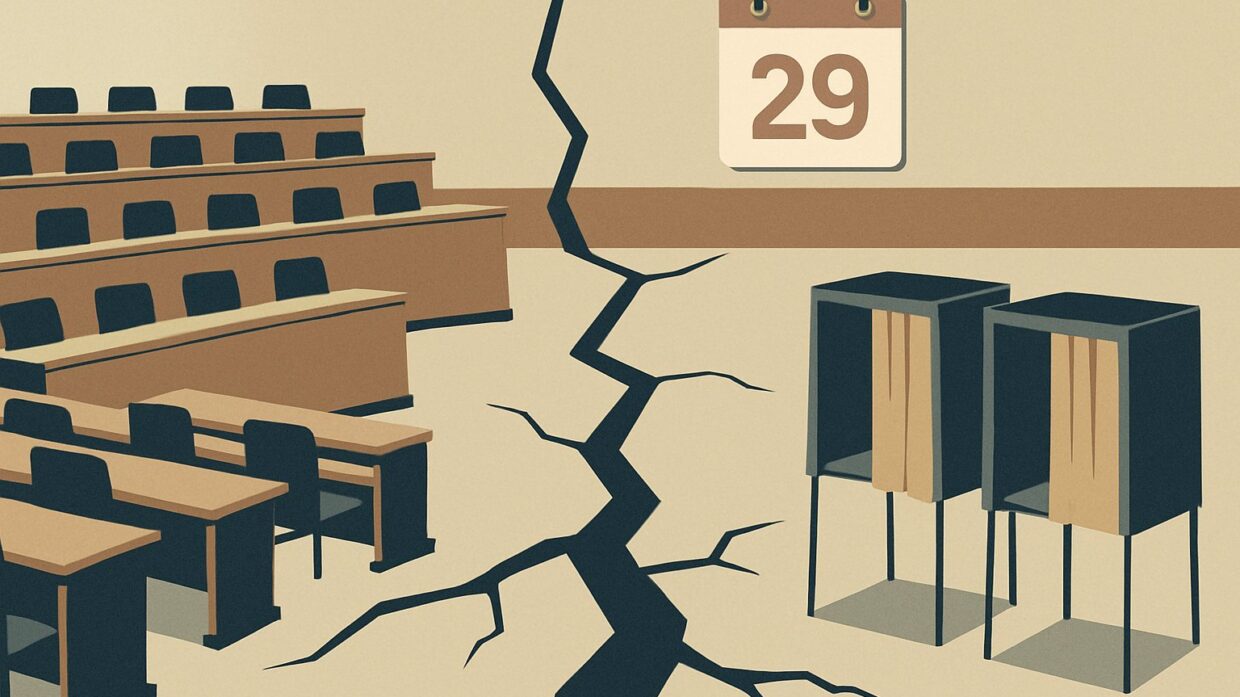
Spanish Prime Minister Pedro Sánchez called snap elections for November 29 after parliament rejected emergency housing measures his government proposed, a sequence that exposes a fundamental tension in his coalition's ability to govern on one of Europe's most acute housing affordability crises. The housing plan that failed was not defeated in principle or on its merits; it was defeated on procedural grounds when right-wing opposition parties voted it down, a fact that each side has framed to serve its political interest.
The documented facts: Sánchez's Socialist Party (PSOE) holds 121 seats in a 350-seat parliament, requiring coalition partners to pass legislation. His government proposed emergency measures intended to address housing affordability. Parliament rejected those measures on October 2. Three days later, on October 5, Sánchez announced the election. The People's Party (PP), Spain's main right-wing opposition, responded to the announcement with a celebratory post on X, calling the decision overdue and pairing it with the EU's official anthem "Ode to Joy."
The Guardian and NPR framed this as the right-wing blocking housing relief during a crisis. The Guardian's language emphasized that "rightwing parties torpedoed the emergency legislation," attributing agency and intent to the opposition's vote. This framing treats the vote as an attack on housing affordability rather than as a legislative disagreement. It does not explain what specific provisions the PP opposed, on what grounds, or what their alternative approach to housing might be. NPR's language was softer but directional: the government "suffered a bruising legislative defeat." That language positions the event as damage to Sánchez's credibility rather than exploring what the opposition was contesting.
Bloomberg described the sequence more neutrally, stating that parliament "rejected a housing plan," that the government "hoped would quell mounting social protests," and that the PP's response to the election announcement was satisfaction, described as the party being "very pleased." Bloomberg does not attribute motive to the opposition's vote. It notes the context (housing affordability is generating social protest) without interpreting the vote as either a principled position or a strategic obstruction.
What neither framing adequately addresses: the specific contents of the housing emergency measures, what objections the PP raised, whether there are legitimate policy differences between the government's approach and the opposition's, or whether Sánchez's coalition had realistic paths to pass the legislation before choosing to dissolve parliament. The reporting establishes that the vote happened and that an election was called; it does not establish whether the election call was a necessary response to an impossible parliamentary math or a political choice to reset the board on terms favorable to Sánchez.
The underlying question is whether Sánchez faced an actual governing crisis or a setback he chose to convert into an election. The available reporting does not establish which. What it does establish is that Spain's housing crisis is acute enough that its failure became the occasion for dissolving the government, suggesting the issue has moved from policy domain to political emergency.
Spain's coalition government just proved it cannot pass legislation on the country's most destabilizing social issue without full party control, a condition it lacks and cannot achieve through negotiation. Sánchez's call for snap elections signals not a procedural mishap but structural paralysis: a minority Socialist government cannot govern on housing affordability without either expanding coalition partners or winning outright majority control. The election gamble assumes voters will deliver what parliament refused to grant, yet the PP's celebratory response suggests the opposition has no stake in changing the current math. Spain's housing crisis will intensify across the campaign period and potentially into a post-election government formation that could take months, meaning the acute affordability problem that triggered this dissolution will face continued legislative gridlock regardless of election outcome. The real institutional consequence is that Spain's most urgent domestic policy problem just became hostage to electoral calculation rather than legislative problem-solving.