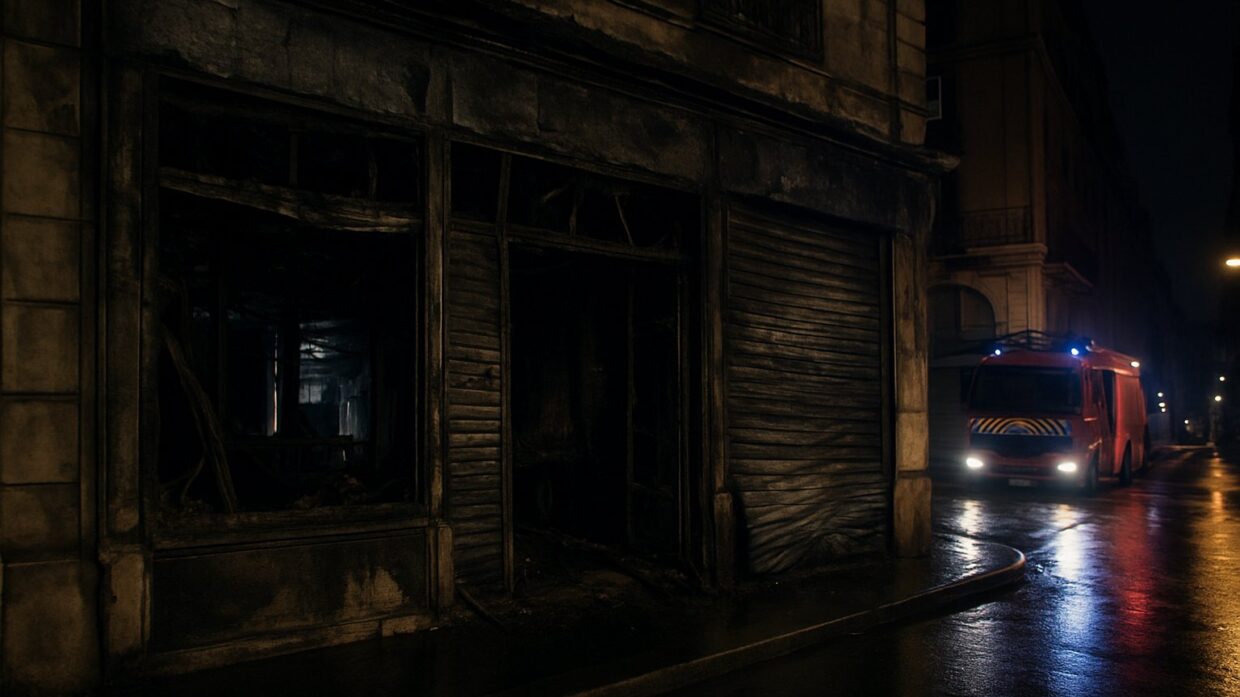
Photo: Well This Is News
French police arrest 780 after violent clashes mar PSG's Champions League celebration
Riots and looting erupt across France following PSG's Champions League victory
PSG wins second consecutive Champions League title; 780 arrested in post-match violence across France
Key Takeaways
- The reporting does not establish whether the 780 detained people represent organized supporter groups with a history of post-match violence or opportunistic participants capitalizing on chaos.
- Neither side examined whether Saturday's disorder was significantly larger or smaller than post-match violence following previous PSG victories or comparable sporting events in other European cities.
- The coverage leaves unspecified whether fires and looting were concentrated in neighborhoods with existing social tensions or distributed equally across all 15 affected cities, which would determine whether this reflects PSG-specific fandom or broader urban disorder patterns.
The Analysis
Paris Saint-Germain won the Champions League on Saturday by defeating Arsenal on penalties, but the narrative of sporting triumph was immediately displaced by reports of widespread violence that swept across France. The left-leaning coverage emphasizes the scale of police response and injury to officers, while the right-leaning framing leads with riots and looting. What both framings leave strategically vague is the specific geography and composition of the violence itself.
The verified facts establish these parameters: PSG defeated Arsenal in a penalty shootout at the Puskas Arena on Saturday. French Interior Ministry officials confirmed that police detained 780 people across approximately 15 cities. The Guardian reports 57 police officers were injured. Investing.com documents that roughly 200 people were hurt in total. Fires were set and shops were vandalized. The violence erupted immediately following the match conclusion.
The Guardian's framing selects the phrase "violent clashes" and leads with the police response, naming the Interior Minister's statement about officer injuries. This construction positions the story as one about law enforcement managing disorder, with the violence presented as something that happened to public institutions. The language "rioters" appears, but the reporting emphasizes the organized police response and quantifies it precisely: 780 arrests, 57 injured officers, fires in about 15 cities. This framing leaves underspecified who exactly was rioting, what their stated motivation was, and whether the violence was concentrated among specific supporter groups or dispersed across the general celebrating population.
Breitbart leads with "Riots and Looting" and frames the violence as erupting from the victory itself, using the causal construction "immediately erupted following." The language chosen emphasizes property crime and disorder over police action. By leading with looting rather than arrests, the framing invites the reader to see the violence as the primary consequence of the match, rather than a response by law enforcement. Breitbart does not quantify the scale of arrests or injuries, which functions to keep the disorder itself as the dominant image.
What neither framing adequately addresses is the documented history of post-match disorder in French cities following PSG victories, or whether Saturday's violence was significantly larger or smaller than comparable sporting celebrations in other European capitals. The available reporting does not establish whether the detained 780 people represent organized supporter groups known to French police, opportunistic participants, or a mix. The coverage leaves unclear whether the fires and looting were concentrated in specific neighborhoods with existing social tensions or distributed across all 15 cities equally. Investing.com reports 200 injured but does not specify whether those injuries were sustained by civilians, police, or both.
The underlying question is whether this was violence distinctly tied to PSG fandom and celebration, or whether it reflects broader urban disorder patterns that emerge during any large public gathering in Paris and surrounding cities. The evidence available does not yet establish that distinction. What the reporting does establish is that Saturday night produced documented arrests, confirmed injuries to police officers, and property damage across multiple French municipalities. Neither the left nor the right framing engages with whether security planning for the event was adjusted based on previous post-match incidents, or what specific tactical decisions the French Interior Ministry made that night.
French police arrested 780 people following PSG's Champions League victory, but the fragmented media coverage obscures whether this represents typical post-sporting celebration disorder or a breakdown in crowd management strategy that Interior Ministry officials should have anticipated. Neither left-leaning outlets emphasizing police injuries nor right-leaning sources leading with looting address whether France's security apparatus adjusted its deployment based on documented patterns from previous PSG victories, or whether the 15-city distribution of arrests reflects pre-positioned intelligence about known supporter group movements. This gap matters because it determines whether Saturday's violence reflects a specific failure in event security planning that future French authorities must correct, or normalizes police response to inevitable celebration-related disorder as a permanent feature of major sporting events in France.