Photo: Well This Is News
Nobel Prize recognizes breakthrough in understanding how brain controls nerve cell activity
US and German scientists win Nobel Medicine Prize for light-based brain research technology
Nobel Prize in Medicine awarded to three scientists for optogenetics research on neural activity control
Key Takeaways
- Optogenetics emerged from discoveries in the 1990s and became practically useful in the mid-2000s, meaning the 2026 Nobel Prize ratifies a technique that has already revolutionized neuroscience rather than announcing a new possibility.
- The technique has already enabled major discoveries about how neural circuits control sleep, fear, addiction, and motor control, and it has been applied in thousands of published studies before receiving the prize.
- The prize represents a genuine collaboration between American and German research institutions whose joint work created a tool now adopted globally, yet coverage focuses on individual achievements rather than the international scientific partnership.
The Analysis
The 2026 Nobel Prize in Physiology or Medicine went to Karl Deisseroth, Georg Hegemann, and Alexander Nagel for optogenetics, a technique that uses light to control individual nerve cells in the brain. The award represents recognition of a technology that emerged from fundamental biological research, but the coverage reveals how different outlets emphasize different elements of what is substantially the same scientific achievement.
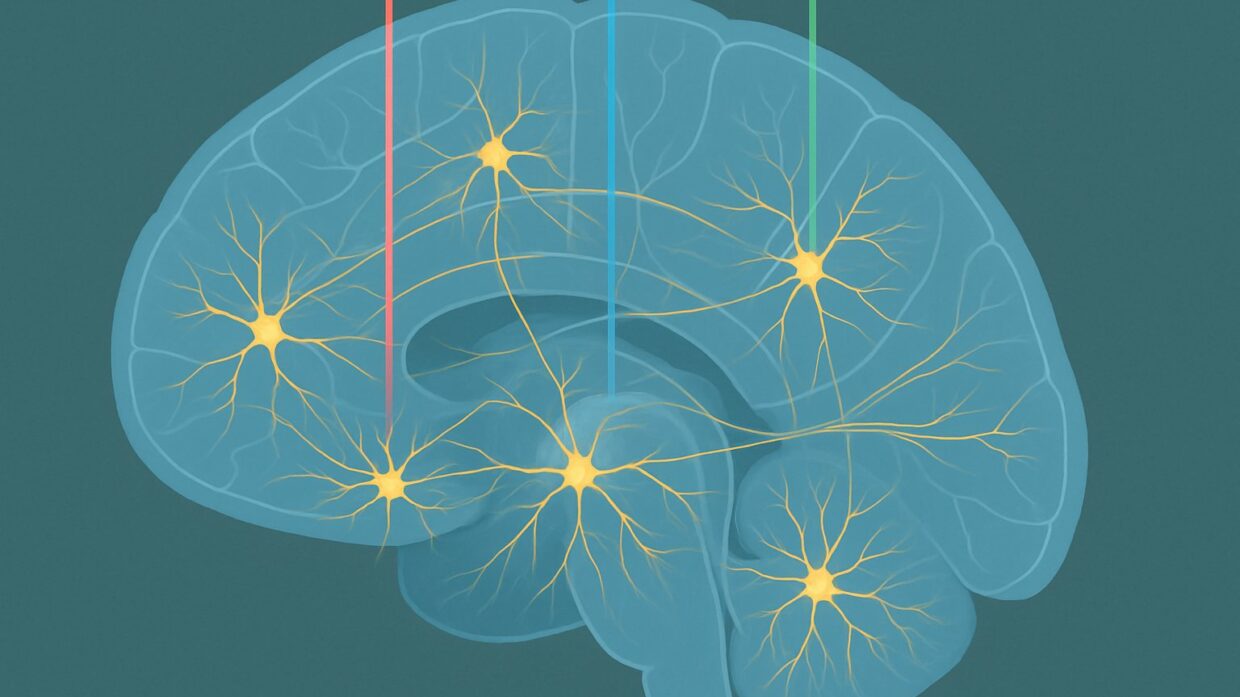
The basic facts are consistent across sources: three scientists, two from Germany and one from the United States, received the prize for work on light-sensitive proteins and their application to neural control. Deisseroth, a biomedical engineer and neuroscientist at Stanford, developed the techniques that made optogenetics practically useful in research. Hegemann and Nagel discovered the underlying molecular basis, specifically channelrhodopsin, a light-activated ion channel from algae that can be expressed in neurons. The technology allows researchers to activate or silence specific neurons with millisecond precision using pulses of light, which has become fundamental to modern neuroscience.
NPR's framing emphasizes the basic mechanism: the brain's capacity to "switch on or off" nerve cell activity. This language centers neural biology itself as the achievement, positioning the research as fundamental discovery about brain function. The left-oriented coverage tends to foreground the potential medical implications, suggesting pathways toward treating Parkinson's disease or depression. That framing assumes readers care about the health applications and orients them toward the humanitarian payoff of the science.
Investing.com's version leads with the geographic distribution of the winners and the technical specificity of the method: "light and brain," immediately naming the tool and its target. The financial news framing treats this primarily as a scientific achievement worth noting rather than as a health breakthrough. That outlet's emphasis on the technology itself, and on which countries contributed scientists, suggests an audience oriented toward understanding what innovations are emerging and where they originate.
What neither framing prominently addresses is the timeline of the discovery. Optogenetics did not emerge in 2026. Channelrhodopsin was first identified in the 1990s. Deisseroth's critical innovations in making the technique practical for mammalian neuroscience came in the mid-2000s. The 2026 prize recognizes work that has already transformed neuroscience and generated decades of subsequent research. This means the award is not announcing a new possibility but ratifying something that has already reshaped the field. Neither outlet explicitly notes that optogenetics has already been applied in thousands of published studies, that researchers have already used it to identify neural circuits involved in behavior and disease, or that this prize codifies a technique already woven into mainstream neuroscience.
The coverage also does not address why this particular moment, 2026, warranted the recognition. Nobel Prizes in Medicine typically come 20 to 40 years after the fundamental discovery, and this award fits that pattern. What the reporting leaves out is that optogenetics has already enabled major discoveries about how neural circuits control sleep, fear, addiction, and motor control. The prize is not for a promise but for a revolution that has already occurred.
The significant detail both sources include but neither emphasizes is the international character: American academic institutions and German research institutions contributing jointly to a fundamental biological tool. That collaboration, and the resulting global adoption of the technique, may be more consequential than either framing suggests.
Optogenetics has already reshaped how neuroscientists map brain circuits, identify disease mechanisms, and design potential treatments across thousands of published studies since the mid-2000s. This prize ratifies an established foundation, not a emerging possibility. The real institutional consequence is that the Nobel recognition will accelerate funding and integration of optogenetic tools into neuroscience departments worldwide, making this methodology the expected standard for neural circuit research rather than a specialized technique. Universities and research institutes will expand their optogenetics labs, and pharmaceutical companies will invest more heavily in therapies built on optogenetic discoveries about neural pathology. The prize signals that this method is now central to neuroscience's future, not peripheral to it.