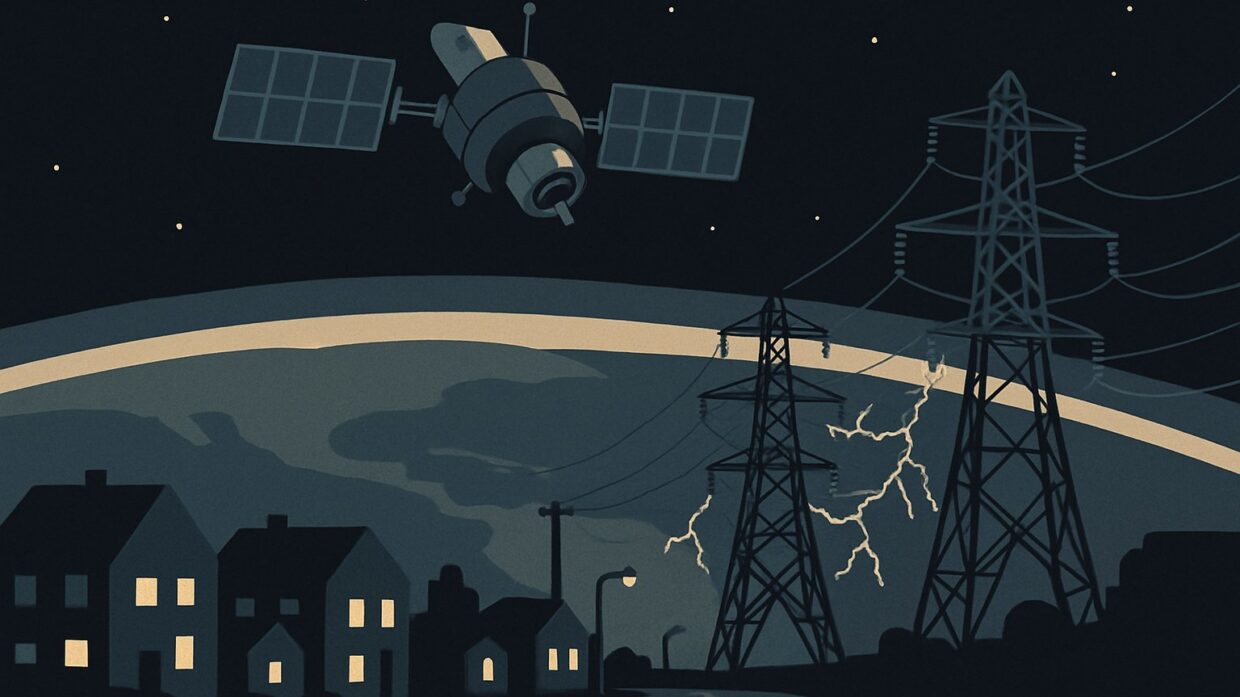
Photo: Well This Is News
Google's Moonshot Data Centers Won't Solve AI's Real Problem: Who Pays the Electric Bill
Tech Giants Rebrand AI as 'Superintelligence' While Pushing Next-Generation Infrastructure
Google's Space Data Centers Face Earth-Based Infrastructure Questions Amid AI Power Demands
Key Takeaways
- Project Suncatcher is a multi-year research initiative, but the electricity infrastructure costs it claims to address are already being incurred and funded through grid upgrades happening now, making the timeline mismatch between innovation and immediate impact a central tension.
- The actual economic model underlying data center expansion and grid costs remains absent from public reporting, leaving unanswered whether space-based alternatives would reduce terrestrial power demand or simply add to overall consumption.
- Industry terminology shifts from AI to superintelligence do not clarify infrastructure costs or power consumption data, suggesting the shift serves public perception management rather than increased transparency about who bears the real costs of expansion.
The Analysis
Google's announcement of Project Suncatcher, described as a refrigerator-sized satellite carrying AI chips designed to harness solar energy in space, arrives at a moment when the actual infrastructure costs of artificial intelligence are becoming visible to a different audience: the residential electricity customers who fund grid upgrades without clear visibility into what they are subsidizing.
The specific claim at issue is whether moving data centers to space solves a problem that is already acute on Earth. Project Suncatcher is positioned as a moonshot,a long-term research initiative to reduce reliance on terrestrial power grids. But NPR's parallel reporting establishes a more immediate dynamic: data centers are already consuming large amounts of power, utilities are already upgrading infrastructure to accommodate them, and the specific allocation of those costs between commercial data center operators and residential ratepayers remains difficult to determine, according to the coverage. The reporting does not establish a clear breakdown of who benefits and who pays, only that the question is currently unanswered in public accounts.
The left frame emphasizes the gap between Google's innovative posture and the concrete burden on ordinary households. By centering the cost-allocation problem,how much do residential customers actually pay for benefits that accrue primarily to tech companies,NPR's framing implies that space ambitions are a distraction from present-day accountability. The vocabulary choices reinforce this: 'moonshot effort' and 'harness solar energy' belong to the language of technological breakthrough, while 'ratepayers on the hook for' belongs to the language of uncompensated burden. What this framing leaves out is any quantification of the actual dollar exposure to residential customers or any acknowledgment that grid upgrades might generate downstream economic benefits not yet captured in the reporting.
The right frame, channeled through Axios reporting on terminology shifts, positions the problem differently. President Trump and tech CEOs including Nvidia's Jensen Huang are described as 'rebranding' AI as 'superintelligence,' or SI. The reporting characterizes this as a strategic response to 'public backlash against AI and data centers' that threatens development momentum. This framing treats terminology choice as necessary clarification of what the technology actually does, rather than as strategic obfuscation. What this narrative underplays is whether the new term 'superintelligence' provides any additional transparency about infrastructure costs or power consumption, or whether it primarily serves to psychologically distance the technology from accumulated public skepticism.
What neither framing addresses is the underlying economic model. Data centers are expanding because computational demand for AI training and inference is real and growing. The question of who bears the cost of grid infrastructure is not a problem that space-based alternatives resolve,it is a question about the distribution of costs from terrestrial operations happening right now. Project Suncatcher, even if successful, operates on a timeline measured in years. The grid upgrades are already funded and already in progress. The public record does not establish whether space-based data centers would reduce power consumption from terrestrial facilities or whether they would be additive to current demand.
The actual headline is simpler: Google is pursuing long-term infrastructure innovation while the industry is simultaneously managing public perception through terminology shifts, and neither addresses the immediate question of how electricity costs for data center expansion are allocated between companies and residential customers. That gap suggests the relevant policy conversation has not yet emerged.
Google's space ambitions sidestep the actual problem: utilities are already upgrading power infrastructure to feed data centers, and residential ratepayers are funding those upgrades without knowing what percentage of their bill subsidizes corporate AI operations. Project Suncatcher operates on a multi-year timeline while grid expansion costs are being allocated right now through rate structures that remain opaque in public accounts. Until regulators require utilities to itemize data center infrastructure costs separately from residential service charges, companies can pursue technological theater about space-based solar while avoiding the immediate accountability question: how much extra are ordinary households paying monthly so corporations can train and operate AI systems that generate no direct consumer benefit? The terminology rebranding to "superintelligence" compounds this evasion by shifting focus away from the infrastructure cost crisis toward abstract capability claims.