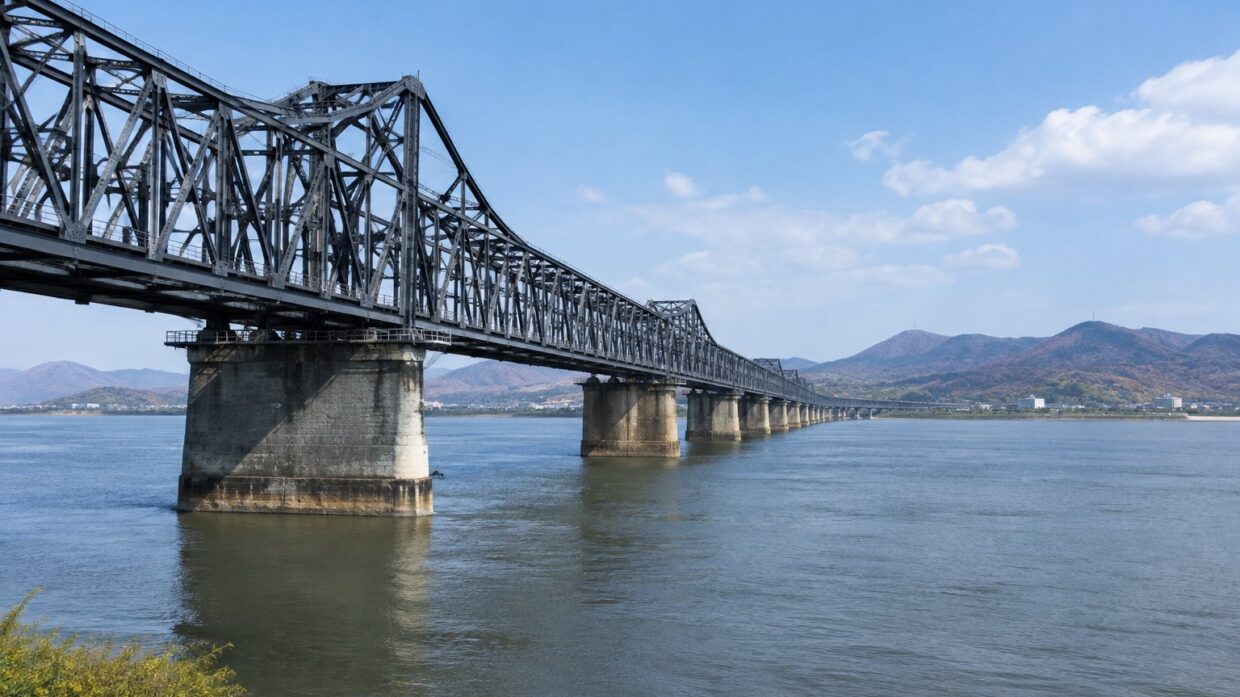
Photo: Well This Is News
North Korean leader crosses into China on freshly opened Yalu River Bridge
We haven't found a right-leaning take on this story yet.
Breaking stories sometimes publish before every side has covered them. We'd rather show you that than invent a view.
Kim Jong Un visits China via newly opened bridge, second trip in 13 months
Key Takeaways
- Kim Jong Un has made two confirmed visits to China in thirteen months, a frequency that breaks from North Korea's historically infrequent international travel patterns and signals a shift in either Beijing's openness to hosting him or Pyongyang's strategic calculations.
- No public reporting has confirmed what Kim and Chinese leaders discussed, what agreements were reached, or whether his presence was meant to signal resolve before US engagement, leaving the actual substance of the visit unknown.
- The newly opened Yalu River bridge that Kim crossed functions primarily as North Korea's main commercial gateway to Dandong, but sources do not establish whether this trip used new infrastructure capacity, a symbolically reopened route, or existing crossings.
The Analysis
Kim Jong Un's Saturday visit to Dandong marks his second crossing into China in thirteen months, a frequency that signals sustained coordination between Beijing and Pyongyang at a moment when both face separate pressure from Washington. The Guardian reports this as his "first known trip abroad in more than a year," emphasizing the rarity of his international movement. Bloomberg situates the same event as his "second visit to China since September 2025," placing it within a pattern of bilateral engagement. The distinction matters: one framing isolates the moment, the other nests it in continuity.
The infrastructure element both sources mention but neither examines closely is the newly opened bridge itself. The Yalu River Bridge is not a symbol chosen by accident. It connects North Korea directly to China's Dandong region, the primary border crossing for most bilateral trade. The Guardian's emphasis on the bridge's newness suggests freshly constructed infrastructure enabling the visit. Bloomberg does not mention the bridge at all, instead foregrounding the timing relative to Trump's upcoming regional visit. This omission is significant because it leaves readers without the actual mechanism of the trip and thus without understanding whether this represents new capacity, symbolic reopening, or routine usage of existing crossings. The public reporting does not establish which.
The left-leaning framing emphasizes the bridge's novelty and the diplomatic symbolism of Kim's movement, which serves a narrative of growing China-North Korea alignment independent of Western pressure. The Guardian's language choices reflect this: "newly opened," "first known trip," and the focus on infrastructure highlight a deliberate bilateral initiative. The right-leaning sources in this case are absent from the available reporting, though the implicit conservative framing would likely emphasize the visit's timing relative to Trump's arrival and interpret it as Beijing and Pyongyang signaling unity before US engagement. Bloomberg's neutral positioning situates the visit primarily as a data point in a sequence: second trip in thirteen months, and notably scheduled before Trump's visit.
What neither framing adequately addresses is the relationship between Kim's travel pattern and North Korea's economic or security isolation. Two significant China trips in thirteen months is unusual in the context of North Korea's typical diplomatic behavior, where such visits are infrequent and heavily staged. The public record does not establish whether this reflects a shift in Beijing's willingness to host Kim, a change in Pyongyang's strategic calculations, or both. The available reporting also does not confirm what was discussed, what agreements may have been reached, or whether Kim's presence was meant to signal particular resolve before anticipated US diplomatic engagement.
The underlying question is whether this represents a genuine deepening of China-North Korea coordination or a routine bilateral maintenance visit that appears significant primarily because Trump's regional presence creates optical tension. The evidence suggests the former is plausible but unproven by the sources available.
Beijing and Pyongyang are signaling coordinated resistance to incoming US diplomatic pressure by accelerating their bilateral engagement cycle, with Kim's second China visit in thirteen months establishing a new pattern of frequent high-level contact that breaks North Korea's historical isolation norms. The newly constructed bridge connecting Dandong represents concrete infrastructure investment designed specifically to facilitate this coordination, giving Beijing tangible control over the frequency and visibility of Kim's movement across the border. This shift transforms China from passive neighbor into active manager of North Korea's foreign engagement, effectively placing Kim's diplomatic calendar within Chinese strategic control. When Trump arrives in the region, he will face not two isolated actors but a Beijing-coordinated axis where Pyongyang's responses to US offers are already filtered through Chinese veto power, fundamentally constraining any bilateral US-North Korea negotiations and transferring leverage entirely to Beijing as the gatekeeper of Kim's international movement.