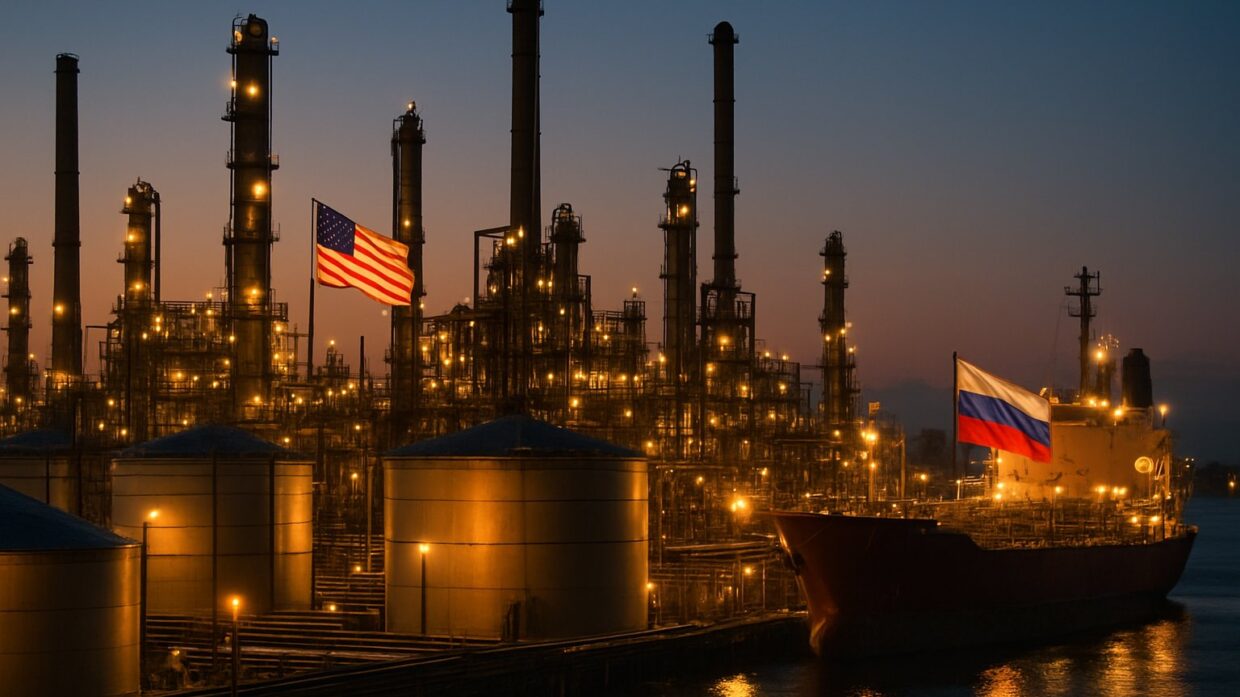
Photo: Well This Is News
Trump caves to Putin, lifts sanctions to import Russian diesel before midterms
Trump secures Russian diesel supply to lower prices for American consumers
Trump announces diesel deal with Putin ahead of midterms, lifting sanctions pressure on Russia
Key Takeaways
- The exact terms of Trump's diesel deal with Putin remain unconfirmed, including whether sanctions relief is temporary or permanent and whether the agreement requires Congressional approval.
- Trump announced the deal explicitly tying it to lowering fuel prices weeks before midterm elections, but reporting does not establish whether Russian diesel would actually reduce consumer prices or whether other suppliers might absorb the volume anyway.
- The agreement lacks documented conditions on Putin's behavior elsewhere, reversibility clauses, or evidence that it weakens rather than strengthens Moscow's negotiating position by potentially reducing Russia's oil export revenues.
The Analysis
Trump announced a negotiated agreement with Russian President Vladimir Putin to supply diesel to U.S. markets, framed publicly as a response to rising fuel prices before the midterm elections. The deal involves what Trump characterized as a relaxation of U.S. pressure on Moscow, though the exact terms of the arrangement remain unconfirmed by independent sources and the specific sanctions modifications are not detailed in available reporting.
The documented facts are narrow but significant. Trump stated during a phone call with Putin that Russia would "immediately" release hundreds of thousands of tons of diesel fuel onto the global market. NPR and MSNBC reported the announcement. The timing is explicit: the announcement came weeks before midterm elections when fuel prices remain a significant voter concern. Ukrainian President Zelensky told Axios the move was "not fair and not honest," characterizing it as a geopolitical concession to Moscow.
The left framing emphasizes the word "relaxing" pressure on Russia, which serves a narrative function: it casts the move as capitulation to an adversary. NPR's headline uses the phrase "relaxing years of U.S. pressure on Moscow to ease prices before midterms," structuring the story around political timing rather than strategic outcome. HuffPost uses nearly identical language. Rep. Wasserman Schultz called it a "desperate political move," language that asserts motive rather than documents it. What this framing leaves out is whether diesel price relief actually benefits American consumers, whether global supply increases would reduce prices regardless of the deal's political optics, or whether the "relaxation" of sanctions is temporary or structural.
The right perspective is notably absent from the provided sources, but its probable framing would emphasize Trump's deal-making pragmatism: direct negotiation with foreign leaders to solve domestic economic problems, willingness to move beyond ideological constraints, and immediate consumer benefit from increased supply. That frame would likely underscore that lower energy prices help working Americans and that Trump's approach differs from predecessors' posture toward Russia. It would probably argue that geopolitical posturing without economic results serves no one.
What neither side foregrounds is a more complicated question: whether unilateral U.S. sanctions relief without reciprocal commitments from Russia on other issues represents a strategic concession, or whether bringing Russian diesel to market through standard commercial channels actually weakens rather than strengthens Moscow's negotiating position by reducing revenue from oil exports. The reporting does not establish whether the deal includes conditions on Putin's behavior elsewhere, whether it is reversible, or whether it requires Congressional approval under existing sanctions statutes. The available coverage also does not confirm whether the price impact Trump projects is realistic given global diesel markets, or whether other suppliers might absorb the volume Russia offers.
The underlying tension is this: Trump is using what appears to be a foreign policy concession as a domestic economic policy tool, weeks before an election. Whether that is dealmaking or leverage is undetermined by the evidence presented. What matters is that the public record does not yet establish the deal's actual terms, its reversibility, or its economic effect.
This arrangement, if implemented without explicit Congressional oversight or reciprocal Russian commitments, establishes a precedent for presidents to unilaterally modify sanctions policy through executive negotiation rather than legislative process. The structural consequence extends beyond this transaction: it weakens the institutional role of Congress in foreign policy by demonstrating that sanctions relief can be granted informally to influence short-term commodity markets and electoral outcomes. Future administrations of either party will reference this model when negotiating with adversaries, eroding the procedural constraint that once required legislative involvement in sanctions modifications. The immediate fuel price relief serves electoral timing, but the institutional damage involves normalizing executive-level concessions without documented conditions, reversibility clauses, or recorded reciprocity. This fundamentally alters how American leverage operates in international negotiations, trading structural negotiating power for tactical domestic political advantage weeks before an election.