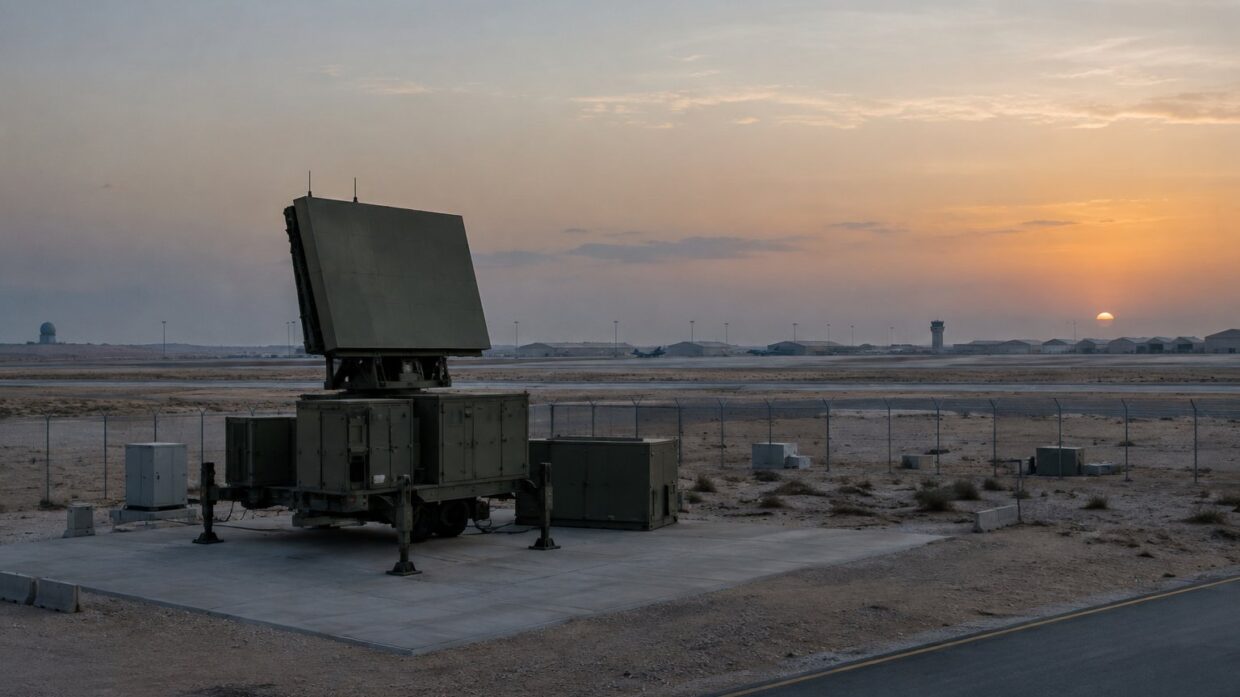
Photo: Well This Is News
Iran targets Bahrain airbase; US military presence in crosshairs amid Gulf crisis
We haven't found a right-leaning take on this story yet.
Breaking stories sometimes publish before every side has covered them. We'd rather show you that than invent a view.
Iran strikes US air base in Bahrain as tensions escalate in Gulf
Key Takeaways
- Iran targeted only a radar system rather than the base itself or personnel, suggesting a deliberate choice to limit the scope of the strike despite demonstrating capability.
- Iran released diplomatic statements about negotiation availability at the same time as conducting the military strike, but the causal relationship and intent behind both actions remains unexplained.
- Without knowing what US or Israeli actions preceded the November 15 strike, readers cannot determine whether Iran crossed a new threshold or continued an existing pattern of tit-for-tat exchanges.
The Analysis
Iran's strike on an air defense radar system at Al-Riffa air base in Bahrain represents a deliberate escalation in a pattern of direct Iranian military action against US positions in the Gulf. What makes this significant is not simply that it happened, but where it happened and what Iran claimed to accomplish with it. The Revolutionary Guards stated they targeted a US air defense radar at the base, not the facility itself or personnel. That specificity matters. Iran attacked infrastructure meant to detect and intercept Iranian missiles, which is consistent with a campaign to demonstrate capability against US air defense systems while leaving room for negotiation on larger questions.
The left-leaning framing emphasizes the geographic proximity of Bahrain to Iran and the presence of the US Navy Fifth Fleet, using language like "direct strike" and "escalation." The Guardian's reporting foregrounds the military threat and the expansion of Iranian operations into Bahrain specifically. That framing is factually grounded: this is the first direct Iranian strike on Bahrain in weeks, and the base does host critical US Navy infrastructure. But the emphasis on military threat leaves out a crucial detail that the Bloomberg reporting includes: Iran simultaneously stated that a path to a negotiated settlement with the United States remains open. That omission shapes how readers understand Iranian intent.
The right-leaning perspective would likely interpret this as evidence that Iran cannot be negotiated with and that military pressure is the only language Iranian leadership understands. That interpretation has historical precedent: Iran has previously combined military action with diplomatic signals. The available reporting does not establish whether Iran's latest diplomatic language represents genuine willingness to negotiate or tactical positioning. What the record shows is that Iran made both moves simultaneously, which suggests the organization is keeping multiple pathways open.
Neither framing addresses what prompted this specific strike on this specific date. The reporting does not establish whether Iran was responding to a prior US or Israeli action, whether it was timed to a particular diplomatic deadline, or whether it was part of a predetermined schedule of operations. Bloomberg notes the strike came "even as" Iran reiterated openness to a deal, which is the structure of the sentence, but the causal relationship between those two facts remains unclear. The sequence raises questions about whether the strike was meant to demonstrate strength before negotiating, to respond to something not mentioned in these summaries, or to pursue both military and diplomatic objectives simultaneously.
The broader context neither side fully captures is the pattern of tit-for-tat escalation in the Gulf over recent months. Understanding whether this strike represents meaningful escalation or continuation of an existing dynamic requires knowing what preceded it. The public record as presented here does not provide that history, which means readers cannot fully assess whether Iran has crossed a new threshold or is operating within an established pattern of mutual strikes and counter-strikes.
What this strike actually signals is less certain than either framing suggests. Iran demonstrated it can strike US-aligned infrastructure in Bahrain. Iran also signaled it wants to negotiate. Both things appear to be true. The question neither side addresses is whether Iran believes those two objectives are compatible, or whether one is genuine and the other is theater.
Iran's targeting of US air defense systems rather than personnel or facilities suggests a calculated strategy to demonstrate anti-access capability while preserving negotiation space, a distinction that reshapes how this escalation should be understood. If Iran successfully degrades early warning radar at Al-Riffa, it meaningfully reduces US air defense effectiveness across the Fifth Fleet's operational area, creating tactical asymmetry that strengthens Iran's position in any future military confrontation. This matters because the strike tests whether the US can respond militarily without triggering broader regional conflict, and whether American allies in the Gulf remain confident in US protection. The simultaneous diplomatic messaging from Iran indicates leadership is hedging against miscalculation, but the lack of clear provocation for today's strike leaves ambiguous whether Iran is negotiating from strength or responding to undisclosed prior action. Either way, the base now requires infrastructure repair and redeployment of air defense assets, concrete costs that demonstrate Iranian strikes produce operational