Photo: Well This Is News
Hurricane Lowell devastates Hawaii as climate change intensifies storm severity
Hurricane Lowell hits Hawaii; Gen Z abandons tech for analog life as AI advances
Hurricane Lowell batters Hawaii with historic winds, flooding, widespread power outages
Key Takeaways
- Public reporting has not established whether Hurricane Lowell's specific characteristics represent a departure from historical norms for September Pacific hurricanes or fall within expected variation, making it premature to cite this storm as proof of climate-driven intensification.
- Neither climate-focused nor skeptical reporting adequately addresses the practical question of what adaptation policies would most effectively protect Hawaiian infrastructure and populations over the next decade, leaving a gap between diagnosis and implementation.
- The available meteorological data does not quantify the relationship between sea surface temperature anomalies and Hurricane Lowell's particular intensity and track, leaving the scientific claim about climate's role in this specific storm underdeveloped in public coverage.
The Analysis
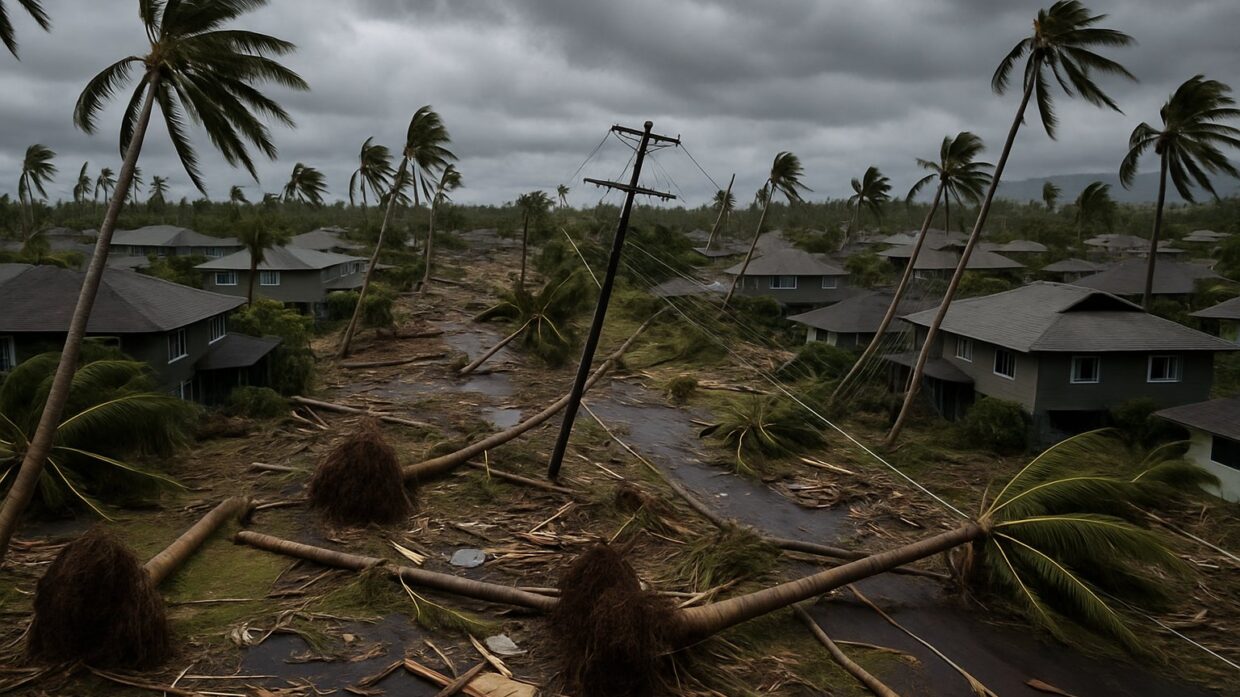
Hurricane Lowell struck Hawaii's western islands on September 8, 2026, with documented damaging winds, heavy rains, and widespread power outages, particularly affecting Kauai. The storm triggered a historic tornado watch on Maui and left debris strewn across North Kihei Road. The National Weather Service warned that flooding and mudslides would continue as risks even as the storm's center moved west of the islands.
The left's framing emphasizes climate change as the underlying driver of the hurricane's intensity. The Guardian's coverage focuses on the immediate damage while climate-focused reporting contextualizes Lowell within broader patterns of ocean warming. The framing assumes readers understand the connection between sea surface temperatures and hurricane intensification, and it allocates responsibility for storm severity to accumulated carbon emissions. This emphasis leaves out the specific meteorological conditions that produced Lowell's particular track and intensity, instead treating the storm as exemplary of a systemic trend. The omission is not accidental: it positions individual hurricanes as data points in a larger narrative about planetary change rather than discrete weather events.
The right's framing, evident in National Review's broader editorial positioning, decouples the hurricane story from climate causation. Instead, National Review's homepage during the hurricane coverage featured prominent stories about Gen Z's return to analog technology and AI advancement, implicitly suggesting that technological progress and natural disasters are separate domains. The framing does not deny the hurricane occurred or its damage; it simply does not foreground climate science in the storm's explanation. This approach leaves out the role of ocean temperatures in hurricane formation, instead treating the hurricane as a natural phenomenon independent of human systems. The strategic value of this framing is that it preserves space for debates about climate policy without conceding that this particular storm demonstrates climate change's real-time effects.
What neither framing adequately addresses is the specific meteorological question: what made Hurricane Lowell's track and intensity distinctive, and what role did sea surface temperature anomalies play in its behavior compared to historical storms? The Yale Climate Connections reporting provides technical detail about the tornado watch and flooding mechanisms, but does not quantify the relationship between ocean temperatures and Lowell's intensity. The available reporting does not establish whether Lowell was unusually severe for a September hurricane in the eastern Pacific, or whether its intensity fell within historical norms for the region.
The underlying question both sides avoid is practical: what does adaptation look like for Hawaii in the near term, and how do emergency response protocols need to change as storm severity patterns shift? The left emphasizes emissions reduction; the right emphasizes resilience and human ingenuity. What the public record does not yet establish is which combination of policies would most effectively protect Hawaiian infrastructure and populations over the next decade.
The real headline is that Hurricane Lowell was a significant weather event with documented human consequences, but the evidence available in public reporting does not yet establish whether its particular characteristics represent a break from historical norms or fall within expected variation for late summer Pacific hurricanes.
Hawaii's power grid vulnerability, exposed by Lowell's outages across Kauai and Maui, reveals a critical infrastructure gap that neither climate adaptation nor disaster preparedness frameworks have adequately addressed. The islands depend on aging diesel generation and limited redundancy, meaning a hurricane-force event now triggers cascading failures that take weeks to fully restore. As Pacific hurricane patterns continue shifting, utilities will face mounting pressure to harden systems designed for 20th-century storm frequencies, requiring capital investment that current regulatory structures do not mandate or fund. The torpedo watch on Maui signals that tropical cyclone behavior is producing weather phenomena outside historical precedent for the region, forcing emergency management agencies to rewrite protocols faster than equipment upgrades can follow. Without specific federal infrastructure mandates triggered by storms like Lowell, Hawaii remains trapped in a cycle where each hurricane demands reactive repairs rather than proactive redesign.