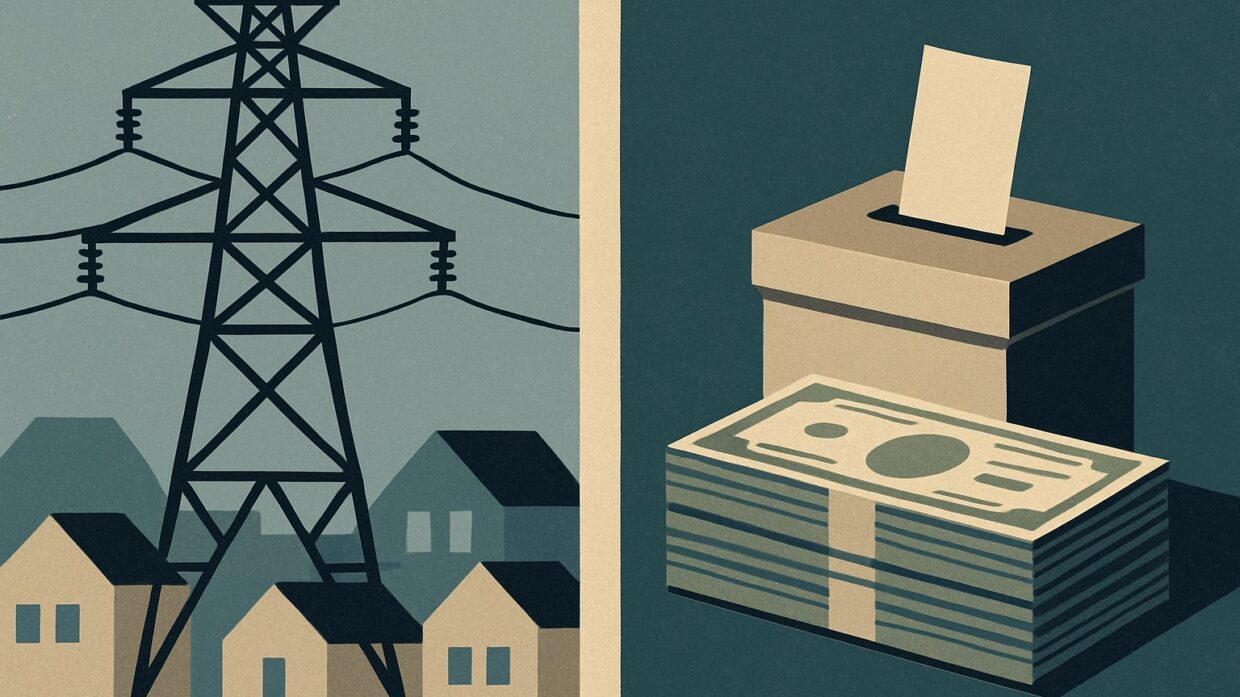
Photo: Well This Is News
Senate Democrats Block 'Toothless' Data Center Bill Lacking Consumer Protections
Democrats Kill GOP Bills on Electricity Costs and Congressional Stock Trading Before Midterms
Senate Democrats Block Data Center Bill and Stock Trading Measure Over Policy Disagreements
Key Takeaways
- Two separate bills failed the same day over unrelated objections: Democrats blocked the Ratepayer Protection Act on substance and rejected a stock trading ban over an attached voter ID requirement.
- Neither the Democratic nor Republican coverage examined whether either bill was actually designed to solve its stated problem or was structured primarily as campaign messaging.
- The core economic question of whether data center operators or utility customers should pay for AI infrastructure costs remains unaddressed by either party's public framing.
The Analysis
Senate Democrats blocked two distinct bills Wednesday using the filibuster, but the framing from each side obscures what the actual legislative texts reveal about the underlying disagreements. The Ratepayer Protection Act fell three votes short of the 60 needed to advance, and a concurrent stock trading restriction bill also failed along partisan lines, but the real story involves what each bill actually required and what each side claims it was trying to accomplish.
The Ratepayer Protection Act, sponsored by Sen. Jon Husted of Ohio, passed the House with bipartisan support according to multiple sources, but faced Democratic opposition in the Senate on substantive grounds. Democrats called the bill toothless, a descriptor that appears in MSNBC and The Hill reporting. The specific criticism appears to be that the legislation did not adequately protect consumer ratepayers from bearing costs when new AI data centers drive up electricity demand. The bill passed the House, but the public record does not yet establish whether Democrats objected to its specific provisions or to the underlying approach of allowing data center operators to absorb more costs.
The left frame emphasizes consumer protection gaps in Husted's bill. MSNBC's language centers on what consumers would not receive under the measure, while downplaying the actual mechanics of how electricity cost allocation would function. The reporting does not detail what specific protections Democrats wanted that the bill lacked, which suggests the coverage reflects Democratic talking points without independent policy analysis.
The right frame emphasizes electoral timing and Democratic obstruction. Fox News and the Washington Examiner both connect the block to midterm election strategy, using language like denying Republicans a win and preventing Americans from seeing lower electricity bills. That framing treats the bill as a settled good that Democrats are blocking for partisan advantage. What that coverage leaves out is whether Democrats' policy objections to the bill's structure were substantive or primarily tactical.
A second vote the same day complicates the narrative further. A congressional stock trading ban, which both parties have claimed to support in principle, failed when Democrats rejected it over a voter ID requirement Republicans had attached. The Hill reports that Democrats argued the voter ID provision was a poison pill, while Republicans used it as a trade off in a bill they knew was unrelated to trading restrictions. This sequence suggests that both parties are using legislative vehicles to advance secondary priorities, not that either side categorically opposes good government measures.
What neither side foregrounds is the actual economic question: whether data center operators or utility ratepayers should bear the cost of infrastructure expansion for AI computation. That is a legitimate policy choice with real distributional consequences. The public record does not establish whether the Ratepayer Protection Act would have meaningfully shifted those costs or merely adjusted margins, nor whether Democrats offered a counter proposal that addressed the underlying problem differently. The coverage treats the bill as self-evidently good or bad depending on which side proposed it, rather than evaluating what it actually did.
The blocking of both bills also raises a procedural question the reporting treats as routine. Both required 60 votes in a chamber where Democrats held 51 seats, making passage impossible without Republican defections or Democratic support. Neither outlet examines whether the bills were designed to fail for messaging purposes or whether either party believed they could gather the necessary votes.
What this actually signals is that Congress is using legislative process as campaign theater rather than negotiating functional bills. The data center issue is real, electricity costs are rising, and both insider trading and voter access are legitimate policy concerns. The question the coverage avoids is whether either bill was structured to solve those problems or to create a record for November.
The blockade of both bills exposes a deliberate legislative strategy where neither party negotiated bills designed to pass. Democrats rejected the Ratepayer Protection Act without specifying which provisions failed to protect consumers from data center electricity costs, while Republicans attached an unrelated voter ID requirement to a stock trading ban, treating unconnected policy areas as tradeable chips. This pattern indicates Congress is producing legislative failures as campaign artifacts rather than functional solutions. The substantive question of whether ratepayers or operators should absorb infrastructure costs for AI expansion remains unresolved, leaving the actual economic problem untouched while both parties claim victory in obstruction. This transforms the legislative process into staged opposition theater, postponing real governance on issues with measurable consequences for utility bills and market integrity.