Photo: Well This Is News
H5 bird flu kills Australian penguin as virus spreads through wildlife
Australia confirms first penguin death from bird flu amid biosecurity concerns
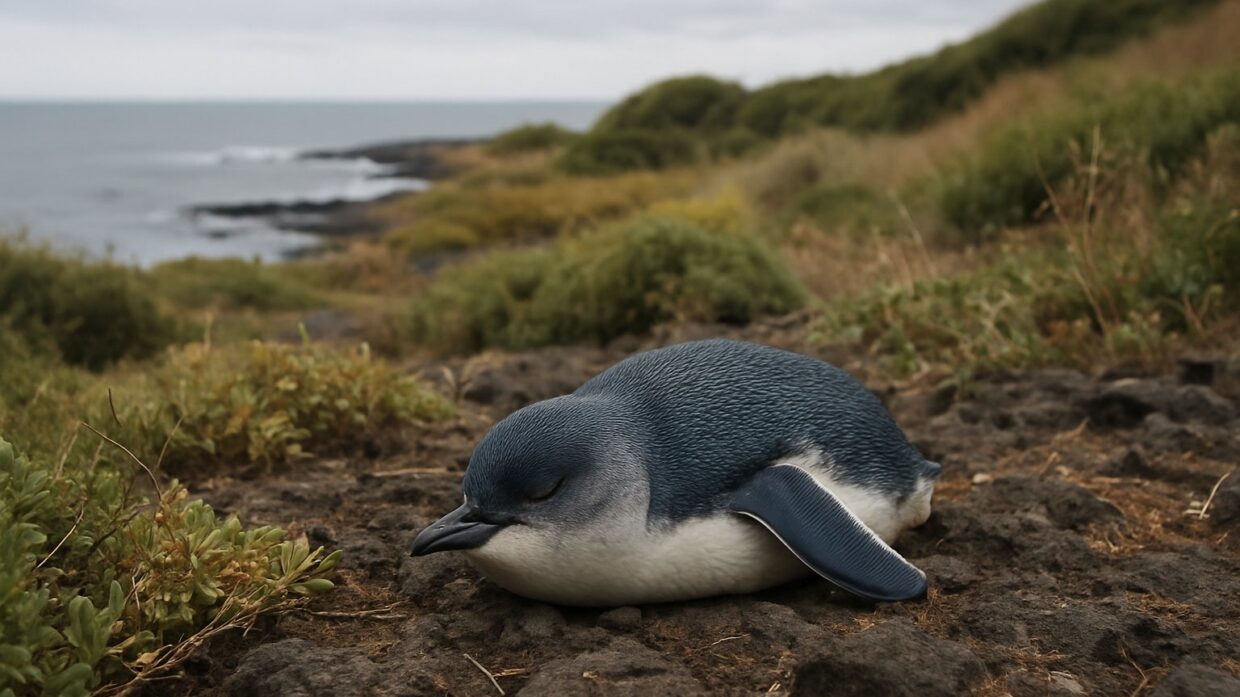
First Australian little penguin dies from H5 bird flu on Phillip Island
Key Takeaways
- The penguin parade continues operating during an active H5 outbreak at the same location where an infected bird was found, but coverage does not reveal whether authorities determined this poses negligible transmission risk or simply chose to accept the risk.
- Little penguins nest in high-density colonies where diseases spread rapidly once established, but reporting lacks clarity on whether H5 has infected multiple birds or remains limited to the single confirmed death.
- The critical unknown is whether this death signals either a management failure or an inevitable cost of the virus circulating through Australian ecosystems, which should determine what policy changes, if any, are necessary.
The Analysis
A little penguin found dead from H5 bird flu on Phillip Island represents the first confirmed Australian death of the species from the virus, but the reporting leaves out what this specific case reveals about how the disease spreads through dense wildlife populations and tourist zones simultaneously.
The Guardian reports that authorities confirmed H5 bird flu in a little penguin on Phillip Island in Victoria. The bird was discovered near the penguin parade, a nightly attraction that draws crowds to observe thousands of little penguins returning to shore. The H5 virus has been circulating in Australian wildlife since late 2024, but this is the first documented death of a little penguin in Australia. Little penguins are endemic to southern Australian waters and are already vulnerable to habitat loss and changing ocean temperatures.
The left framing emphasizes the virus's uncontrolled spread through Australian fauna and frames this death as evidence that wildlife protection measures are insufficient. The Guardian's language focuses on the virus continuing to move through the environment and notes the incident occurred at a major public gathering point, which carries an implicit warning about human-wildlife contact. This framing leaves out the specific transmission vector: whether the bird acquired the virus from other birds, contaminated food sources, or environmental contact. The left frame also does not clarify whether the penguin parade itself poses a meaningful disease transmission risk or whether closing it would meaningfully reduce exposure.
A right-leaning interpretation would emphasize biosecurity management and the need to balance public access with disease containment. This frame would highlight that authorities detected and confirmed the case, suggesting the monitoring system is functional. It would note that Phillip Island's penguin population has been studied for decades, providing a baseline for surveillance. This framing leaves out the harder question: whether the penguin parade's continued operation during an active H5 outbreak represents an acceptable risk, or whether public health authorities have determined the transmission risk to be negligible.
What neither framing addresses directly is the epidemiological context that matters most. H5 bird flu spreads primarily through direct contact with infected birds and contaminated environments. Little penguins are colonial nesters that gather in high densities, which accelerates transmission once the virus enters a population. The penguin parade itself could theoretically increase transmission by concentrating healthy and infected birds in close proximity, though the reporting does not establish whether this has occurred. The decision to keep the attraction open during an active outbreak is notable but unstated as a policy choice in the coverage.
Also absent is how this death changes the risk calculus for other endemic seabirds. Little penguins are one of Australia's smallest penguin species and occupy a specific ecological niche. If H5 establishes in little penguin colonies, the long-term population effect depends on whether the virus becomes endemic or remains sporadic. The reporting does not clarify whether authorities are tracking other seabirds on Phillip Island or whether the infection is limited to this specific penguin.
The underlying question is whether H5 in a high-profile tourist location represents a management failure or an inevitable consequence of the virus's circulation through Australian ecosystems. The answer to that question determines whether this death signals a need for policy change or simply reflects the costs of coexisting with a pathogen already established in the continent.
Phillip Island's first confirmed H5 death in a little penguin establishes the virus in a species already stressed by climate-driven ocean changes and habitat loss, creating a cascading risk for other endemic seabirds that share colonial nesting sites and food sources. The penguin parade's continued operation during active H5 circulation represents an undeclared policy choice to accept wildlife mortality rather than disrupt tourism revenue, setting a precedent that wildlife protection yields to public access when disease emerges in economically valuable locations. If H5 becomes endemic in little penguin colonies, population recovery becomes structurally harder because the birds already face warming waters that reduce food availability and breeding success, meaning the virus compounds existing pressures rather than acting as an isolated threat. Australian authorities now must decide whether endemic seabird surveillance will expand beyond Phillip Island's studied population or remain concentrated on tourist zones, determining whether this death signals the beginning of systematic tracking or an isolated incident.