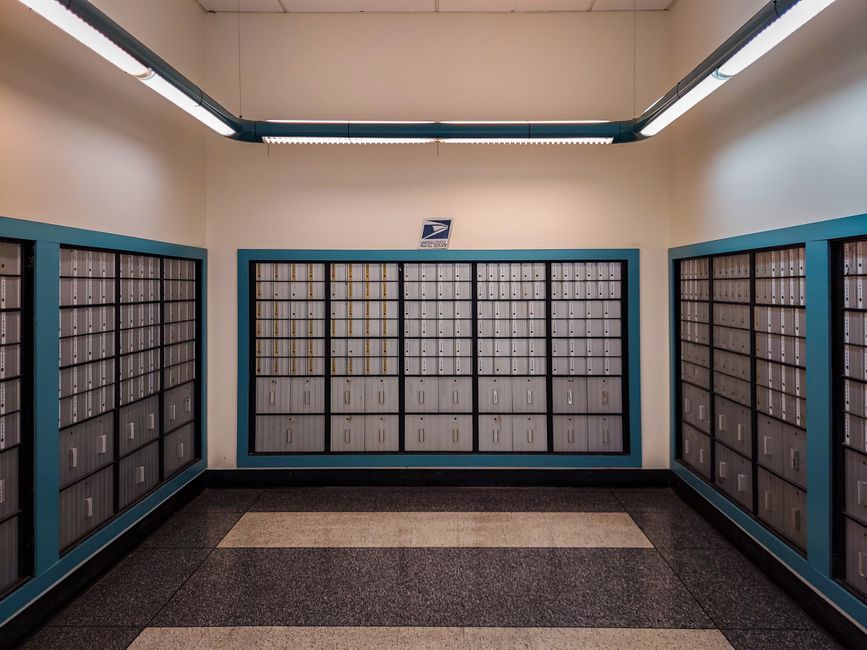
Photo: David McElwee
Postal worker threw out 300 mail-in ballots out of 'laziness,' DOJ prosecution reveals
Former USPS worker indicted after dumping 300-plus Utah mail-in ballots without delivering one
Federal grand jury indicts Utah postal worker for discarding 300+ mail-in ballots
Key Takeaways
- A single postal worker was able to remove and discard 300 ballots undetected in 90 minutes, indicating a specific security gap in how facilities monitor ballot handling independent of any coordinated suppression effort.
- The indictment documents individual criminal conduct and facility-level detection failure, but provides no evidence the ballots affected any election outcome or were part of a systematic pattern at that location.
- Both left and right framings obscured that the real issue is not political conspiracy or proof that mail voting is fundamentally unsafe, but rather that mail security depends heavily on point-of-facility monitoring and worker integrity rather than architectural safeguards.
The Analysis
A federal indictment unsealed Tuesday charges a Utah postal worker with destroying 300+ mail-in ballots. What the indictment explicitly establishes and what both sides are quietly omitting are two different stories.
The documented facts are these: Damon Matai Seei, 34, of Payson, Utah, separated over 300 mail-in ballots from other mail at the start of his shift and discarded them within 90 minutes, according to the DOJ charging document. The indictment charges one count of unlawful secretion and destruction of mail. Seei told investigators he did this because of "laziness," according to the government's public statements. No ballots were delivered. No allegation of political motive appears in the indictment. No evidence has emerged that any election outcome was affected.
The left framing, exemplified by NBC News, emphasizes the word "laziness" and frames this as evidence of a vulnerability in mail-in voting systems that voting rights advocates have warned about. That framing is accurate as far as it goes. It does leave out something material: the indictment does not allege this was politically motivated or part of a systematic effort to suppress votes of any particular group. The laziness framing serves a narrative function, suggesting this is a real threat to election integrity that transcends individual incompetence. The coverage does not establish whether Seei's actions were part of a broader pattern at this facility or an isolated incident.
The right framing, exemplified by Fox News, leads with the scale and speed: 300+ ballots, 90 minutes, not one delivered. That is accurate and emphasizes operational failure. The framing leaves out what the left frame emphasizes: the absence of political motive. By leading with "allegedly dumping" and detailing the scale without noting the lack of partisan intent, the story's structure invites readers to infer intentional suppression, though the indictment does not support that inference.
What neither frame foregrounds is what the public record actually establishes about how this happened and why no larger institutional failure is evident. Seei was indicted. The postal service did not appear to have systems that prevented one worker from removing hundreds of ballots and disposing of them undetected for what appears to be a significant window. That is a genuine operational problem, independent of motive. But the indictment also suggests the breach was discovered and prosecuted, which indicates some level of accountability function did work.
The real question neither framing addresses is whether this represents a systemic vulnerability in mail-in voting or an individual failure caught and prosecuted. One postal worker, acting alone, removed ballots without apparent detection until after the fact. That should prompt questions about facility oversight and mail security. It should not, based on the available evidence, prompt claims about coordinated election interference or widespread ballot theft. The indictment addresses individual conduct, not institutional failure or deliberate suppression.
What makes this significant is not that it proves mail-in voting is fundamentally unsafe, but that it reveals specific points where individual postal workers can remove ballots from the system without immediate detection. The consequence is that mail-in voting's security depends partly on individual integrity and facility-level monitoring. That is a material fact that voting systems should address regardless of whether this case involved motive or mere negligence.
This case exposes a concrete operational gap in postal mail-in ballot handling: one worker successfully removed and destroyed over 300 ballots within 90 minutes without triggering detection systems during his shift. Whether driven by negligence or intent, the indictment demonstrates that facilities lack real-time accountability mechanisms to prevent a single postal employee from intercepting ballots between sorting and delivery. Election administrators and postal leadership now face pressure to implement unit-level tracking, camera coverage in ballot-handling areas, and shift-end reconciliation procedures. The consequence extends beyond this one indictment. Federal oversight bodies and state election officials must audit similar vulnerabilities at other facilities, transforming mail-in voting infrastructure from a system that relies on worker integrity alone into one with procedural safeguards. Without institutional reform, this vulnerability remains replicable at any facility nationwide.