Photo: Well This Is News
Republican-appointed judges rebuke GOP map as intentional racial discrimination
Federal court blocks Alabama redistricting plan in setback for Republicans
Federal court blocks Alabama's GOP-drawn congressional map, restores majority-Black districts
Key Takeaways
- The panel's finding rested on examining specific evidence of intentional discrimination through testimony and statistics, not on disagreement with the Supreme Court's abstract legal principles about redistricting.
- Alabama's previous map itself was drawn as a race-conscious remedy for past discrimination, so the dispute involves which racial baseline the state should use rather than whether race should matter at all in redistricting.
- The ruling exposes a genuine unresolved tension in voting rights law: the Supreme Court has narrowed Voting Rights Act protections while simultaneously requiring courts to consider race-conscious remedies, leaving courts uncertain about what motives count as impermissible discrimination versus acceptable electoral calculation.
The Analysis
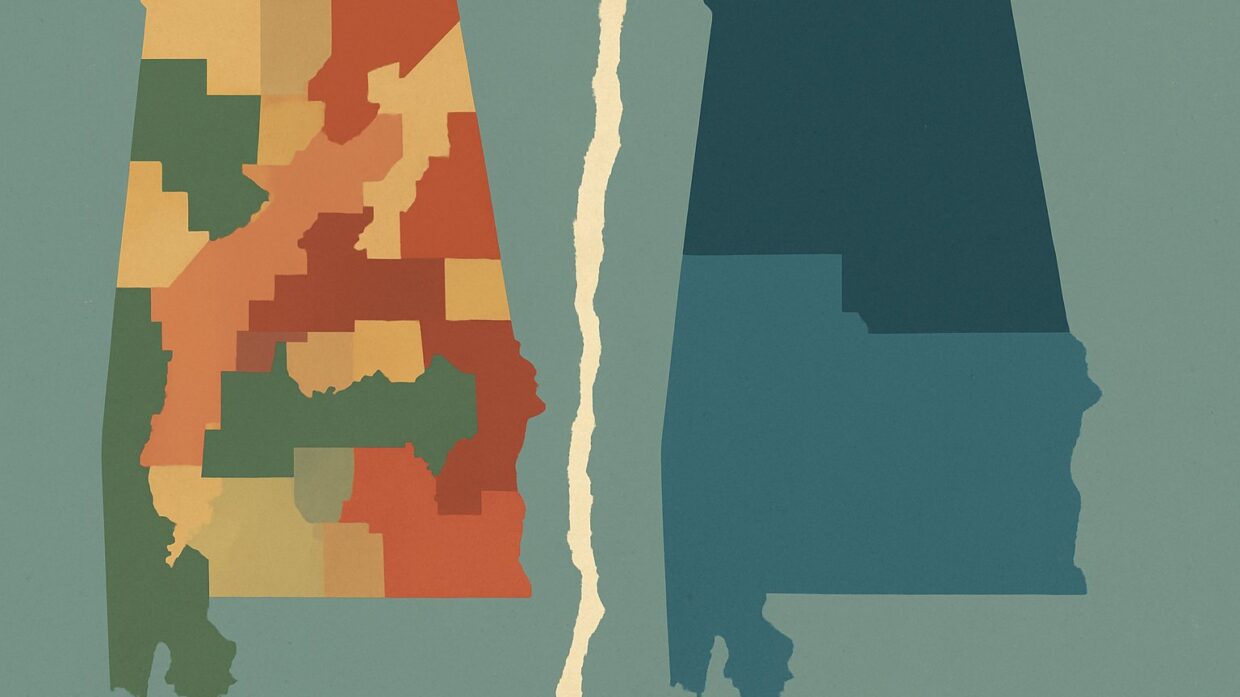
A three-judge federal panel issued a preliminary injunction Tuesday blocking Alabama from using a new congressional map, finding that the Republican-drawn alternative intentionally discriminated against Black voters in violation of the Voting Rights Act and the Fourteenth Amendment. The ruling restores a previous map containing two majority-Black districts. What makes this significant is not the outcome alone, but which judges reached it and what they rejected.
The factual record is straightforward. Alabama Republicans proposed replacing a map with two districts where Black voters comprised majorities or strong pluralities with a map containing only one such district. The state justified this shift as necessary to comply with population changes and to improve competitiveness in other districts. The Supreme Court, in a separate case involving similar concerns, had recently approved maps with reduced majority-minority districts in other states, signaling receptiveness to such arguments. But this three-judge panel, which included two judges appointed by Trump, found the evidence showed intentional discrimination rather than neutral redistricting policy.
The left's framing emphasizes that Trump-appointed judges delivered this decision, using the word "rebuke" to describe their disagreement with the Supreme Court's direction. Mother Jones frames this as a "stunning" rejection by conservative judges of what the Roberts Court apparently permits. This language does political work: it suggests the Trump appointees are independently minded and that the Supreme Court's recent voting rights decisions represent an extreme position even conservatives reject. What this framing leaves out is the specific evidentiary record. The panel did not simply disagree with conservative jurisprudence. The three judges, examining testimony and statistical evidence, concluded the state's stated justifications were pretextual. That distinction matters. The ruling rests on findings about intent and motive, not on abstract principle.
The right's framing emphasizes the practical consequence: Republicans lose representation opportunities and the decision harms GOP electoral prospects. Fox News calls it a "blow to Trump," linking the outcome to the former president rather than to Alabama state officials or abstract constitutional doctrine. This language frames the decision as a defeat for a political figure rather than a determination about constitutional compliance. What this framing does not address is whether the specific evidence presented actually supported the panel's finding of intentional discrimination. The framing assumes the outcome is significant because of its electoral effect, not because of the legal reasoning.
What neither side fully addresses is the unresolved tension in voting rights law itself. The Supreme Court has narrowed the Voting Rights Act while simultaneously requiring courts to consider race-conscious remedies for past discrimination. Alabama's previous map was itself drawn to remedy prior discrimination by creating majority-minority districts. The new map, by reducing those districts, does not restore a race-neutral baseline. It shifts the baseline. The panel's decision assumes intentional discrimination occurred, but the legal question of what constitutes intentional discrimination in redistricting, versus what constitutes permissible electoral calculation, has been genuinely contested among courts and legal scholars. The Supreme Court's recent direction suggests courts should presume neutral motives absent clear evidence. This panel found that evidence. But the framing from both sides obscures that genuine doctrinal disagreement is occurring here, not merely a question of which side is hiding facts.
Alabama's loss of a majority-Black congressional district will likely trigger immediate appeals that could reach the Supreme Court before the 2024 election cycle concludes, forcing the justices to clarify whether intentional discrimination requires explicit statements of racial motive or whether statistical evidence and timing of map changes can establish intent. The ruling also signals that even conservative judges may reject redistricting changes that eliminate minority representation without compelling neutral justifications, potentially constraining Republican mapmaking strategies in other states where demographic shifts have prompted similar proposals to reduce majority-minority districts. This doctrinal clarification will shape redistricting battles for the next decade, determining whether courts actively police racial intent in mapmaking or defer substantially to legislative choices.