Photo: Well This Is News
Alabama pushes Supreme Court to override racial bias ruling to gain GOP seat
Alabama asks SCOTUS to unblock GOP-friendly congressional map
Alabama seeks Supreme Court emergency order to use congressional map a lower court blocked
Key Takeaways
- The lower court's racial bias finding was issued after the Supreme Court's 2022 decision in Merrill v. Milligan, which substantially narrowed the legal standard for proving Voting Rights Act violations by requiring challengers to prove an alternative compliant map could have been drawn.
- Alabama's emergency petition strategy may succeed not on new legal grounds but by invoking the Supreme Court's own recent precedent, which neither the left nor right reporting mentioned.
- Neither the lower court's specific remedy nor Alabama's argument about available alternatives have been publicly disclosed, leaving the actual scope of the dispute unclear.
The Analysis
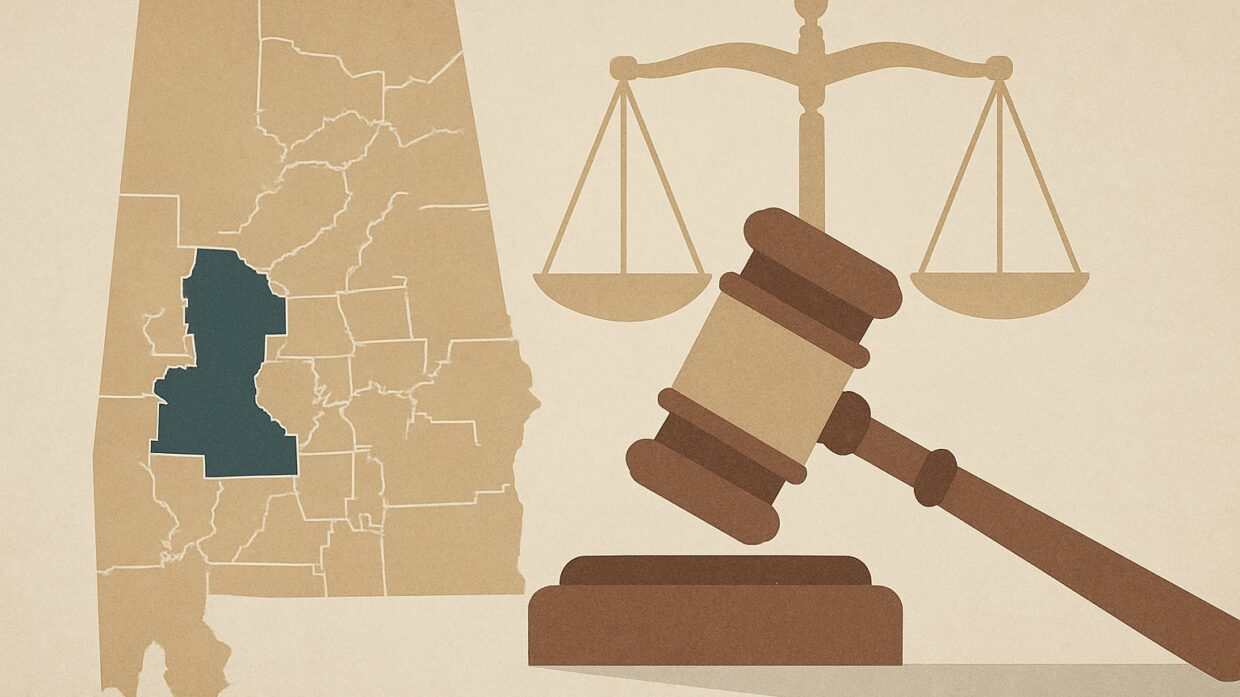
Alabama's Republican leadership has filed emergency petitions with the Supreme Court seeking to overturn a lower court's block of a congressional map that concentrates Black voters into one of seven districts, a move that would likely flip a Democratic seat to Republican control in 2026. The question the filing raises is not whether Alabama can draw districts that advantage one party, but whether courts can stop it from doing so when the mechanism involves packing minority voters into a single seat.
The documented facts are straightforward. In May 2026, a three-judge federal panel refused to allow Alabama to use a map the state had adopted three years earlier. That map creates a district with a majority Black population in only one of seven congressional seats. The panel's reasoning appears grounded in the Voting Rights Act and precedent established in cases like Thornburg v. Gingles, which prohibits vote dilution. Alabama's response was not to modify the map but to ask the Supreme Court for emergency relief, filing its petition one day after the lower court's ruling. The timing matters because emergency petitions to the Supreme Court are meant for situations where delay would cause irreparable harm, suggesting Alabama views the 2026 election calendar as the controlling deadline.
The left's framing emphasizes the racial composition of the map and the lower court's finding of bias. PBS NewsHour's phrasing, "despite racial bias ruling," foregrounds the court's explicit finding and treats the bias claim as established fact. This framing leaves out Alabama's legal argument entirely, what the state actually claims justifies the map, and whether the Supreme Court's recent Voting Rights Act decisions have narrowed what courts can enjoin. It also omits what remedies the lower court offered or whether Alabama has other lawful options.
The right's framing treats the map as a straightforward policy choice. The Washington Examiner calls it "GOP-friendly," which is accurate but incomplete. It does not engage the lower court's racial bias finding, does not explain what Black voter concentration means legally, and does not foreground that the state is seeking emergency relief rather than pursuing normal appellate channels. The Examiner's phrasing emphasizes the electoral consequence, "flip a Democratic seat," which answers why Alabama filed but not why courts might block it.
What neither side fully captures is the legal precedent that governs this case. In 2022, in Merrill v. Milligan, the Supreme Court substantially narrowed Section 2 of the Voting Rights Act, the statute typically used to challenge maps like Alabama's. The Court held that plaintiffs must show not just that a map packs minority voters, but that an alternative map could have been drawn complying with traditional redistricting criteria while creating an additional majority-minority district. The lower court's ruling predates this decision or applied it in a way the Supreme Court may not. Alabama's emergency petition is not asking the Court to revisit voting rights law but to apply its own recent precedent, which is precisely why the request may succeed. The reporting from neither side mentions Merrill v. Milligan.
The institutional implication is that Alabama's filing tests whether the current Supreme Court majority will grant emergency relief in circumstances where its own recent precedent may already require the lower court's injunction be lifted on appeal. What remains undisclosed is what alternative the lower court would accept, whether Alabama believes no alternative legally exists, and how quickly the Supreme Court is likely to move.
Alabama's emergency petition forces the Supreme Court to clarify whether its 2022 narrowing of the Voting Rights Act in Merrill v. Milligan now shields redistricting maps from judicial intervention during election cycles. If the Court grants relief, it signals that lower courts lack authority to block maps mid-cycle based on voting rights claims, effectively insulating partisan redistricting from legal challenge when timelines compress. This outcome would reshape how federal courts can enforce voting rights protections, transforming what appeared settled law into contingent authority dependent on whether a case reaches appellate review before election deadlines arrive.