Photo: Well This Is News
DeSantis Fast-Tracks Gerrymandered Map to Flip Democratic House Seats to Republicans
DeSantis Reveals New Florida Map Giving GOP Four Additional Congressional Seats
DeSantis Unveils Congressional Map That Could Gain GOP Four House Seats in Florida Redistricting
Key Takeaways
- Democrats controlled Florida's redistricting from 1992 to 2012 and drew maps favoring their own party, making current Republican map-drawing part of ongoing tit-for-tat politics rather than unprecedented wrongdoing
- Florida's 2015 constitutional amendment banning partisan gerrymandering and the federal Voting Rights Act both constrain whether this map can survive legal challenge, but neither side mentions these legal obstacles because they undermine claims of certainty
- Whether the map gains seats depends partly on how voters actually vote, a caveat the left downplays while the right treats the Republican advantage as guaranteed
The Analysis
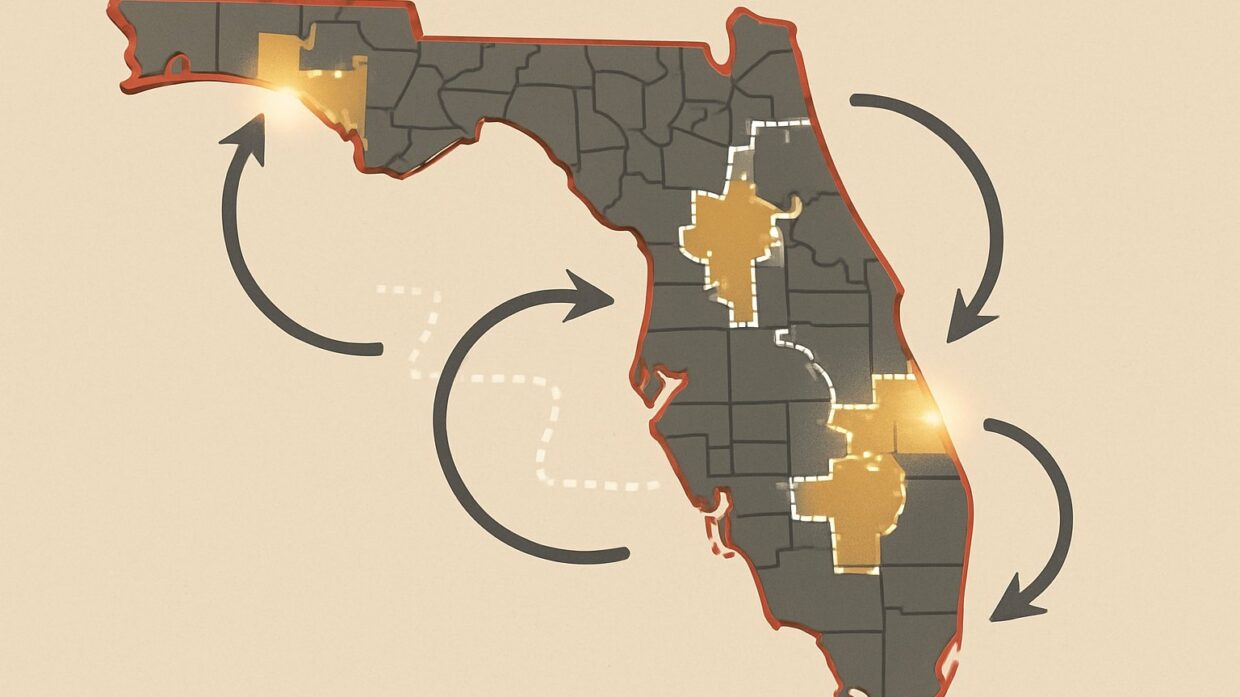
DeSantis released a congressional redistricting map Monday that his office estimates could deliver Republicans four additional House seats, but what both sides are quietly omitting is the specific mechanism that makes those gains possible and the precise legal history that governs whether this map can survive legal challenge.
Here are the verified facts: DeSantis called a special legislative session starting Tuesday. His office provided the map to Fox News Digital showing the district reconfigurations. Florida currently has 20 Republican House members and eight Democrats. The Axios report explicitly states DeSantis' office came close to admitting intentional seat-creation design. The Hill reports the gains depend on how voters actually vote, which is an important caveat neither side emphasizes equally.
The left frames this as gerrymandering, using the word "gerrymandered" explicitly in the Axios headline and NPR's language about a fast-track redistricting that could flip seats. This framing emphasizes speed (the emergency Tuesday session), partisan intent (flipping Democratic seats), and the absence of public deliberation. What NPR and the left leave completely unspoken is that Democrats controlled Florida redistricting from 1992 to 2012 and drew maps that advantaged their own party. That historical fact would undermine the moral clarity of calling the current map uniquely egregious. The left's silence on prior Democratic gerrymandering is politically convenient because it treats Republican map-drawing as unprecedented wrongdoing rather than tit-for-tat politics.
The right frames this as legitimate representation reflecting voter preference, with Fox calling it DeSantis' unveiling of a map that would "give the GOP" seats. This language treats the outcome as earned rather than constructed. The right emphasizes that the state's demographics and political preferences have shifted toward Republicans, implying the map follows reality rather than creating it. What Fox and the right completely omit is any acknowledgment that these districts are drawn with specific partisan intent, which the Axios reporting actually documented. The right's silence on intentional seat-engineering preserves a fiction of neutrality while celebrating the partisan result.
Neither side names the actual constraint that governs whether this map survives: the Voting Rights Act's Section 2, which prohibits redistricting that dilutes minority voting power. Florida has a large Black population concentrated in certain urban areas. If this map cracks or packs Black voters in ways that reduce their ability to elect candidates of choice, courts have struck down similar maps from both parties. Both sides avoid discussing this because it introduces legal uncertainty into what both are presenting as a done deal.
The other omitted piece is Florida's own constitutional ban on partisan gerrymandering, passed by voters in 2015. Amendment 5 requires that districts be drawn without regard to incumbents or partisan advantage. Neither NPR nor Fox mentions this constitutional constraint, which means any court challenge would not rest solely on federal Voting Rights Act grounds but on Florida's own law. Both sides avoid mentioning it because it complicates their narratives.
The real headline: DeSantis released a redistricting map designed to gain four Republican seats, but whether it survives legal challenge depends on whether it violates the Voting Rights Act or Florida's own constitutional requirements for partisan neutrality, constraints neither side is emphasizing because admitting legal jeopardy weakens the appearance of certainty both sides are selling.
Redistricting maps that appear settled today often face years of legal challenges that determine whether partisan gains actually materialize, making the true significance of this moment depend on judicial interpretation of voting rights law rather than legislative ambition.