Photo: Well This Is News
Alabama Republicans rush to gerrymander after Supreme Court guts voting rights safeguards
Alabama governor convenes special session to implement new congressional districts following court ruling
Alabama governor calls special session to redraw congressional maps after Supreme Court weakens voting rights protections
Key Takeaways
- Alabama is implementing maps that courts had previously blocked as racial gerrymanders, now legal because the Supreme Court stripped Section 5 of the Voting Rights Act, which required federal approval for redistricting changes in states with histories of voting discrimination.
- Both Democrats and Republicans are preparing identical aggressive redistricting strategies for 2028, meaning this is a structural problem created by the Supreme Court ruling rather than a partisan one.
- Gov. Ivey moved Alabama's primary election backward specifically to eliminate the legal challenge window before the general election, a tactical maneuver neither news outlet emphasized.
The Analysis
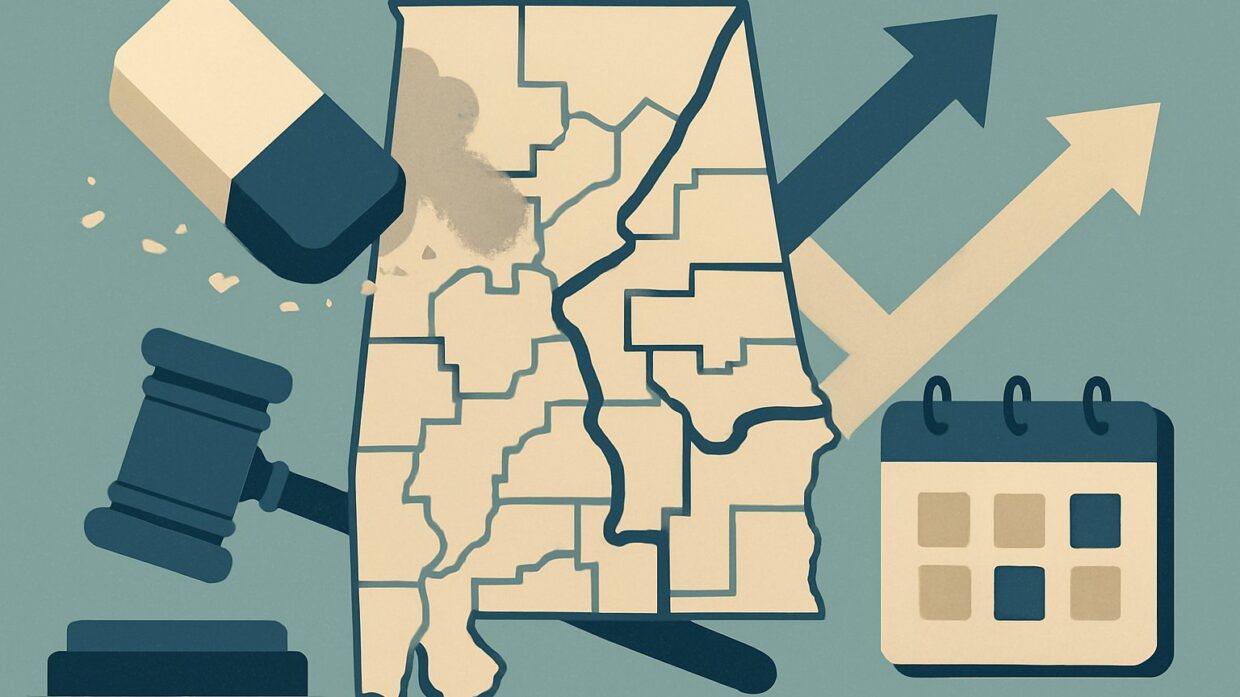
Gov. Kay Ivey called a special legislative session and moved Alabama's May 19 primary election backward, explicitly to create time for redrawing congressional maps that had been blocked by federal courts before a recent Supreme Court decision stripped enforcement power from the Voting Rights Act. What neither MSNBC nor the Washington Examiner told you is that this is not Alabama doing something new. It is Alabama doing something previously illegal, now made legal.
The verified facts: Ivey issued her proclamation on Friday calling lawmakers back for next week. The primary was scheduled for May 19. The maps she wants to install had been blocked in court under Section 5 of the Voting Rights Act, which required states with histories of racial discrimination in voting to get federal approval before changing election rules. That approval requirement was gutted by the Supreme Court in a ruling this week. Georgia's Gov. Brian Kemp announced Thursday that Georgia would not redraw maps before the midterms because voting was already underway, but signaled changes for 2028. Axios reported that this week's ruling has prompted Democrats to begin preparing their own aggressive redistricting for 2028.
The left's framing: MSNBC called this a rush to "re-install congressional maps that had been blocked in court," using language that treats the blockade as merely procedural. The left frames the Supreme Court ruling as having "weakened" voting rights protections, emphasizing the loss of federal oversight. This language is accurate but incomplete. It does not explain that Section 5 existed because Alabama, like other Southern states, had demonstrably used redistricting to dilute Black voting power. By omitting that history, MSNBC allows viewers to hear this as a neutral dispute about federal power rather than a state reclaiming the ability to do what courts had found it did before.
The right's framing: The Washington Examiner describes this as implementing "maps responsive to population changes and legal requirements established by the recent ruling." This language treats the court decision as permission to act rather than removal of a prohibition. By calling the maps "responsive to population changes," the Examiner echoes the standard redistricting justification while omitting that the maps had been blocked because courts found them responsive to racial gerrymandering, not demography.
What both sides are hiding: Neither outlet mentioned that Ivey is moving the primary specifically to avoid the window in which any legal challenge could succeed before the general election. Neither mentioned the Voting Rights Act's history. Neither noted that Axios reported Democrats are preparing identical aggressive maps for 2028, which means this is not a Republican problem or a Democratic problem. It is a structural problem that existed when the Voting Rights Act had teeth and will accelerate now that it does not.
The real headline: After the Supreme Court removed federal oversight of redistricting in states with histories of racial discrimination, Alabama moved its primary election to clear the calendar for congressional maps that federal courts had previously blocked, while both parties prepared to exploit identical legal authority in 2028.
The removal of federal voting rights oversight means that states with documented histories of racial discrimination in elections can now legally do what courts previously forbade them from doing, unleashing a bipartisan arms race in aggressive redistricting that will reshape American representation for the next decade.