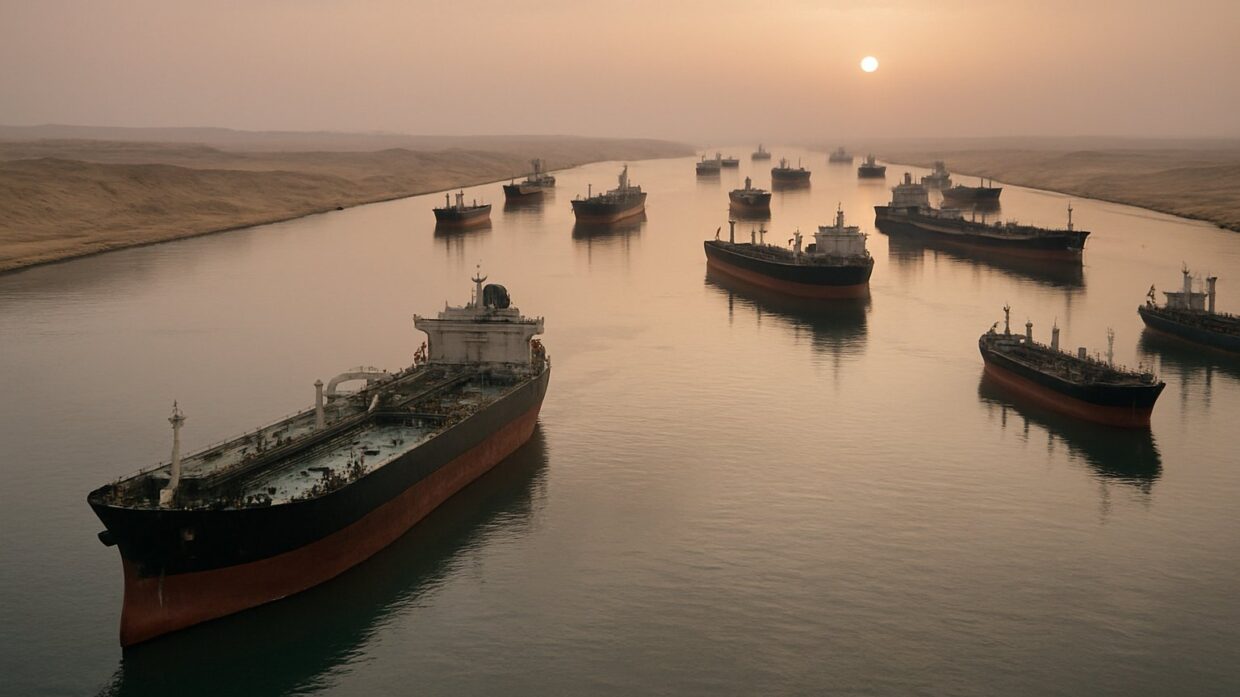
Photo: Well This Is News
Trump blamed for gas prices as Democrats surge in midterm enthusiasm
Trump hints Iran deal imminent, pauses Project Freedom military operations
Trump pauses military operations as Iran negotiations advance; Democrats lead in midterm polling
Key Takeaways
- Trump's military operation constraining Iranian oil supplies helped drive up global gas prices, which then became politically damaging when voters blamed him for inflation.
- Neither side explained that a successful Iran agreement would likely bring Iranian oil back to global markets and potentially lower gas prices, creating a hidden political calculus where Trump could gain relief from his current polling deficit.
- The pause was not presented with historical context showing Project Freedom was originally deployed after Iran's 2019 attack on oil tankers, making it unclear whether current regional conditions justified resuming it in the first place.
The Analysis
Trump announced a pause to 'Project Freedom,' the military operation protecting shipping through the Strait of Hormuz, claiming progress toward an Iran agreement. Simultaneously, new polling shows Democrats gaining midterm advantage and majorities blaming Trump for gas prices. What neither side fully explains is why those two facts are connected, and what the actual negotiating position looks like.
NPR and MSNBC led with the polling numbers: 63% of Americans blame Trump for gas prices, 60% disapprove of Iran policy, and Democrats show stronger midterm enthusiasm. The framing was straightforward damage assessment, Trump as economic and foreign policy liability. NPR's reporting named the exact poll (NPR/PBS News/Marist) and the specific disapproval threshold (60% on Iran, 63% on gas). The implicit narrative: Trump is losing on both domestic economics and international credibility heading into the midterms.
Breitbart's framing inverted the causality entirely. Instead of 'Trump pauses operations because he's politically wounded,' the story became 'Trump pauses operations because a deal is near.' Breitbart used the phrase 'Final Agreement' in quotation marks, Trump's own words, and paired it with 'around the corner,' suggesting imminent diplomatic success. The operation itself, Project Freedom, was reframed from its actual function (military protection of commercial shipping) to a more passive descriptor: 'an effort to help ships through the Strait of Hormuz.' The choice matters. One version sounds like Trump is retreating under political pressure. The other sounds like Trump is pivoting from military to diplomatic solutions because negotiations are succeeding.
Here is what both sides omitted. The original rationale for Project Freedom itself: following Iran's June 2019 attack on oil tankers near the Strait of Hormuz, the Trump administration deployed naval assets to protect commercial shipping and deter Iranian aggression. The operation ran intermittently for years, with varying intensity depending on regional tensions. The pause Trump announced was not presented by either side with this historical context. Neither NPR nor Breitbart explained what triggered the resumption of this operation or what specific Iranian actions or threats had justified it this time.
Second omission: the polling on gas prices requires context that neither side provided. Americans were blaming Trump for gas prices at the same moment his administration was actively constraining oil supplies through sanctions and military posturing. This is not coincidental. Rising gas prices are politically toxic regardless of cause. But the actual mechanism matters for understanding voter reasoning. The left used the polling as straightforward indictment. The right did not address the polling at all. Neither explained what diplomatic agreement with Iran would actually do to oil supply, global market prices, or US consumers' gas bills. A real agreement would likely result in Iranian oil returning to global markets, potentially lowering prices. But that would also be Trump handing a foreign policy victory to Iran and potentially easing sanctions. This is the calculation neither side made explicit.
The real headline is this: Trump is pursuing a negotiated settlement with Iran, which could lower gas prices and improve his midterm position, but only after months of military pressure that both raised global oil prices and damaged his polling. The pause is not evidence of diplomatic skill. It is evidence that the previous strategy was politically unsustainable.
Pausing military operations while pursuing Iran negotiations creates a strategic contradiction neither side examined: Trump's months of military posturing through Project Freedom raised global oil prices and tanked his approval ratings on gas costs, yet any successful negotiation would only work if it reverses those exact conditions by releasing Iranian oil to global markets. Democrats used polling data showing 63% blame him for prices as electoral ammunition without explaining the mechanics of how a deal solves the problem he created. Breitbart inverted causality entirely, framing the pause as diplomatic progress rather than political damage control. The actual consequence matters for 2024: if Trump clinches an Iran agreement that lowers gas prices, he reshapes the midterm narrative from economic failure to foreign policy success, regardless of whether the lower prices result from his negotiating or simply from ending the military pressure that raised them in the first place. His polling recovery depends entirely on how quickly markets respond.