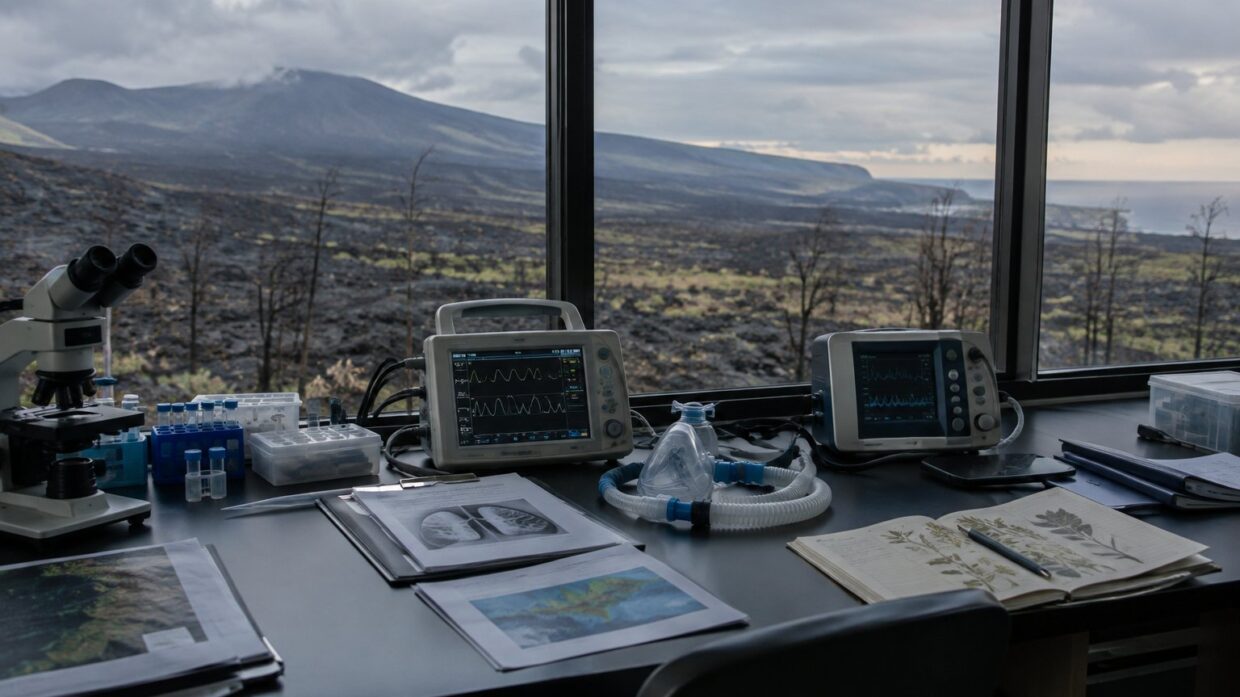
Photo: Well This Is News
We haven't found a left-leaning take on this story yet.
Breaking stories sometimes publish before every side has covered them. We'd rather show you that than invent a view.
We haven't found a right-leaning take on this story yet.
Breaking stories sometimes publish before every side has covered them. We'd rather show you that than invent a view.
Three Years After Maui Wildfire, Scientists Study Long-Term Health Effects on Survivors
Key Takeaways
- Three years after the August 2023 Lahaina fires, systematic health tracking of survivors has only recently ramped up, leaving a gap in understanding what the disaster actually did to residents' bodies.
- The study exists because standard post-disaster public health protocols failed to trigger automatic federal health surveillance, suggesting similar institutional gaps likely exist in other disaster-affected communities.
- The reporting does not disclose baseline health data, projected timelines for preliminary findings, or what policy changes might result from the research, making it unclear what this delayed study will actually accomplish.
The Analysis
Three years after the August 2023 Lahaina fires killed over 100 people and destroyed nearly 3,000 structures, the actual work of understanding what the fire did to survivors' bodies remains incomplete. Inside Climate News reports that University of Hawaii researchers are conducting the Maui Wildfire Exposure Study, tracking health outcomes for residents exposed to the smoke and ash. Ruben Juarez, a scientist affiliated with the study, has made the 45-minute flight from Oahu to Maui dozens of times over the past three years to collect data. The specific question the study aims to answer is documented but not yet resolved: what are the long-term respiratory, carcinogenic, and mental health effects of acute wildfire exposure on a community living at sea level in a tropical climate.
The publicly available reporting on this study does not establish why three years elapsed before systematic longitudinal health tracking began, or what the documented barriers were to earlier research deployment. The timeline raises questions about resource allocation and public health preparedness: the fires occurred in August 2023, but the research effort appears to have ramped up gradually over the subsequent years. Mikey Burke, a resident who appears in the coverage, was still attending acupuncture appointments in May, nearly nine years after the initial disaster, seeking relief from ongoing effects. The reporting does not confirm the specific health outcomes the researchers have already documented, or how the preliminary findings compare to epidemiological predictions for similar fire exposures in other regions.
What the coverage does establish is that this study exists specifically because the standard post-disaster public health response proved insufficient. The framing emphasizes individual resilience and the scope of ongoing care needs, but does not address why a community of Lahaina's size did not trigger automatic federal health surveillance protocols immediately after the fires. The study focuses on tracking exposure through smoke inhalation data and subsequent illness patterns, and the research appears to operate without the kind of real-time health alert infrastructure that might have detected emerging health crises earlier. The available reporting does not explain the institutional gaps this retrospective study is now attempting to fill, or whether those gaps apply to other disaster-affected communities.
The underlying tension is between what a well-resourced public health system would have already documented in the weeks and months after the fires, and what researchers are now laboriously reconstructing years later. The specific diseases being tracked include respiratory illness and cancer risk, but the reporting does not disclose baseline health data for comparison, projected timelines for preliminary findings, or what policy changes might result from the study's conclusions. One plausible interpretation is that wildfire recovery, even in a state with relatively robust climate awareness, operates without integrated health surveillance systems designed to detect and respond to population-level harm in real time. The consequence is that survivors like Mikey Burke are left managing symptoms through whatever combination of conventional medicine and alternative care they can access, while researchers collect the data that should have informed earlier intervention.
What neither framing addresses is why this study needed to exist at all, or what the baseline expectation should be for post-disaster epidemiological response in an era of increasing wildfire frequency. The study is necessary precisely because standard protocols failed to capture early health impacts, and three years of data collection suggests those impacts were significant enough to warrant urgent documentation. The actual headline is that Maui's wildfire survivors are still waiting for answers about what the disaster did to their bodies, while the scientific work to establish those answers is only now reaching early analysis phases.
Federal health surveillance protocols failed to activate automatically after the Lahaina fires, leaving Maui residents to manage undocumented health consequences for years while researchers now conduct the epidemiological work that should have begun within weeks of August 2023. The University of Hawaii study tracking respiratory, carcinogenic, and mental health outcomes represents a reactive rather than preventive infrastructure, one that depends on academic research capacity rather than integrated public health monitoring systems. This structural gap exposes how disaster response plans across the country likely lack real-time population health surveillance mechanisms designed to detect emerging illness patterns from wildfire exposure. Without knowing what preliminary findings the researchers have already documented or whether those findings deviate from standard epidemiological projections for similar fire events, the public cannot assess whether Maui's three-year delay in systematic health tracking cost lives or accelerated disease progression in a vulnerable population.