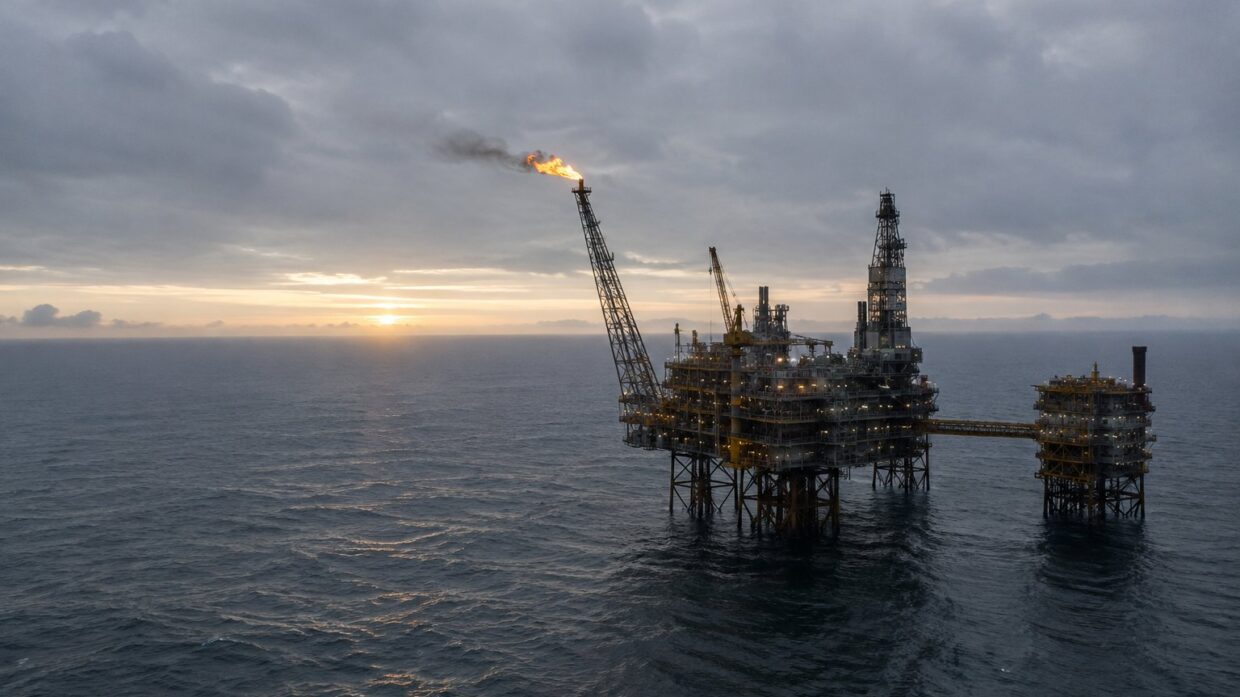
Photo: Well This Is News
Labour government greenlit controversial Jackdaw gas field despite climate pledges
We haven't found a right-leaning take on this story yet.
Breaking stories sometimes publish before every side has covered them. We'd rather show you that than invent a view.
UK government approves Jackdaw North Sea gas field, balancing energy security with climate commitments
Key Takeaways
- The government framed Jackdaw approval as compatible with climate goals but neither Labour nor its critics publicly explained the specific cost-benefit calculation that made approval appear necessary.
- Jackdaw's scale relative to UK energy demand and the price difference between domestic production and imported alternatives remain publicly unspecified despite being central to evaluating whether the approval represents genuine policy reversal.
- The decision reflects a judgment that energy supply risk posed a more urgent threat than climate risk, but neither the government nor coverage addressed what renewable energy or alternative projects were considered as substitutes.
The Analysis
The UK government's approval of the Jackdaw North Sea gas field is being framed along predictable ideological lines, but both the climate advocacy framing and the energy security justification leave out the specific economic and policy pressures that made this decision appear necessary to officials.
The Guardian's framing emphasizes the contradiction between the approval and Labour's climate commitments, using language like "blow to climate campaigners" and noting the decision "threatens to undermine Labour's green credentials." This framing is factually grounded. Labour did campaign on climate action. The Jackdaw field will produce natural gas. But the Guardian's coverage does not explain why the government believed approval was compatible with its climate goals, nor does it quantify how much gas Jackdaw will actually produce relative to the UK's total energy consumption or import requirements. The omission is significant because it prevents readers from understanding the government's cost-benefit reasoning.
The BBC's coverage, characterized as the long-awaited decision about a controversial field, takes a more neutral descriptive stance but similarly underspecifies the economic logic. Neither outlet appears to have foreground the specific policy calculations that officials cited: whether this field reduces dependency on imported gas, what price pressures or supply security concerns informed the decision, or what other projects in the pipeline were considered as alternatives.
What the coverage is not addressing requires historical context. The UK has historically produced significant portions of its gas domestically from North Sea fields. As those mature and decline, the country faces a choice between approving new fields like Jackdaw or increasing reliance on imported liquefied natural gas from producers including Russia, Qatar, and the United States. The government's decision to approve Jackdaw rather than to accelerate renewable energy or alternative sources signals a prioritization of domestic energy production over immediate climate targets. That choice has tradeoffs neither side is fully articulating.
The left framing treats climate and energy security as separate policy domains, when in fact the decision reflects a judgment about which threat is more urgent: climate risk or energy supply risk. The right framing, from what is available in these summaries, is absent entirely. A more complete accounting would explain what the government said about why this project serves UK interests, not just why campaigners oppose it.
The specific numbers matter here and appear to be missing from both framings. How much carbon will Jackdaw produce over its operational life? How much gas will it supply relative to current UK demand? What would be the price difference between Jackdaw gas and imported alternatives? These details would clarify whether the approval represents a genuine climate policy reversal or a narrow technical decision within an energy transition still weighted toward renewables. Without them, readers are left with narrative competing claims rather than a factual basis for judgment.
Britain's approval of Jackdaw establishes a precedent that domestic fossil fuel production remains compatible with climate commitments when framed as energy security infrastructure. This unlocks political cover for future North Sea approvals by embedding the logic that import substitution justifies emissions. The decision will shape how regulators assess the next contested gas field application, likely lowering the climate threshold required for authorization. Government officials now must credibly explain why renewable expansion cannot replace this output, forcing explicit tradeoff calculations between carbon and supply security into public records. That documentation becomes the baseline against which all subsequent energy infrastructure decisions get measured. Absent transparent quantification of how much gas Jackdaw produces versus total UK consumption, and what specific import prices or supply vulnerabilities justified overriding climate targets, the decision creates institutional ambiguity that invites further projects rather than closing a temporary exception.