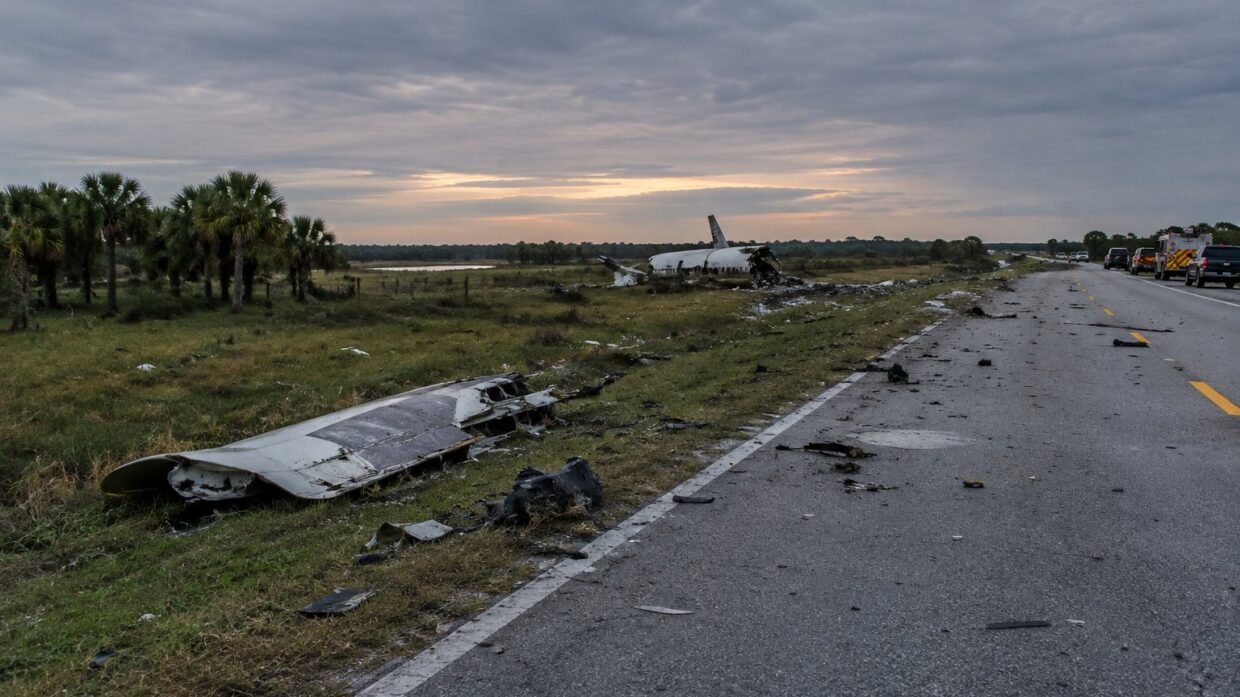
Photo: Well This Is News
Crashed Learjet's 20-year-old co-pilot remembered for her early love of flying
Pilot Prayed 'Our Father' on Doomed Learjet Co-Piloted by 20-Year-Old Woman
We haven't found a neutral take on this story yet.
Breaking stories sometimes publish before every side has covered them. We'd rather show you that than invent a view.
The Analysis
A Learjet crashed in Florida killing nine people, but the two major news outlets covering the story emphasize entirely different elements of the same event, revealing how editorial framing can direct reader attention toward grief and human interest on one side and spiritual drama on the other, while neither outlet addresses what witnesses or investigators may have established about why the aircraft went down.
The documented facts: a Learjet 60 crashed in Florida. Nine people died, including 20-year-old co-pilot Nathalia Gadelha Filgueiras. NBC News reports that the pilot was heard praying the Our Father during the flight. The aircraft struck a road. The names and circumstances of other passengers are not detailed in either source summary. The cause of the crash remains under investigation.
NBC News frames this as a human interest story centered on Filgueiras herself. The headline emphasizes her identity as a 20-year-old and her "early love of flying." The reporting focuses on the mourning process in her Boca Raton neighborhood, the reactions of friends and family, and her personal passion for aviation. This framing converts a transportation accident into a narrative about a young person cut short at the beginning of her career. The language choices, "remembered for" and focus on her neighborhood and family gathering, orient the story toward emotional resonance and biographical detail. What this framing does not address: the circumstances of the crash, the pilot's actions during the emergency, technical factors, or any substantive information about what occurred at 35,000 feet or what caused the descent.
Breitbart's headline centers on an entirely different detail: the pilot's prayer. The framing emphasizes "Prayed 'Our Father'" and places the co-pilot's age and gender in the predicate rather than the headline. By titling the piece around the prayer moment, Breitbart signals to readers that the spiritual element of the final moments is the story's primary significance. The language "doomed Learjet" and "hit like a missile" (from the summary) emphasize the violence of impact and create dramatic stakes. This framing invites a reading centered on human faith in extremity. What this framing leaves out: any technical explanation, any indication of what the pilot was doing to address the emergency, or any factual reporting about the crash sequence itself.
Neither outlet foregrounds the most pressing informational question: why did the aircraft go down? The available reporting does not establish whether the crash was caused by mechanical failure, pilot error, weather, medical emergency, or another factor. Neither source addresses whether there were warning signs, whether the crew made radio communications about the emergency, or what instruments or procedures were available to them. Neither outlet reports on the other eight fatalities or identifies them. The summaries provided do not establish whether any safety investigation has been initiated or what its preliminary findings might be.
The left framing converts the story into a coming-of-age tragedy. The right framing converts it into a spiritual narrative. Both editorialize through what they emphasize and what they omit, but neither provides the factual foundation a reader would need to understand what actually happened or why it matters beyond the human cost. A reader encountering only these two framings would leave knowing that a young woman died in a crash and that the pilot prayed, but nothing about aviation safety, aircraft systems, or the mechanisms of the accident itself.
Aviation crashes demand investigation into mechanical and human factors because they reveal systemic vulnerabilities that affect thousands of future passengers. By framing this Learjet disaster solely through grief or spiritual drama, neither outlet addresses what investigators need to determine: whether mechanical failure, pilot error, weather conditions, or crew incapacity caused the descent, and whether similar aircraft face unrecognized hazards. The Federal Aviation Administration's safety protocols depend on detailed public reporting of crash sequences, warning signs, and crew actions during emergencies. When media outlets treat aviation accidents as human interest narratives rather than technical events, they obscure the information that prevents recurrence. Nine deaths in this crash represent a failure that must be understood structurally, not sentimentally, if the same failure is to be prevented on the next Learjet carrying passengers.