Photo: Well This Is News
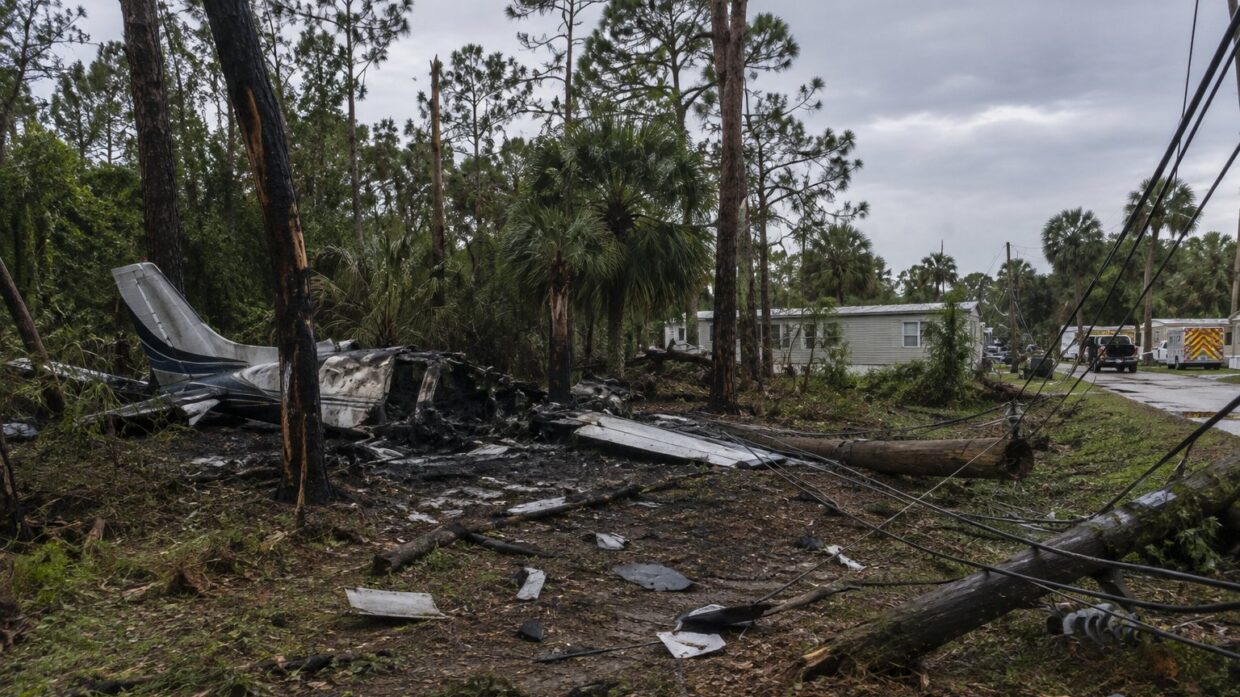
Private jet nosedives into fireball near residential area in South Florida
Pilot's mayday call precedes jet fireball crash near Mar-a-Lago
We haven't found a neutral take on this story yet.
Breaking stories sometimes publish before every side has covered them. We'd rather show you that than invent a view.
The Analysis
A Learjet 60 carrying nine people crashed near a mobile home park in South Florida on Sunday around 1:00 p.m. ET, with all aboard killed. The aircraft departed Austin, Texas bound for the Bahamas, struck trees and power lines, then erupted into a fireball. U.S. Transportation Secretary Duffy confirmed the fatalities. The specific cause remains under investigation by federal authorities. What differs sharply between coverage is not the facts of the crash itself but the framing of its significance and location.
NPR frames this as a crash that "nosedives" into a "busy roadway" in a "Florida neighborhood," emphasizing the proximity to residential areas and using language that suggests sudden, catastrophic failure. The network leads with the location's populated character, implying a public safety dimension. The word "neighborhood" invokes proximity to homes; "busy roadway" suggests traffic and bystanders. These choices direct attention toward the risk posed to civilians, not merely those aboard the aircraft.
The Daily Wire emphasizes the pilot's mayday call as "haunting" and leads with the aircraft's monetary value at $2 million. It also specifically names the proximity to Mar-a-Lago, former President Trump's residence, as a notable detail worthy of the headline. This framing treats the crash as a dramatic human moment, captured in real time through the pilot's final radio transmission, while also anchoring the story to a geographically significant landmark. The Daily Wire's language choices invite readers to focus on the immediacy and personal element of the tragedy, combined with the location's political prominence.
What neither framing addresses is the baseline rate at which business jets experience accidents of this severity, or whether this incident represents an anomaly or a consistent risk pattern. The National Transportation Safety Board will eventually determine whether this involved mechanical failure, pilot error, weather, or structural issues. Neither outlet foregrounds what regulatory or procedural factors might have contributed. Neither discusses whether the aircraft's flight path, altitude, or approach differed from standard procedures for that airspace. The mayday call itself, which The Daily Wire emphasizes, remains unquoted in both reports, readers hear only that it existed and was "haunting," not what the pilot actually communicated about the emergency.
The left framing's emphasis on residential proximity serves an implicit safety narrative: private aviation poses risks to communities. The right framing's emphasis on the mayday call and the aircraft's value serves a drama narrative: this was a specific, documented emergency captured in real time, involving significant loss. Neither is false. Neither addresses the full technical picture.
The underlying question this accident raises is whether current airspace management, pilot qualification standards, or aircraft maintenance protocols require examination. That question sits beneath both frames, unaddressed by either. What makes this significant is not its location relative to a political figure's property, nor its occurrence near a neighborhood generically, but what the NTSB investigation reveals about systemic factors. Until that investigation concludes, both framings remain speculative about causation while treating the tragedy itself as confirmed fact.
Business jet accidents kill roughly 350 people annually in the U.S., yet media coverage typically spikes only when crashes occur near residential areas or politically connected locations. This incident will likely trigger renewed scrutiny of business aviation safety standards, pilot training requirements, and airspace management protocols only if the NTSB investigation identifies systemic failures rather than pilot error or mechanical anomaly. The actual regulatory consequence depends entirely on what federal investigators find, yet current framing by major outlets sidesteps this question entirely, instead competing over narrative significance based on geography and drama. Whether this crash catalyzes new safety measures or becomes forgotten depends on establishing whether existing oversight gaps contributed to the fatalities, not on proximity to neighborhoods or notable properties.