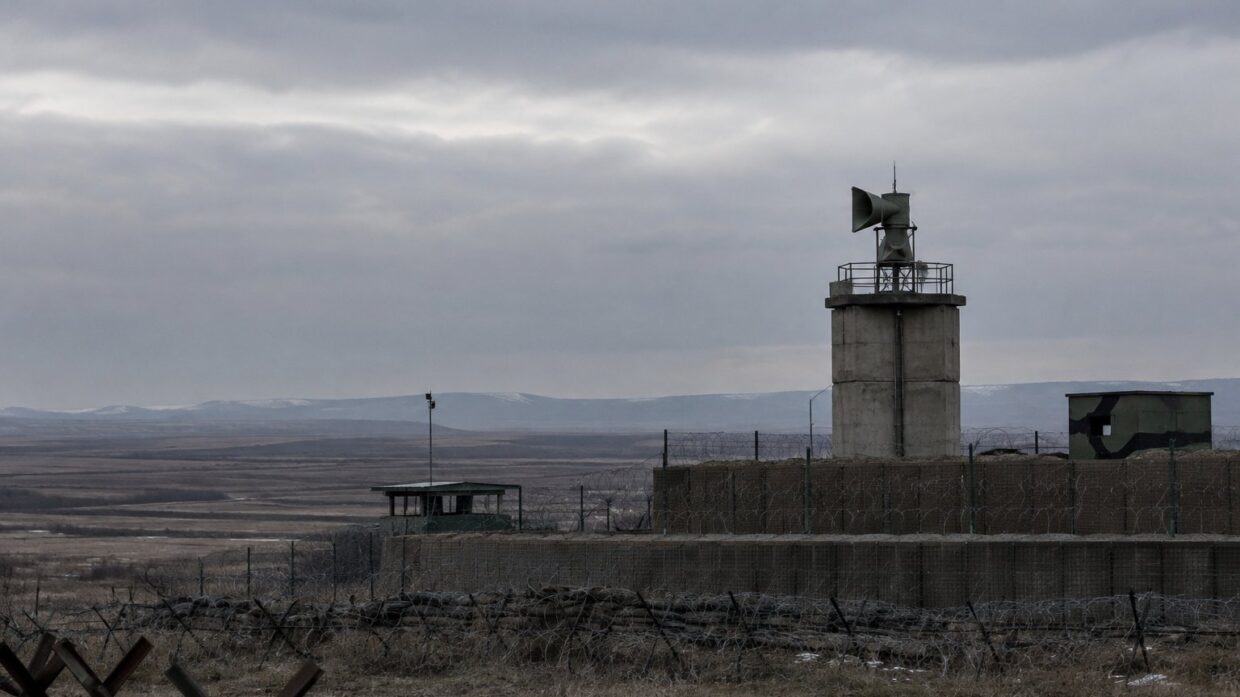
Photo: Well This Is News
North Korea prepares to restart propaganda loudspeakers as ties sour with South
We haven't found a right-leaning take on this story yet.
Breaking stories sometimes publish before every side has covered them. We'd rather show you that than invent a view.
North Korea says propaganda loudspeakers will be operational within days along heavily militarized border
Key Takeaways
- South Korea resumed its own loudspeaker broadcasts first in response to the September landmine incident, and North Korea's announcement appears to follow that resumption rather than initiate the escalation cycle.
- The 2018 inter-Korean military agreement explicitly required both countries to dismantle propaganda loudspeakers, making the question whether either side is withdrawing from that joint accord rather than whether one is simply escalating.
- Kim Yo-jong's statement about loudspeaker readiness within days does not clarify whether this is a definitive decision or a conditional threat dependent on further South Korean actions.
The Analysis
North Korea announced plans to restart propaganda loudspeakers along its border with South Korea within days, but neither the left nor right framing acknowledges the specific diplomatic history that makes this move significant rather than shocking.
The announcement came from Kim Yo-jong during an inspection of border fortifications, according to reporting from The Guardian, NPR, and Bloomberg. She stated the loudspeakers would be operational across the entire demilitarized zone border. The timing follows a September incident in which three South Korean soldiers were injured by a landmine in the area, according to Bloomberg's report. The loudspeakers themselves were last operational in 2015 before both countries agreed to dismantle them in 2018 as part of a broader diplomatic thaw that included Kim Jong-un's first direct talks with a U.S. president.
The Guardian frames this as part of "souring ties" and emphasizes Kim Yo-jong's role as a "powerful" figure, suggesting deliberate escalation by the North Korean leadership. The language emphasizes psychological warfare and the resumption of a campaign, positioning North Korea as the aggressor in a deteriorating relationship. NPR similarly describes this as a revival of a psychological warfare tactic. Both framings lead with the threat dimension and treat the announcement as a unilateral escalation.
Bloomberg's framing is more restrained. It mentions the loudspeakers will be ready and notes the context of the September landmine incident, but avoids attributing motive or interpreting the announcement as escalation. It presents the facts without the interpretive frame of souring relations or deliberate psychological warfare.
What neither framing adequately addresses is the 2018 agreement context. North Korea and South Korea jointly agreed to dismantle propaganda loudspeaker systems as part of the inter-Korean military agreement signed in September 2018. That agreement explicitly called for the removal of loudspeakers, broadcasting equipment, and other psychological warfare tools along the entire border. The 2018 agreement also suspended military exercises and established buffer zones. The relevant question is not whether North Korea is escalating, but whether it is withdrawing from or threatening to withdraw from the 2018 agreement.
The September landmine incident appears to have been triggered by North Korean mines drifting across the border following heavy rains, according to reports not emphasized in these sources. South Korea responded by resuming loudspeaker broadcasts of its own in kind. North Korea's announcement of intent to restart its loudspeakers appears to follow South Korea's resumption, not precede it. The sequence of events matters for determining who initiated the escalation cycle.
Neither the left nor neutral framings establish whether Kim Yo-jong's statement represents a definitive decision or a threat conditional on further South Korean action. Both treat the announcement as imminent operational reality. The actual timeline and conditions for activation remain unconfirmed in the available reporting.
The underlying question is whether this represents a sustained rupture of the 2018 agreement or a tactical escalation following specific provocations. The left framing treats it as evidence of deteriorating relations broadly. The neutral framing treats it as a response to the landmine incident. The actual record shows South Korea resumed broadcasting first following the September incident, which the available reporting does not foreground equally.
North Korea's loudspeaker resumption signals potential collapse of the 2018 inter-Korean military agreement that banned psychological warfare tools along the entire demilitarized zone. That agreement represented the most significant arms control arrangement on the peninsula in decades, establishing mutual commitments to reduce provocations and create buffer zones. If North Korea formally withdraws from this pact, it removes institutional constraints on escalation tactics that both countries voluntarily accepted. South Korea's own loudspeaker resumption following September's landmine incident triggered this cycle, yet reporting obscures that sequence. The technical question of whether this constitutes agreement violation or conditional response determines whether diplomatic channels remain viable or whether the peninsula enters a new phase where agreed-upon restraints no longer function. The 2018 framework collapse would eliminate formal mechanisms designed specifically to prevent the kind of rapid tit-for-tat escalations that historically precede military incidents.