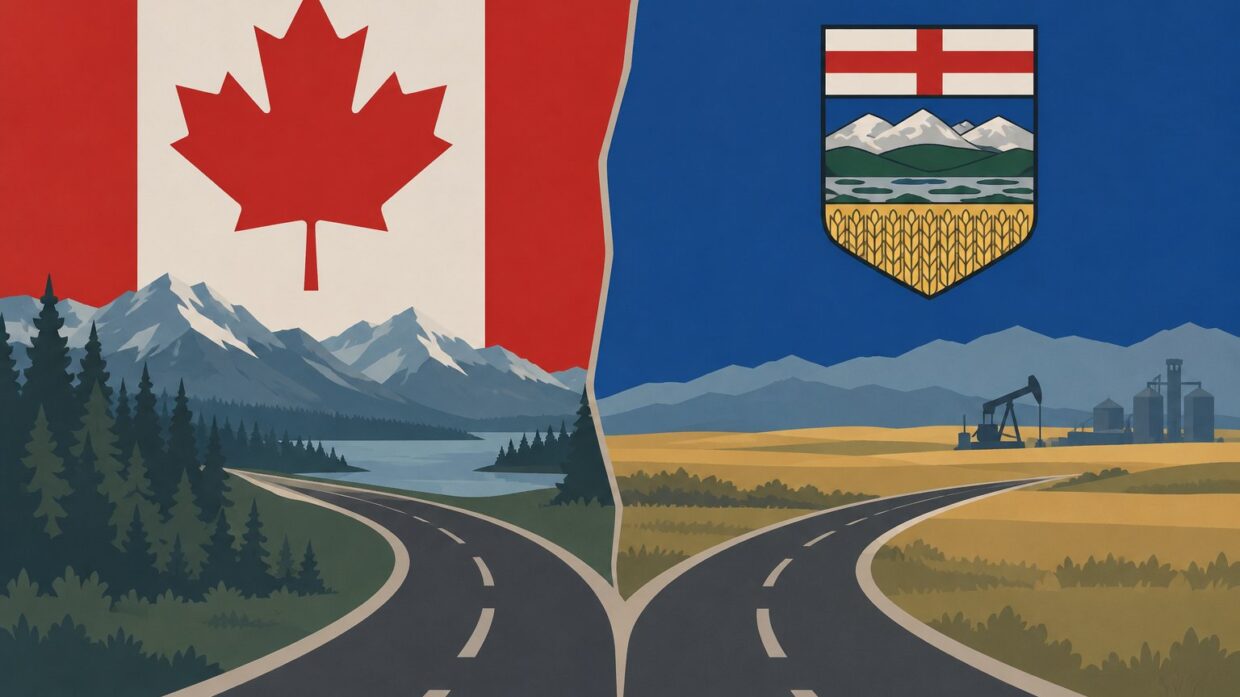
Photo: Well This Is News
Alberta rejects separation: Referendum exposes deep fractures within independence movement
We haven't found a right-leaning take on this story yet.
Breaking stories sometimes publish before every side has covered them. We'd rather show you that than invent a view.
Alberta voters reject independence in referendum, separatists pledge to continue campaign
Key Takeaways
- Separatist groups have not explained what specific conditions or grievances they believe will shift voter sentiment toward independence in a future referendum.
- A 32% pro-independence vote could represent either a foundation for future organizing or evidence of a movement in terminal decline, but available reporting does not establish which.
- Premier Smith's gamble to settle the independence question through a referendum succeeded in rejecting separation but did not eliminate the political forces driving the separatist movement.
The Analysis
Premier Danielle Smith called a referendum on Alberta independence intending to settle the question, yet 68 percent of voters chose to remain in Canada, and separatist groups immediately declared the fight would continue. What the reported results do not immediately clarify is whether this represents a conclusive rejection of independence or a temporary setback in a longer political cycle.
The documented facts are straightforward: Alberta held a non-binding referendum on separation from Canada. Bloomberg reports that 68 percent voted to stay. The Guardian emphasizes that the vote "exposed deep divisions within the province, not least in the separatist movement itself." This is the key detail neither outlet has fully unpacked. A movement that cannot speak with one voice to a provincial electorate faces a credibility problem, particularly when that electorate has just voted against its central demand.
The left framing, through The Guardian's language of "exposed divisions," implies that separatism was already fractured and the referendum simply made that fracture visible to everyone else. This narrative emphasizes the internal weakness of the independence movement, treating the vote as evidence of fundamental organizational and ideological incoherence. The Guardian's choice to lead with division rather than the numerical outcome suggests an interpretation: the referendum did not just defeat separatism in Alberta; it revealed that separatism in Alberta was never unified enough to mount a credible campaign. That framing leaves out whether those divisions are recent or long-standing, whether they reflect genuine ideological disagreement or tactical disputes about timing and strategy, or whether the separatist groups have any coherent response to the loss.
The center framing, through Bloomberg, emphasizes the numerical outcome (68 percent for Canada) and the immediate separatist response (vowing to fight on). This is the bare fact structure: result plus reaction. Bloomberg does not assess the strength or weakness of that vow to continue. It does not evaluate whether a 32 percent pro-independence vote constitutes a foundation for future organizing or evidence of a political movement in terminal decline. It simply reports both the outcome and the stated intention to persist.
What neither framing directly addresses is the strategic question Smith's call for the referendum implicitly raises: if a separatist movement cannot persuade a significant majority of Albertans to support independence, and if its own internal divisions are profound enough to be visible to the national press, what conditions would need to change for the movement to succeed in a future referendum? The reporting does not establish whether separatist leaders have identified specific grievances they believe can shift voter sentiment, or whether they are relying on demographic change, economic crisis, or federal actions they expect will alter Albertan sentiment over time.
The underlying political reality is that Smith gambled that a referendum would settle the independence question in her favor as a unionist. The vote did reject separation decisively. But "vowing to fight on" is not the same as announcing a strategy. The left emphasizes division to suggest the movement is already broken. The center simply records what happened and what separatists said next. Neither asks the question that matters most: how does a movement with internal fractures and a 32 percent base rebuild toward a second referendum it might actually win?
Premier Smith's referendum strategy backfired by creating institutional permission for indefinite separatist organizing. A 68 percent rejection should have settled Alberta's constitutional status through democratic procedure, but separatist groups' immediate vow to continue campaigning, combined with visible internal fractures the vote exposed, signals that Smith's gambit actually legitimized independence as a recurring political demand rather than extinguishing it. Future Alberta governments cannot now dismiss separatism as fringe without appearing to ignore a democratic expression of grievance from nearly one-third of voters. The referendum converted what might have been a marginal movement into one with documented electoral standing and a roadmap for regrouping. Smith sought closure; she accelerated institutionalization.