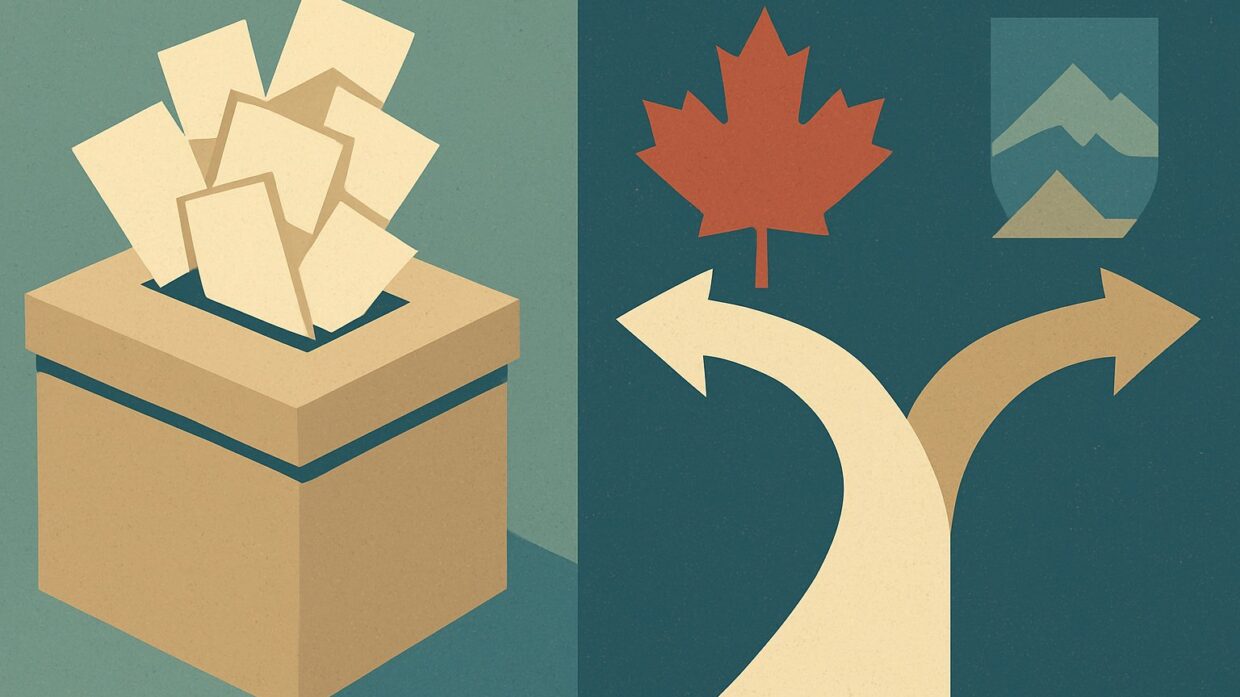
Photo: Well This Is News
Carney Makes Final Case Against Alberta Separation as Sovereignty Concerns Mount
We haven't found a right-leaning take on this story yet.
Breaking stories sometimes publish before every side has covered them. We'd rather show you that than invent a view.
Alberta Separation Referendum Draws Over 1 Million Early Votes as Carney Warns Against Independence
Key Takeaways
- The reporting does not clarify whether Alberta's referendum is advisory or constitutionally binding, or what specific constitutional pathway would enable Alberta to separate if voters support it.
- Neither the left-aligned nor right-aligned coverage explains what policy disputes, resource conflicts, or federal decisions have actually driven Alberta's independence movement, leaving the referendum's underlying causes unexplored.
- Canadian constitutional law requires federal parliament to authorize any separation referendum, but the coverage does not establish whether this vote follows established legal frameworks like the Clarity Act or what circumstances would obligate the federal government to act on a separation vote if it passes.
The Analysis
Alberta's separation referendum has crossed into active voting with over 1 million early ballots cast, forcing a direct confrontation between federal authority and regional secession sentiment. Prime Minister Mark Carney's Friday appeal invoked "growing threats to Canada's sovereignty," a framing that redefines the referendum from a domestic policy question into a national security issue. The timing, scope, and language of his intervention reveal what each side is choosing to emphasize and what each is leaving unexamined.
The factual record establishes several things the reporting confirms: the early vote count exceeds 1 million ballots in a province with approximately 2.7 million eligible voters, suggesting turnout patterns well above historical averages for provincial referenda. Carney used the phrase "dangerous gamble" to describe the separation option and explicitly connected Alberta's vote to external threats to Canadian sovereignty, though the reporting does not specify which threats he referenced. Bloomberg's coverage notes that pollsters interpret high early turnout as favoring the "remain" side, but does not cite the specific polling organizations or their internal methodologies. NBC's reporting emphasizes Carney's national security framing but does not report the substance of the independence campaign's counter-argument or how the separation movement has characterized the referendum.
The left-aligned framing, represented by NBC's emphasis on Carney's warning and the sovereignty language, treats the referendum as a threat to be averted through executive intervention. By opening with Carney's appeal and the sovereignty warning, this framing positions the federal government as defender of an endangered national interest. It does not examine what specific grievances drive Alberta separatism, what policy differences motivate the independence movement, or what the separation campaign claims about provincial economic capacity or resource control. The omission of the independence side's stated case makes the referendum appear to be an irrational impulse rather than a coherent political movement with articulated demands.
The right-aligned perspective is not represented in the available sources. A full right-leaning analysis would presumably emphasize provincial autonomy arguments, Alberta's resource wealth and fiscal capacity, disputes over federal resource management or environmental regulation, or the legitimacy of referenda as democratic tools. Without sourced material from that perspective, this analysis cannot complete that framing.
What neither side foregrounds is the constitutional and procedural history. Canadian constitutional law requires federal parliament to authorize any referendum on secession; Alberta cannot unilaterally hold a binding separation vote. The reporting does not establish whether this referendum is advisory, constitutionally binding, or what specific circumstances would trigger federal action if separation were to win. It does not clarify whether the referendum follows the Clarity Act framework established after Quebec's 1995 separation crisis, or how recent federal-provincial disputes over energy policy, equalization payments, or environmental regulation have shaped Alberta's independence movement. The underlying question is not whether Albertans want to separate, but what specific constitutional pathway exists for that separation and under what circumstances the federal government has committed to recognizing the result.
If this referendum produces a pro-separation majority, it will force Canada into its first post-1995 constitutional crisis over secession, potentially requiring Parliament to invoke the Clarity Act framework or risk establishing precedent that provincial referenda can compel federal negotiation without explicit constitutional authorization. The early vote surge suggests turnout exceeding 65 percent, transforming what might have been dismissed as fringe protest into a binding political mandate that federal officials cannot ignore through administrative delay. Carney's national security language signals the government is already preparing a confrontational posture rather than a negotiation framework, meaning the result could trigger not compromise but institutional gridlock between Edmonton and Ottawa over resource control, debt allocation, and the terms of dissolution itself.