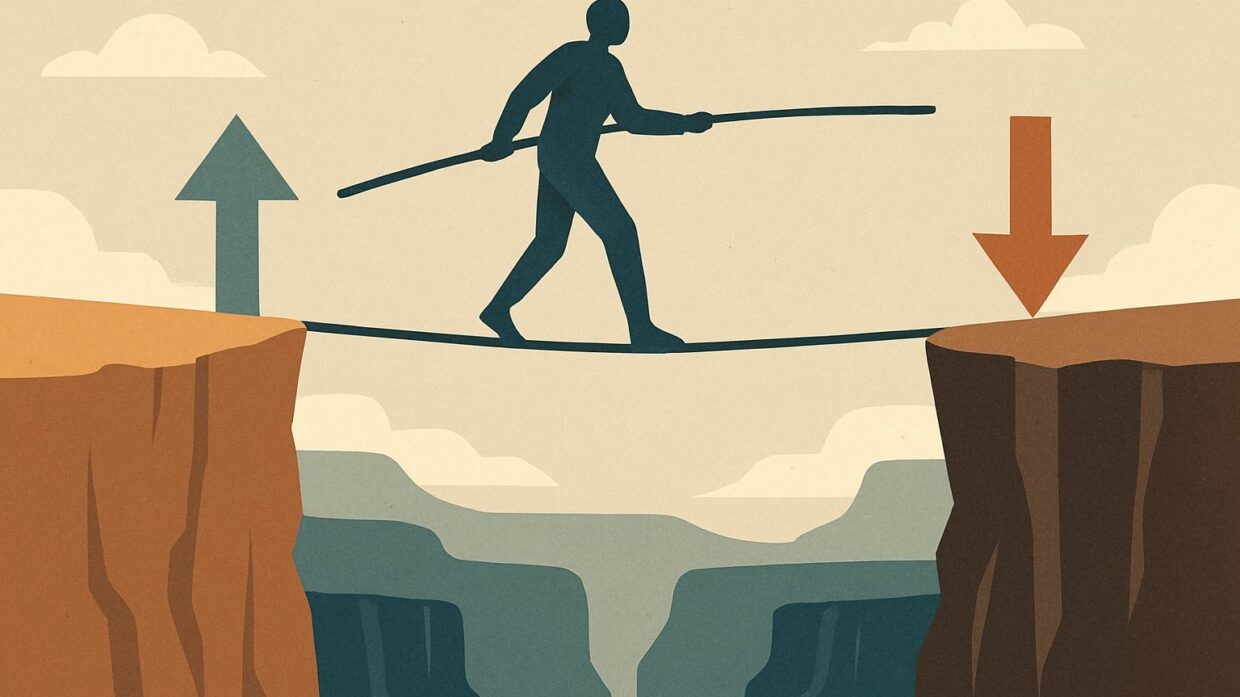
Photo: Well This Is News
Fed signals readiness to fight inflation as hot price data fuels rate hike expectations
We haven't found a right-leaning take on this story yet.
Breaking stories sometimes publish before every side has covered them. We'd rather show you that than invent a view.
We haven't found a neutral take on this story yet.
Breaking stories sometimes publish before every side has covered them. We'd rather show you that than invent a view.
The Analysis
Kevin Warsh delivered a carefully calibrated non-answer to the market's most pressing question: when will the Federal Reserve raise interest rates again? Speaking Thursday night while most Americans were not watching, the Fed Chair acknowledged inflation remains a priority while explicitly declining to signal the timing of the next move, according to MarketWatch's account. That silence itself is meaningful.
The documented facts are these: Warsh stated the Fed is focused on taming rising prices, but offered no guidance on rate timing. Two inflation reports arrived during the week of his speech, with the PPI reading coming in hotter than expected, according to CNBC's report of economist reactions. Brokerages and Fed watchers have now moved their probability estimates upward, with some now expecting a December rate increase, as reported by multiple outlets covering the Thursday speech and subsequent market reaction.
The left-leaning framing, present in NBC's coverage, emphasizes that "inflation remains the Fed's focus" and notes that hot inflation data this week "set the stage for a rate hike potentially sooner than previously expected." This framing makes two moves: it highlights the Fed's resolve to address price pressures, and it treats the recent inflation reports as the primary driver of expectations. What this framing does not foreground is why the Fed Chair would decline to signal timing if inflation pressure truly warrants an imminent hike. The silence itself contradicts the inference that a hike is coming soon.
A right-leaning perspective is not clearly available in the sources provided. Conservative outlets often frame Fed rate increases as necessary corrections to excessive stimulus and would likely emphasize the persistence of inflation despite previous hikes. However, the specific coverage offered here does not capture that argument with sufficient clarity to construct a distinct right-leaning summary.
What neither the left nor the center framing fully captures is why Warsh chose non-disclosure. MarketWatch's headline explicitly notes this was consistent with his "practice of leaving markets guessing," suggesting this is a deliberate communication strategy, not an accidental omission. The economic implication matters: by declining to signal timing, Warsh keeps policy optionality open. The Fed retains flexibility to respond to data arriving between now and the meeting without contradicting prior guidance. The market consequence is distinct from the policy consequence. Markets hate uncertainty, and Warsh's refusal to resolve it may reflect a Fed that is genuinely undecided, or one that believes forward guidance is itself a form of policy tightening.
The underlying question is whether the Fed's silence indicates genuine uncertainty about the inflation trend, confidence that price pressures are moderating even if the PPI number looked warm, or a preference for data-dependent discretion. The sources do not establish which. What the record does show is that economists have now internalized enough price pressure to move their rate hike expectations forward, while the Fed Chair has not validated those expectations with explicit confirmation. That gap between market pricing and official guidance is the story neither side has fully articulated: a Fed Chair refusing to coordinate expectations with market participants, even when those participants have already priced in the scenario officials may have already decided upon.
Warsh's deliberate refusal to telegraph rate timing while hot inflation data circulates creates operational friction within the Fed's own communication apparatus. Markets have already repriced December rate-hike odds upward based on PPI readings, but the Chair will not confirm what traders have already bet. This breaks the post-2012 consensus that Fed chairs shape market expectations through forward guidance. If Warsh maintains this non-signaling posture through December, the Fed surrenders its ability to engineer orderly market adjustments before major decisions. Banks, pension funds, and investors will stop treating Fed communications as reliable anchors and instead trade on economic data directly, reintroducing volatility that explicit guidance was designed to prevent. The institutional cost is real: a Fed that cannot credibly guide markets loses half its policy transmission mechanism.