Photo: Well This Is News
Senate confirms Warsh as Fed chair despite concerns over rate cuts during inflation
Senate confirms Warsh as Fed chair, Trump's economic vision takes shape
Senate confirms Kevin Warsh as Federal Reserve chair in narrowest margin ever
Key Takeaways
- The 54-45 confirmation vote is the narrowest margin in Federal Reserve history and signals that the Senate now votes on Fed chairs along partisan lines rather than treating the position as above politics.
- The voting patterns have shifted dramatically: Warsh received only Republican support (except one Democrat), while Fed chairs decades ago received broad bipartisan approval with margins around 80-20 or higher.
- Both sides debated Warsh's policy merits while ignoring the larger institutional change that Congressional voting on monetary policy is no longer insulated from electoral politics.
The Analysis
Kevin Warsh was confirmed as Federal Reserve chair with a 54-45 vote, the narrowest confirmation margin in the institution's history, a fact both sides are using to tell opposite stories about what just happened. What neither is saying clearly: this vote margin itself is the story, and it signals a fundamental shift in how the Senate treats the central bank that is supposed to be insulated from electoral politics.
The facts first. Warsh received exactly 54 votes in favor, all but one Republican (Sen. John Fetterman of Pennsylvania broke ranks). He replaces Jerome Powell, whose term expired. Warsh previously served as a Federal Reserve governor under George W. Bush and later as chair of the Aspen Economic Strategy Group. The vote occurred on May 13, 2026. He officially takes office on May 15. The confirmation came after months of public pressure from President Donald Trump, who criticized Powell repeatedly for not lowering interest rates faster.
The left's framing centers on a single word choice: concern. NPR opened with the phrase 'there's room for the central bank to lower interest rates, but that could be challenging at a time of rising inflation.' The left is using Warsh's own position against him. By naming his stated view on rate cuts first, then immediately adding the inflation context, NPR creates a narrative of recklessness without saying so. What the left is quietly omitting: Warsh's specific inflation thesis, which relies on artificial intelligence driving productivity gains that he argues will be deflationary. By leaving out the mechanism, they leave out his actual argument.
The right's framing uses the phrase 'Trump's economic vision comes into focus,' which treats the confirmation as an endorsement of a coherent policy approach. The Daily Wire called it 'a big win for Trump.' What the right emphasizes: Warsh's 'reform mindset' and 'market experience.' What the right is quietly omitting: the partisan polarization evident in the 54-45 vote itself. This margin would have been unthinkable for a Fed chair nominee 20 years ago. The right presents this as a victory without naming the cost, which is the institutionalization of partisan voting on monetary policy.
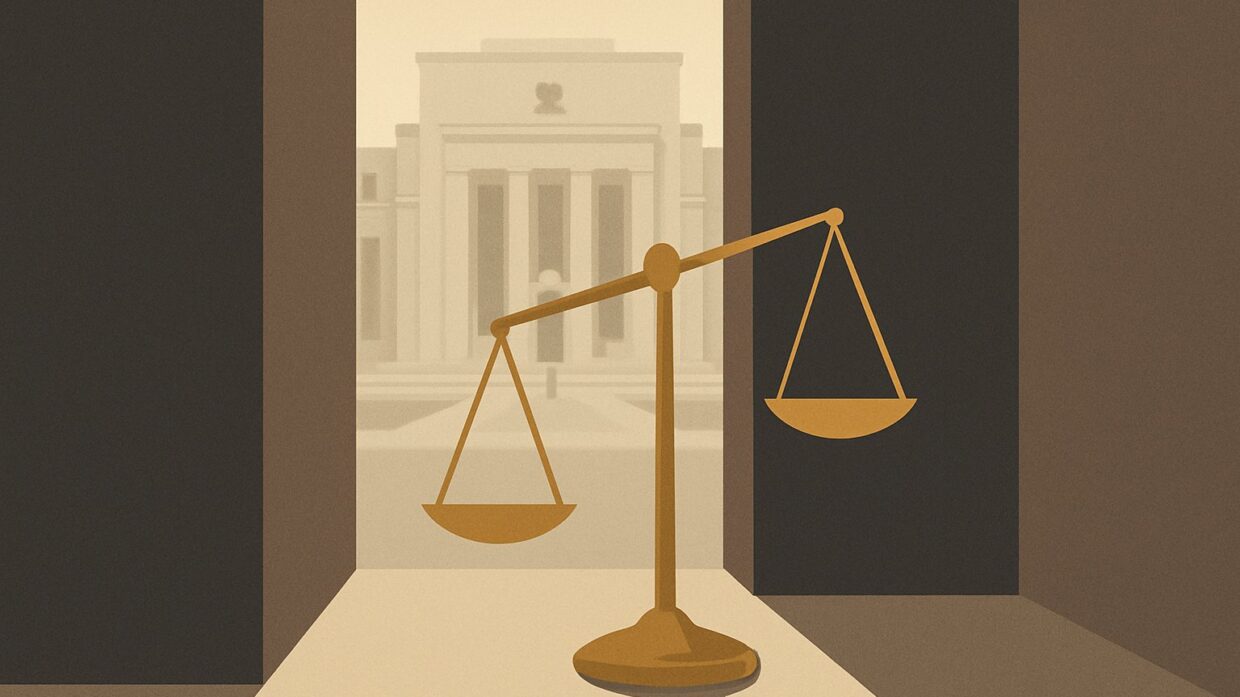
Neither side is naming the actual headline: the Federal Reserve's independence from electoral politics just died in plain sight. This 54-45 vote is not close because Warsh is uniquely controversial as a monetary policy expert. It is close because Trump campaigned on pressuring the Fed, the Senate voted largely along party lines, and both sides have now agreed that Fed chair confirmations are partisan votes. This is new. When Paul Volcker was reconfirmed in 1983, the vote was 88-12. When Alan Greenspan was confirmed in 2004, it was 78-21. When Ben Bernanke was reconfirmed in 2010, it was 63-37, and that was considered contentious.
A 54-45 vote for a Fed chair means Congress has stopped pretending the central bank operates outside politics. Warsh's actual policy positions on AI and productivity may be right or wrong, but they are now being voted on as Republican positions rather than as technical Federal Reserve doctrine. This vote did not confirm a central banker. It confirmed a political choice, with a margin that makes explicit what all parties were previously willing to leave implicit.
The Federal Reserve's institutional independence from electoral politics has collapsed, and the 54-45 confirmation vote itself is the evidence. When Fed chair nominees once received bipartisan supermajorities (Volcker won 88-12, Greenspan 78-21), confirming Warsh along party lines signals that monetary policy is now openly partisan territory. Congress has abandoned the pretense that central banking requires insulation from campaign politics. Future Fed chairs will be confirmed on razor-thin margins whenever a president's party lacks a filibuster-proof majority. Warsh's actual views on AI-driven deflation and rate policy are secondary to the fact that they are being voted as Republican positions rather than technical doctrine. This vote precedent means the central bank's credibility no longer rests on political independence but on which party controls the Senate.