Photo: Well This Is News
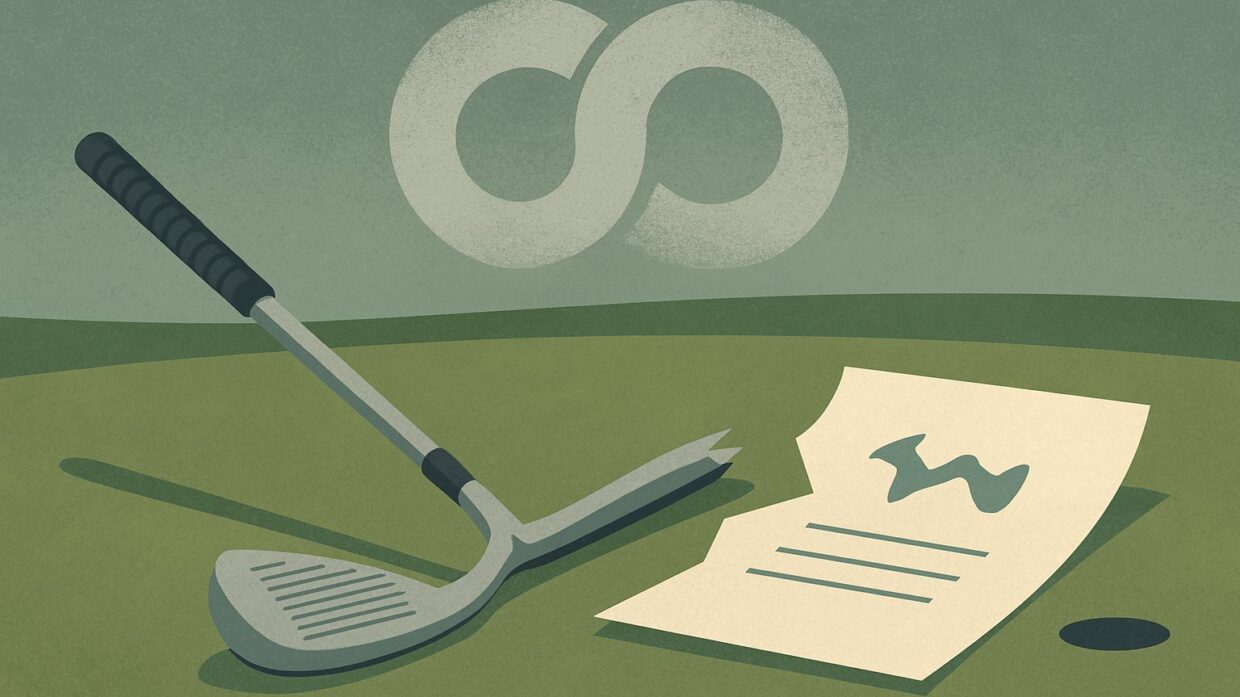
Callaway severs ties with golf brand after controversial ad sparks outrage
Callaway cuts ties with Good Good Golf after video ad backlash
Callaway ends Good Good Golf partnership after viral ad showing violence sparks backlash
Key Takeaways
- Neither Callaway nor Good Good Golf has explained whether they created the ad intentionally as satire or commentary, or whether they fundamentally miscalculated how audiences would receive it.
- Retailers and Golf Channel took action independently of Callaway's announcement, suggesting multiple pressure points drove the outcome rather than a single corporate decision.
- The three-year partnership's original business goals and whether either company anticipated backlash before public circulation remain completely undocumented in available reporting.
The Analysis
Callaway Golf terminated its three-year partnership with Good Good Golf after a commercial showing a male golfer physically shoving a female golfer generated widespread criticism across social media and prompted retail and media responses. The partnership dissolution marks the most concrete corporate consequence so far of the ad's circulation, though the specific sequence of events and the ad's original purpose remain partially obscured in reporting.
The documented facts are limited but verifiable. MarketWatch reports the ad depicted a male player shoving a female golfer to the ground after she attempted to use his driver. NBC News characterizes the response as outrage and describes it as "the worst ad known to man," attributing this description to public reaction rather than editorial judgment, though the attribution is imprecise. Callaway made the severance announcement on Thursday according to NBC's reporting. MarketWatch adds that retailers pulled gear and Golf Channel delayed programming, indicating consequences beyond the partnership dissolution, though neither source provides retailer names or the specific Golf Channel show affected.
NBC's framing emphasizes the ad's role in sparking "outrage" and emphasizes reputational damage to both companies. The phrase "controversial ad" appears in the headline and is repeated in coverage, but the network does not provide the ad's original business rationale or when it was created. This framing invites readers to view the partnership termination as a moral correction in response to public pressure, which is consistent with how corporate responses to viral criticism are typically covered. What this framing leaves out is whether the ad was meant as satire or commentary on golf culture, what Good Good Golf's intended audience was, or whether the companies anticipated negative reaction before the public backlash began.
Breitbart's framing emphasizes the "backlash" without the language of outrage. The headline names both companies equally and describes a "firestorm online," using terminology consistent with viral circulation rather than moral judgment. Breitbart's summary is shorter and does not characterize the public response as clearly negative in tone. This framing is more neutral in attribution but also provides less detail about the ad's content or the consequences. Neither source explains what Good Good Golf's typical content consists of or whether this ad represented a departure from their usual format.
What neither side addresses directly is why Callaway partnered with Good Good Golf in the first place or what the partnership was designed to accomplish. MarketWatch mentions it was a three-year partnership but does not specify when it began or what promotional or content goals it served. Neither source quotes either Callaway or Good Good Golf explaining their original business reasoning or their responses to the backlash beyond the termination statement. The absence of internal commentary means the public record does not establish whether either company viewed the ad as an error in execution or a fundamental misalignment in values.
The underlying question is whether this represents a standard corporate risk-management response to viral criticism or whether it reflects genuine strategic miscalculation. The available reporting suggests Callaway and Good Good Golf faced cumulative pressure from retailers, media platforms, and social circulation simultaneously, but the timing and relative weight of each pressure point remain unclear. A reader encountering only these headlines learns that an ad caused enough damage to end a partnership but not why the companies believed that outcome was preferable to attempting to contextualize or defend the ad.
Corporate partnerships now face instantaneous dissolution risk from viral social media reactions, regardless of original intent or context. Callaway's termination of its Good Good Golf deal establishes a precedent where a single controversial advertisement can trigger coordinated retailer action and media platform responses that make partnership continuation untenable within days. This compressed decision-making cycle effectively transfers content moderation authority from brand strategists to viral audience sentiment, meaning companies must now preemptively assume their sponsored content will circulate beyond intended audiences and face judgment divorced from creation context. The Golf Channel's programming delays alongside retailer pullouts demonstrate that reputational cascades no longer require mainstream media initiation but rather consolidate around whatever narrative gains momentum first, forcing corporate decision-makers to align with that momentum rather than contest it.