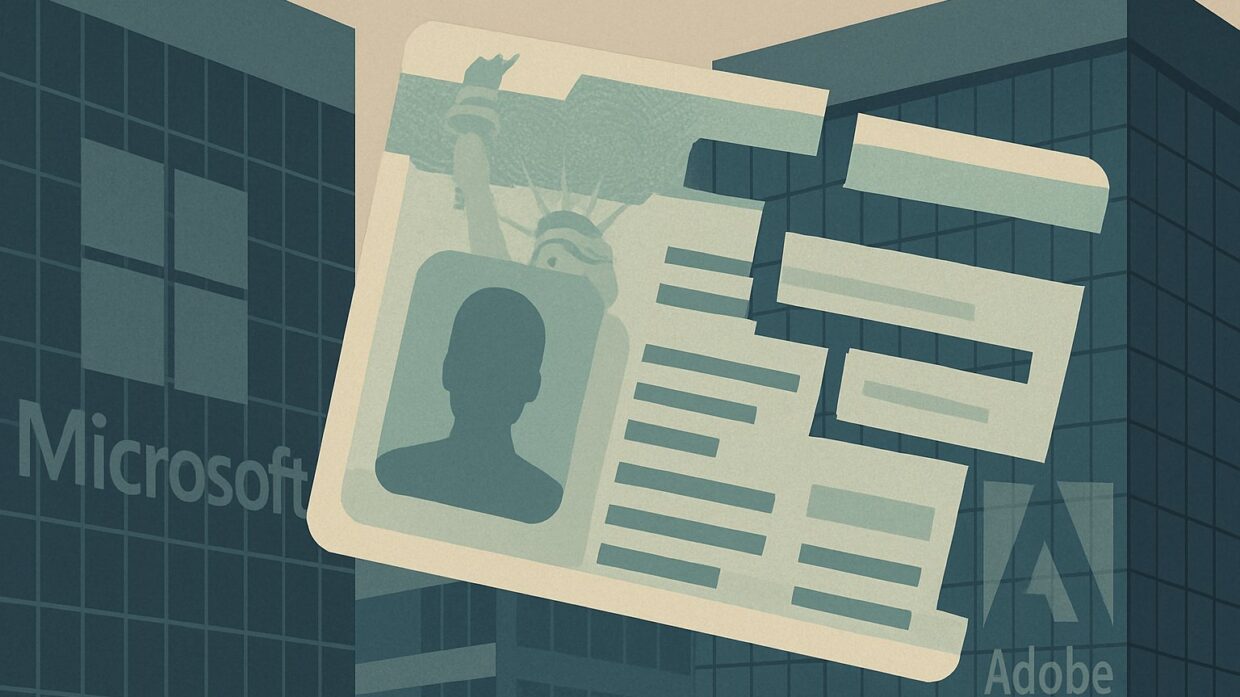
Photo: Well This Is News
Trump targets Big Tech: Microsoft suspended from visa program in latest worker crackdown
Trump administration cracks down on tech firms abusing H-1B visa loopholes
Trump administration suspends Microsoft, Adobe from green card visa program, citing fraud concerns
Key Takeaways
- The Trump administration has not publicly disclosed the specific evidence, documents, or hiring practices that led it to accuse Microsoft, Adobe, and other firms of fraud in their green card sponsorship activities.
- The suspension targets permanent residency sponsorship programs like EB-3, not the temporary H-1B visa program, but news coverage often conflates the two visa types and does not explain how the restrictions affect different labor functions.
- The administration has not clarified whether the indefinite suspension is pending an investigation with a potential pathway to reinstatement, or a permanent enforcement action that bars the companies from sponsoring any foreign workers for permanent residency.
The Analysis
The Trump administration suspended Microsoft, Adobe, and other tech firms from a green card sponsorship program on October 8, citing fraud allegations. Vice President JD Vance announced the indefinite suspension, specifically accusing the companies of abusing the EB-3 and related visa categories. The public record does not yet disclose the specific evidence of fraud, what form that abuse allegedly took, or how the administration identified these particular firms rather than others in the sector.
The left frame emphasizes this as a continuation of Trump's restrictive immigration stance, with outlets highlighting that even some Republicans like Senator Roger Marshall defend H-1B pathways as necessary for innovation and talent acquisition. The HuffPost framing presents Marshall's support as politically courageous given his party's shift, focusing on the vulnerability of defending worker visas in a Trump-era Republican party. That frame leaves out the distinction between H-1B temporary worker visas and green card permanent residency sponsorship, collapsing two separate visa mechanisms into a single narrative about "worker visas." It also does not foreground what specific hiring practices prompted the fraud allegation, allowing readers to assume the crackdown is primarily ideological rather than compliance-based.
The right frame emphasizes the administration's enforcement authority and the long-standing criticism that H-1B and related programs have been used to displace American workers or undercut wages. Axios and other outlets in this zone use language like "crackdown" and note that the suspension "affects hundreds of companies," suggesting the scope extends beyond the named firms. That framing prioritizes the premise that fraud or abuse occurred without establishing what evidence the administration possesses. It also does not address whether temporary visa programs and permanent residency sponsorship serve different labor market functions, or whether suspending green card eligibility creates different workforce pressures than restricting temporary visa allocations.
What neither framing fully captures is the operational distinction between the H-1B temporary worker program, which allows companies to sponsor foreign nationals for three-year work visas, and green card sponsorship programs like EB-3, which are pathways to permanent residency. The left and right frames often use "H-1B" as shorthand for all foreign worker programs, obscuring that the suspension targets permanent residency applications, not temporary visa issuance. Bloomberg reports the companies were suspended from "a longstanding immigration initiative that's served as a crucial talent pipeline," but the reporting does not establish whether this suspension prevents new green card applications, revokes existing pending applications, or suspends the companies' ability to sponsor any foreign workers for permanent status.
The available record also does not establish whether the fraud allegations stem from hiring practices specific to these firms, wage-level reporting discrepancies, or violations of residency requirements tied to the green card sponsorship process. The administration has not named the specific firms beyond Microsoft and Adobe as of the reporting date, and the claim that the suspension affects "hundreds of companies" appears to refer to subsidiaries or related entities rather than separate firms. That distinction matters for assessing the actual scope of the action.
One unresolved question is whether the suspension is indefinite pending investigation, or indefinite as a permanent enforcement action. The available coverage does not clarify the distinction or establish a potential pathway for the companies to regain eligibility.
This suspension reshapes the permanent residency pathway for tech workers by converting green card sponsorship into a compliance liability rather than a routine staffing mechanism. If the suspension remains indefinite without transparent fraud findings, Microsoft and Adobe cannot sponsor new applicants for EB-3 permanent residency, forcing them to rely exclusively on temporary H-1B visas for foreign talent or redirect hiring entirely. The cascading effect extends to workers with pending applications who face years of additional uncertainty. Without public disclosure of what specific fraud prompted this action, other tech employers now face enforcement risk from an undefined standard, incentivizing them to reduce foreign worker reliance regardless of actual compliance violations. The distinction between temporary visa restrictions and permanent residency bans matters operationally because it eliminates a key retention tool: companies cannot transition high-performing temporary visa holders into permanent status, fundamentally altering tech sector talent acquisition strategies and creating upstream pressure on which roles get filled domestically versus outsourced.