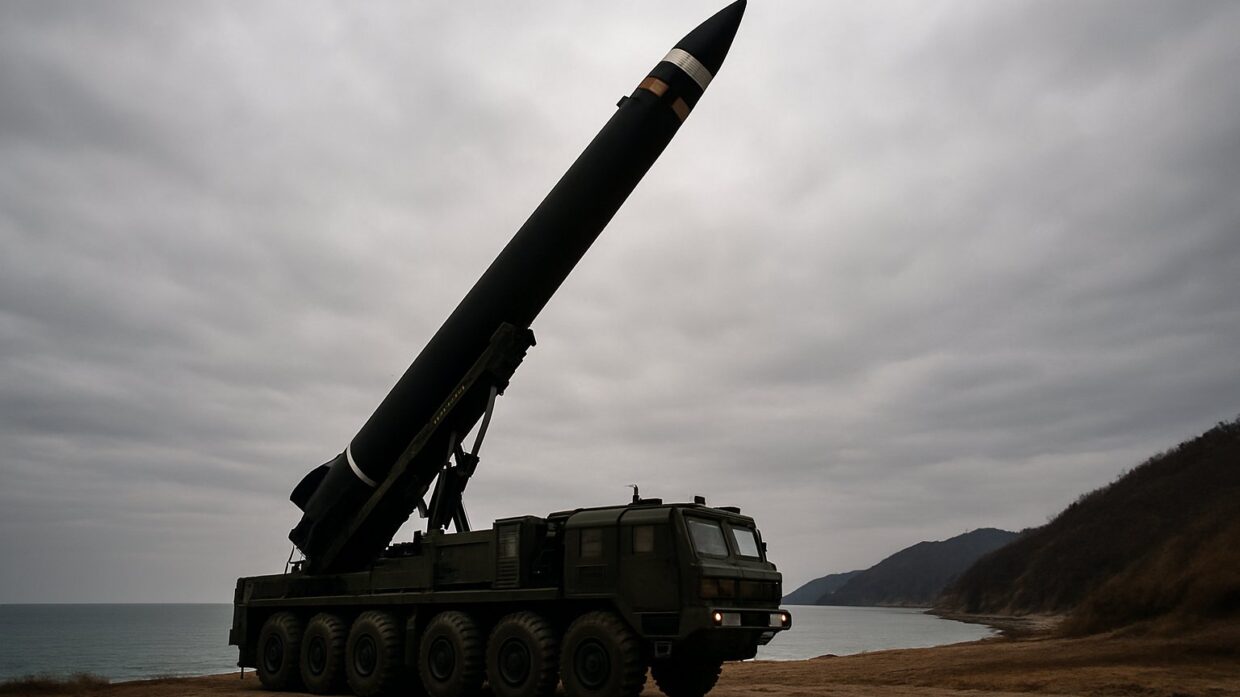
Photo: Well This Is News
North Korea Launches Missile in Defiant Response to Seoul's Mine Accusations
North Korea Test-Fires Ballistic Missile Amid Wider Regional Instability and POW Transfer Revelations
North Korea Fires Ballistic Missile as Border Tensions Escalate Over Landmine Incident
Key Takeaways
- The sequence and timing of the landmine incident, North Korea's denial, and the ballistic missile test are documented, but no reporting has established whether these events are causally connected or coincidentally timed.
- South Korea's internal political response to the Ukraine disclosure of North Korean troops may have influenced how Seoul handled the DMZ border incident, but this connection remains unexplained in available reporting.
- The fundamental question of whether North Korea's missile test was a calculated response to accusations, a routine exercise, or part of broader military mobilization involving the Ukraine troop transfer has not been answered by either side.
The Analysis
North Korea fired a ballistic missile toward its east coast on Saturday, South Korea's defense ministry confirmed, escalating a border dispute that began with allegations of landmine injuries but appears to involve a more complex set of regional pressures and information control issues. What the competing framings do not adequately disclose is the relationship between the immediate landmine incident, North Korea's military posturing, and the parallel controversy over North Korean troops in Ukraine that appears to have triggered South Korea's internal political conflict.
The sequence of events is documented: South Korean soldiers were wounded by mines near the DMZ in late September. Seoul attributed those mines to North Korea. Pyongyang rejected the accusation. One day after Kim Jong-un's sister made a public statement denying responsibility, North Korea conducted a ballistic missile test. That test is the event being reported. The verified facts are: a missile was launched, it traveled toward the east coast, South Korea and Japan detected it, and the timing followed Seoul's accusations.
The Guardian's framing emphasizes North Korea's defiance and rejection of South Korean claims, presenting the missile launch as a direct response to the accusation and apology demand. The language "after Seoul demands apology" places North Korea in a reactive posture, responding to Seoul's initiative. This framing leaves out the parallel story: that South Korea's opposition leader Lee Jae-myung threatened Ukraine with consequences if it did not apologize for exposing that North Korean troops had been transferred abroad. The Guardian does not address whether the landmine incident itself might be connected to broader North Korean military mobilization or whether the troop transfer allegations complicated Seoul's response to the border incident.
Breitbart's framing inverts the causality entirely, presenting the North Korean missile test as secondary to what it describes as South Korea's threat against Ukraine. The headline emphasizes Lee Jae-myung's accusation that Ukraine made him appear to be a liar by revealing information about North Korean POW transfers. This framing treats the missile launch as supporting context for a broader story about South Korea's reaction to the Ukraine disclosure. Breitbart does not establish the connection between the Ukraine controversy and North Korea's missile test, instead presenting them as linked events without explaining the mechanism.
What neither framing adequately addresses is the public record's silence on whether North Korea's troop transfer to Ukraine was coordinated with the DMZ military activity, whether the landmine incident was deliberate or accidental, or what Seoul's internal political divisions reveal about South Korean decision-making during the crisis. The reporting establishes that tensions increased, that a missile was launched, and that separate controversies involving Ukraine disclosure occurred in close temporal proximity. What remains undisclosed is whether these events are causally linked or coincidentally timed.
The underlying question is whether North Korea's ballistic missile test was a calculated response to Seoul's public accusations about mines, a routine military exercise that happened to occur during a tense period, or part of a broader North Korean military mobilization that includes troop transfers to Europe. The available reporting does not establish which interpretation the evidence supports.
North Korea's missile launch will reshape how Seoul calibrates its intelligence-sharing agreements with allies and manage information about cross-border incidents. The incident exposes a fracture in South Korea's decision-making: opposition leader Lee Jae-myung's threat against Ukraine for disclosing North Korean troop transfers reveals that domestic political actors now weaponize foreign policy crises to settle internal scores. This creates operational risk. When opposition figures punish allies for transparency about military threats, defense ministries become reluctant to share threat assessments. The U.S. and Japan will recalculate what intelligence they can safely provide Seoul if political figures will publicly retaliate against sources. That erosion of information-sharing capacity directly weakens the trilateral deterrent against future North Korean action along the DMZ and beyond.