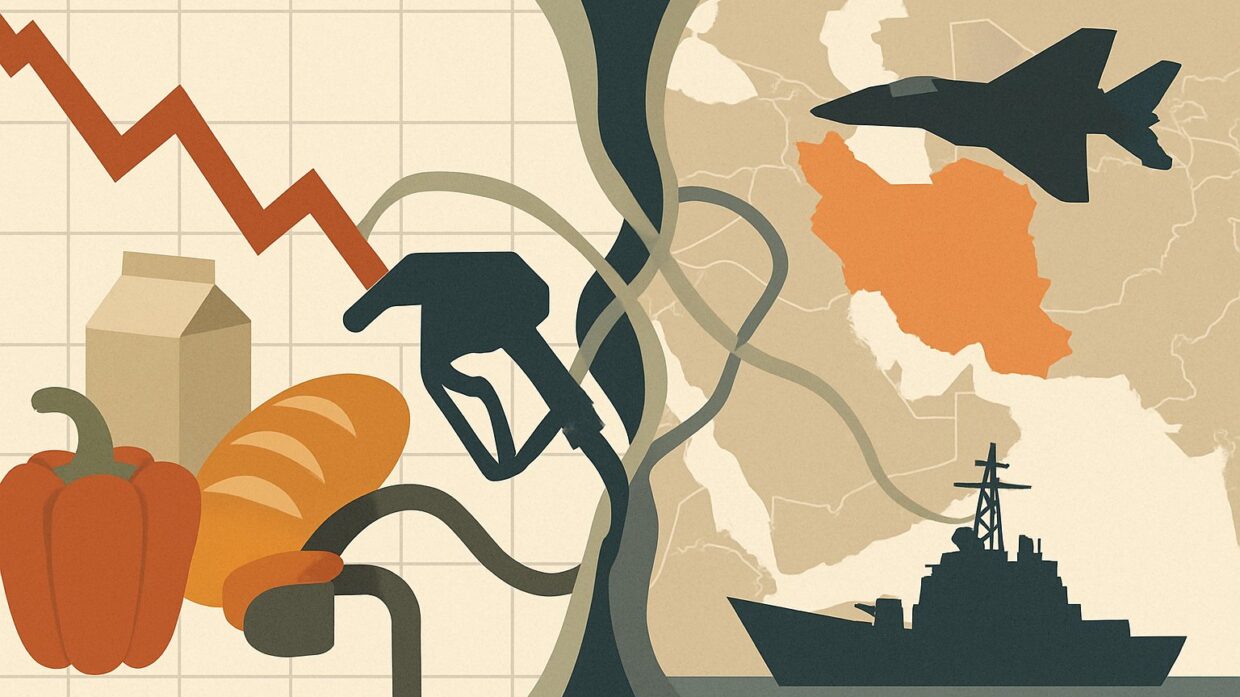
Photo: Well This Is News
Economic Pressure and Conflict Uncertainty Cloud Midterm Outlook
Republicans Poised for Sweep Despite Media Doubts on War and Economy
Iran War Strain and US Military Presence Shape 2026 Midterm Dynamics
Key Takeaways
- The Iran conflict's electoral impact depends on whether voters view it as successful deterrence or an open-ended commitment, a perception that available reporting does not clearly establish.
- Midterm elections during military conflicts show inconsistent patterns: 2002 produced gains for the sitting party despite the Afghanistan war, while 2006 reversed that effect as casualties mounted.
- Neither inflation stabilization nor military readiness fully explains the predicted divergence between polling and actual Republican performance, leaving the determining factor unmeasured in current reporting.
The Analysis
Three weeks before the 2026 midterms, two unrelated crises are colliding with electoral forecasting: sustained inflation and a seven-month military conflict with Iran that shows no clear endpoint. The tension is not whether these factors matter, but which party benefits from them, and whether public polling has any remaining predictive value.
The documented facts establish this baseline. Bloomberg reports Iran is experiencing measurable economic strain from US military pressure and expanded troop presence. NPR identifies both inflation and the Iran war as factors analysts believe will influence midterm outcomes. The Washington Examiner predicts Republicans will expand majorities in both chambers, contradicting most polling that suggests a narrower Republican advantage or potential Democratic gains. What none of these sources reconcile is why, in an environment where inflation has typically punished the party in power and military conflicts abroad usually depress voter enthusiasm for the incumbent administration, Republicans would outperform historical precedent.
The left-leaning framing emphasizes uncertainty as a liability. NPR's language centers on inflation as a "concerning indicator" and the war as an "ongoing" complication. This framing implies both factors create drag on the sitting administration's support. The specific word choice, "pressure," appears across coverage to suggest cumulative weight pushing voters away from the party in power. What this emphasis leaves out is any acknowledgment of military readiness, deterrence success, or whether the Iran conflict actually commands significant voter attention. Domestic inflation remains the centerpiece of the Democratic challenge, but the coverage does not foreground whether inflation has stabilized, accelerated, or become insulated from electoral consequences by other factors.
The right-leaning prediction from the Washington Examiner invokes a counter-narrative: that traditional polling models are systematically underestimating Republican performance. The specific claim is that polls are "lying," not that they are simply off by the historical margin of error. This framing implies a fundamental breakdown in the survey methodology itself rather than a genuine tightening race. What the Republican argument leaves largely unaddressed is the mechanism by which military conflict abroad, combined with elevated prices for goods and services, would produce larger-than-expected electoral gains for the administration that authorized both. The prediction assumes something polls measure poorly, but does not name what that unmeasured factor is.
What neither side fully addresses is the specific history of midterm elections during military conflicts. The 2002 midterms occurred during the early Afghanistan war and produced midterm gains for the sitting party, a pattern that violated typical midterm expectations. However, by 2006, extended conflict and casualty accumulation reversed that effect. The public record does not establish whether the Iran conflict has reached a stage where it affects electoral sentiment, or whether it remains sufficiently contained that only economic indicators drive voting behavior. Bloomberg documents Iran's strain, but does not report whether Americans view the military escalation as successful deterrence or as an open-ended commitment.
The actual headline these sources suggest is narrower than either side claims: whether inflation alone can overcome traditional midterm headwinds for the party in power remains unresolved, and the Iran conflict's electoral impact depends on factors the available reporting does not clearly establish. Neither polling error nor military readiness explains the gap. What explains it may be voter perception of which party offers stability amid dual crises, but that specific perception remains unmeasured in the sources provided.
The 2026 midterms will test whether inflation can reverse a pattern established over seven decades: the party holding the presidency almost always loses House seats in midterm elections. If Republicans underperform the Washington Examiner's prediction despite economic headwinds, it signals voters prioritize perceived strength on foreign conflict over domestic price concerns, fundamentally reshaping how parties campaign during economic distress. If Democrats gain ground despite inflation, the Iran military presence becomes proof that foreign policy crises no longer reliably punish incumbent administrations, forcing both parties to rebuild electoral strategies that assume traditional trade-offs between guns and butter no longer hold. Either outcome rewrites the playbook for future administrations managing simultaneous domestic and military crises.