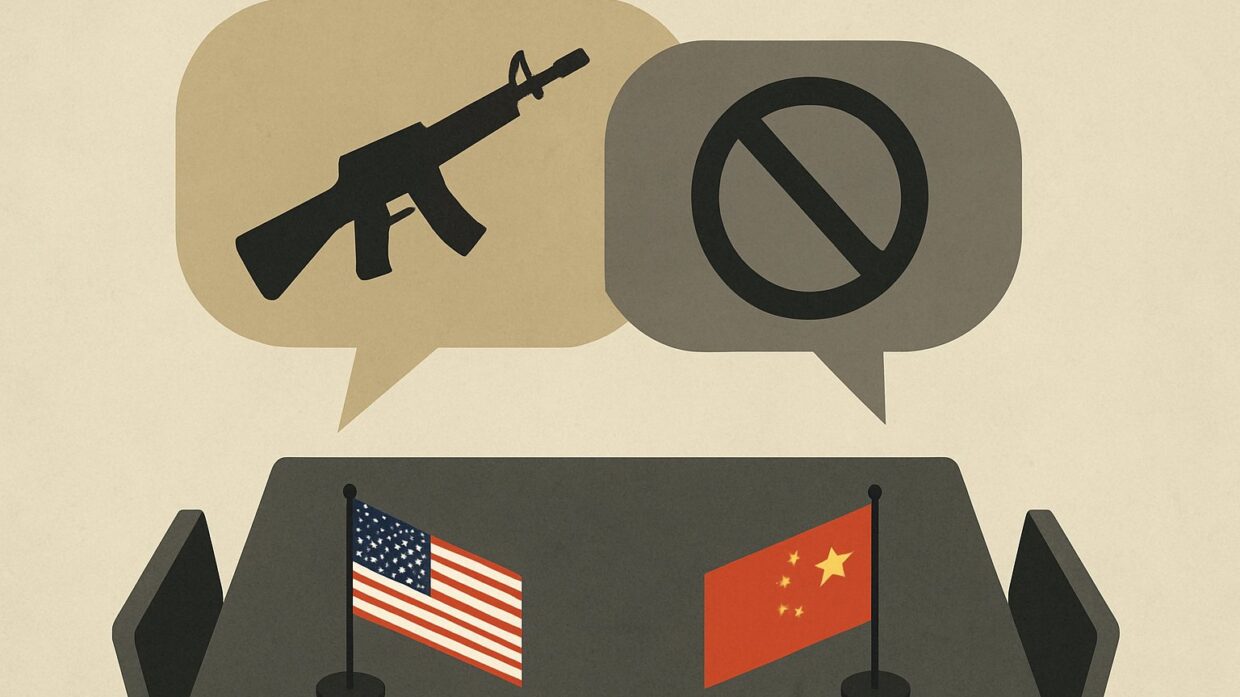
Photo: Well This Is News
Trump Proposed Selling Weapons to China, Ambassador Confirms
Trump Denies Arms Sales Discussion With Xi, Contradicts Ambassador
Trump and Ambassador Perdue Dispute Over China Arms Sales Offer
Key Takeaways
- The exact language Trump used in his conversation with Xi Jinping remains undisclosed, leaving unclear whether he asked a hypothetical question, made a formal offer, or discussed arms sales in general terms.
- Neither Trump's denial nor Perdue's account addresses why a confidential diplomatic discussion became public through Fox News, or whether the administration authorized the disclosure.
- Perdue holds a Senate-confirmed position requiring expertise in US-China relations, giving him institutional credibility, yet Trump's direct contradiction means one official is either mischaracterizing or falsifying a key moment.
The Analysis
The factual dispute is simple and direct: David Perdue, the US ambassador to China, told Fox News that President Trump asked Xi Jinping whether China would like to buy US weapons during their recent meeting. Trump subsequently denied making that offer. The evidence consists of Perdue's on-the-record statement and Trump's on-the-record denial. No third-party account of the Trump-Xi conversation has been disclosed.
Perdue's exact language matters. He framed the moment as Trump extending an offer or invitation: asking if China would "like to buy" weapons. That construction indicates a proposal being presented for consideration. If Perdue's account is accurate, it signals a departure from standing US policy, which restricts military technology transfers to China under the Arms Export Control Act and the Taiwan Relations Act. Those restrictions have shaped US-China relations for decades.
Trump's denial is categorical. He stated he "has not discussed selling arms to China." That formulation contradicts Perdue's account directly. It is not possible for both statements to be true simultaneously. Either Perdue accurately reported what occurred, or Trump accurately denied it. The public record does not establish a middle ground where Trump discussed something related to arms sales that falls short of Perdue's characterization.
The left frame emphasizes the significance of what Perdue reported: a sitting president entertaining weapons sales to a strategic competitor. The Guardian's coverage foregrounds the "severe" military threat to Taiwan that Perdue mentioned, framing his remarks as evidence Trump is willing to abandon longstanding policy restraints. That framing underplays the fact that Trump himself has denied the claim and leaves out the possibility that Perdue mischaracterized the conversation or that Trump was speaking hypothetically rather than making a formal offer.
The right frame emphasizes the contradiction and casts doubt on Perdue's credibility. Bloomberg's reporting and Trump's response highlight the denial directly, treating Perdue's statement as potentially inaccurate. That framing underplays the fact that Perdue is the US ambassador to China, a position requiring Senate confirmation, and has an institutional stake in accurately characterizing his meetings. It also does not address why Perdue would volunteer such a characterization on national television if Trump had not said something that invited that interpretation.
What neither framing addresses is the specific language Trump used. The available reporting does not disclose the exact words Trump spoke to Xi Jinping or whether those words constitute an "offer" in the formal sense Perdue described. Trump may have asked a hypothetical question. He may have discussed the possibility in general terms. The public record does not establish the precise nature of the conversation or what prompted Perdue's interpretation. That missing information is consequential because the difference between asking a hypothetical question and formally proposing an arms sale is substantial under international law and trade policy.
Also absent from both frames is any explanation for why this conversation has become public. Diplomatic discussions with foreign leaders are typically confidential. The fact that Perdue disclosed it on Fox News suggests either that the administration authorized the disclosure or that Perdue acted without authorization. Neither side of the current dispute has addressed which circumstance applies or what it reveals about internal administration processes.
Perdue's disclosure either reveals a fundamental breach in diplomatic confidentiality or signals authorized messaging from the Trump administration about a willingness to reconsider decades of arms restrictions toward China. If the statement was unauthorized, it exposes fractures within the administration's foreign policy apparatus and raises questions about whether career diplomats can be trusted with sensitive conversations. If authorized, it signals the administration is testing whether reversing the Arms Export Control Act's restrictions on China would face international pushback before formally proposing such a shift. Either interpretation has institutional consequences: unauthorized disclosures undermine the confidentiality necessary for effective diplomacy, while authorized testing suggests deliberate policy exploration that could reshape US-China military technology frameworks and regional stability in the Pacific.