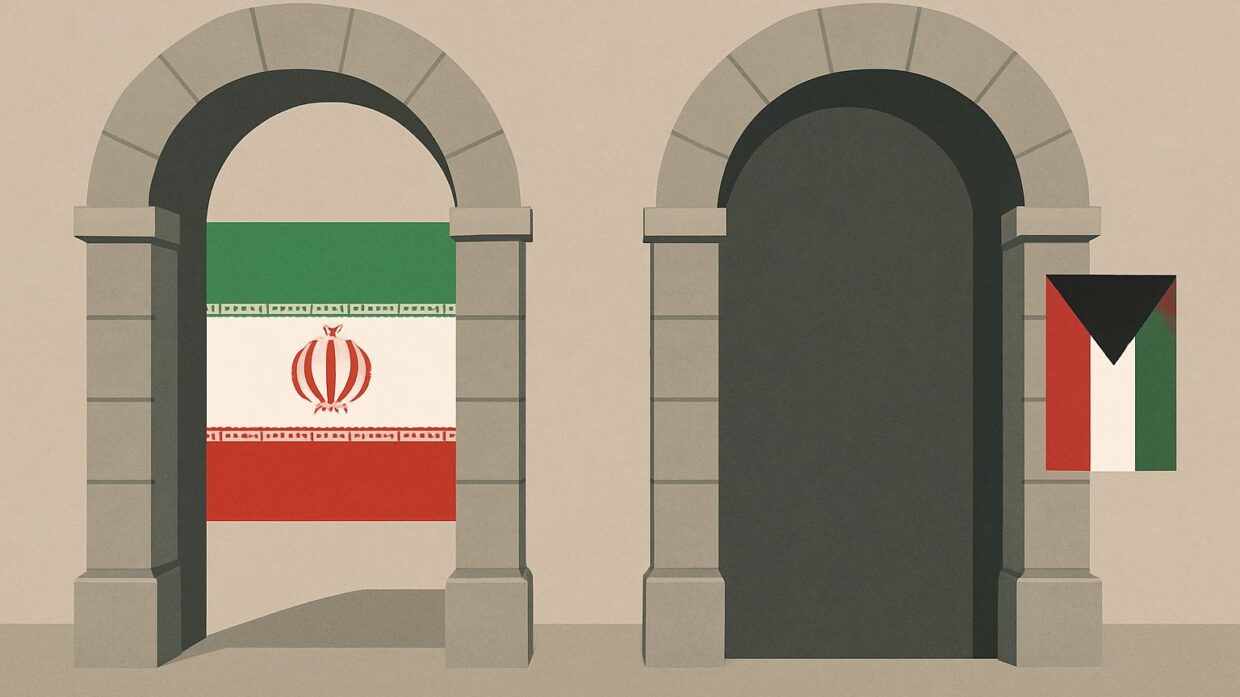
Photo: Well This Is News
Trump bars Palestinians while rolling out red carpet for Iranian leaders at UN
Trump administration denies Abbas visa again, allows Iranian delegation to attend UN General Assembly
Trump administration grants Iranian visas for UN while denying Palestinian officials entry for second year
Key Takeaways
- Iran's UN delegation visas are legally protected under the 1947 UN headquarters agreement requiring the US to grant access unless claiming national security threats, while Palestinian representation has no equivalent treaty protection making the two denials operate under different legal frameworks.
- The State Department has not publicly explained its specific reasoning for either approving Iranian visas with stated restrictions or rejecting Palestinian visas, leaving the strategic purpose of both decisions undocumented in official statements.
- Both administrations' approaches to Palestinian UN representation and Iran's diplomatic access involve treaty obligations and military conflict dynamics that neither media framing adequately separates from claims about inconsistency or hypocrisy.
The Analysis
The Trump administration has simultaneously approved visas for Iran's core UN delegation and denied entry to Palestinian officials for the second consecutive year, creating a policy contradiction that neither side of the coverage fully explains. The State Department confirmed Thursday that Iranian leaders would attend next week's UN General Assembly in New York, even as the US remains militarily engaged with Iran in the Middle East. On the same day, Palestinian Authority President Mahmoud Abbas's visa application was rejected, continuing the 2025 precedent of barring Palestinian representation from the annual forum.
The documented facts are straightforward: The State Department granted "core delegation" visas to Iranian officials without public specification of which officials or what restrictions apply. Simultaneously, it denied visas to Palestinian officials without public explanation of specific reasons for rejection. Both decisions were announced by State Department spokespersons on consecutive days. Neither the Iranian visa approval nor the Palestinian denial was framed as conditional on negotiations or tied to specific diplomatic demands by the administration.
The left framing, presented by MSNBC and The Guardian, emphasizes the apparent hypocrisy: the Trump administration is "granting visas to top Iranian leaders" while "denying entry to Palestinian officials." This language treats the decisions as symmetrical diplomatic gestures and interprets them as revealing the administration's true priorities. The framing leaves out what the State Department actually said about Iran,that the delegation faced "restrictions",and does not address whether previous administrations also denied Palestinian visas or under what circumstances.
The right framing, presented by The Daily Wire, leads with the Palestinian denial as "another blow to the Palestinian Authority," emphasizing a pattern of pressure on Abbas specifically. It treats the Iranian visa approval as secondary context rather than the primary contradiction. This framing does not examine what diplomatic purpose the Iranian visa approval might serve or acknowledge the apparent inconsistency it creates with the Palestinian policy.
What neither framing adequately addresses is the treaty context. Iran's UN representation is protected under the headquarters agreement of 1947, which obligates the US to grant visas to delegations attending the General Assembly unless the US claims a specific threat to national security. Palestinian representation has no equivalent treaty protection. The administration's denial of Palestinian visas may be legally defensible under this framework, but that legal distinction is invisible in both the left and right coverage. Similarly, neither side explores why the State Department might approve Iranian visas despite hostilities, a choice that appears consistent with maintaining minimal diplomatic channels during military conflict rather than a sign of reconciliation.
The underlying question is whether these decisions reflect strategic calculation about UN diplomacy or reflect something else entirely,but the available reporting does not establish the State Department's reasoning for either choice. What the record does show is that the administration is treating two international actors under different legal and diplomatic frameworks, a distinction that the coverage on both sides fails to make clear to readers.
Denying Palestinian UN representation while granting Iranian delegation visas reshapes America's standing in multilateral diplomacy for years to come. The State Department's invocation of the 1947 UN headquarters agreement to admit Iran while excluding Palestinians establishes a legal precedent that future administrations will either follow or explicitly reject, forcing them to articulate new standards for visa denials at the assembly. This creates institutional pressure within the State Department itself, where career diplomats must now justify differential treatment of delegations under competing treaty obligations. The Palestinian Authority's second consecutive exclusion signals to other nations that UNGA participation is conditionally available based on US bilateral relations rather than the assembly's universal membership principle, weakening America's ability to demand reciprocal access for its own representatives at competing forums. One year of exclusion reads as policy. Two years becomes doctrine, with measurable consequences for how other nations calculate their own participation in US-led multilateral institutions going forward.