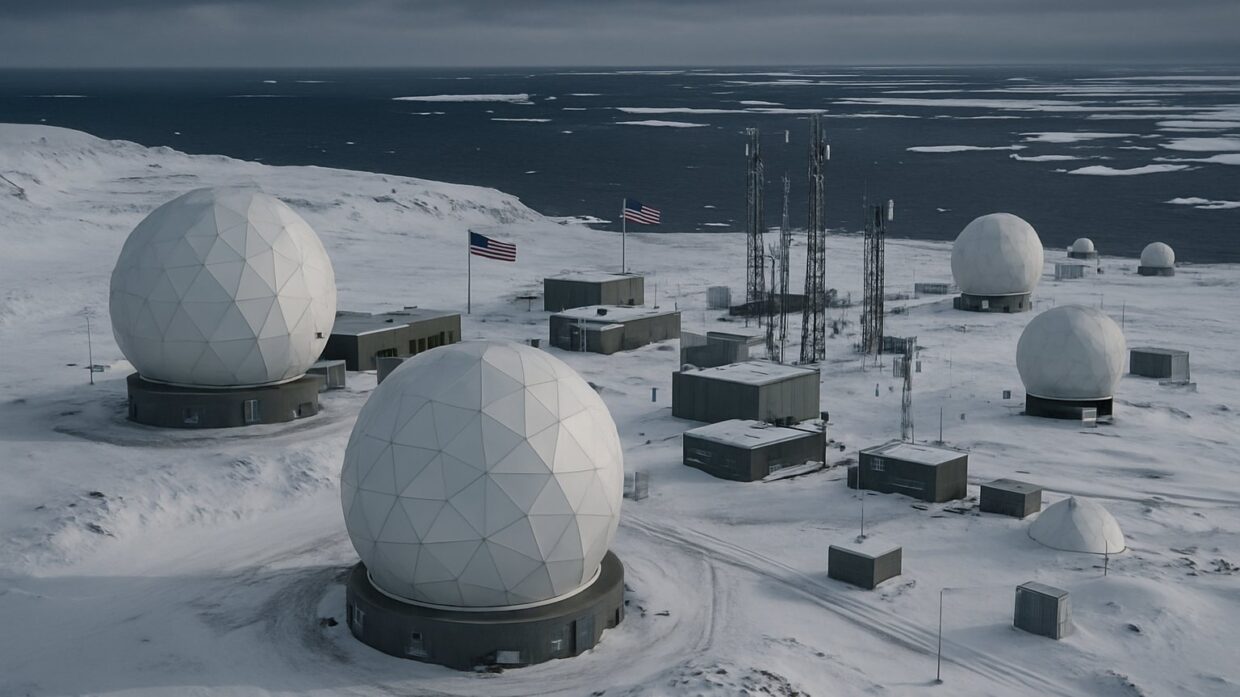
Photo: Well This Is News
Trump secures 'permanent control' over Greenland in controversial deal with Denmark
Trump declares victory: historic deal gives US permanent military rights in Greenland
Trump announces security agreement with Denmark over Greenland, claims permanent US control
Key Takeaways
- The White House has not released the actual terms of the agreement, leaving fundamental questions about what 'permanent control' legally means and whether it survives future changes in US, Danish, or Greenlandic leadership.
- Both American military leadership and Trump administration officials have identified Arctic security as a priority, meaning this agreement reflects broader US strategic consensus rather than Trump's personal obsession alone.
- Previous US military basing agreements framed as permanent, such as arrangements in Bahrain, have required renegotiation decades later, raising questions about whether Greenland's semi-autonomous status and potential independence movements could reshape this deal.
The Analysis
Trump announced a security agreement with Denmark over Greenland on Friday, claiming it grants the United States 'permanent control' over the Arctic territory's defense, but the specific terms of the deal remain undisclosed to the public. The left frames this as a dangerous diplomatic escalation that threatens NATO relations, while the right celebrates it as a strategic victory against Chinese and Russian Arctic ambitions. What neither side adequately addresses is that the actual scope and enforceability of 'permanent control' remain fundamentally unclear.
The factual record establishes only what Trump stated in his announcement: the US has reached an agreement with both Denmark and Greenland that provides expanded military access and security authority, explicitly excluding Beijing and Moscow from Arctic operations. Bloomberg reports Trump provided no specifics on the pact's terms. The Hill notes the deal 'expands military presence' without defining permanence or control mechanisms. Fox News claims it grants 'permanent US military basing with no expiration,' but provides no source for that specific contractual language. The Daily Wire quotes Trump saying the US will 'immediately begin the process of developing a large Military presence' there, suggesting the deal may be framework rather than completed infrastructure.
The left coverage, represented by MSNBC, emphasizes the word 'controversial' and frames this as Trump's personal obsession finally escaping diplomatic reality. That framing leaves out why Trump's Arctic focus has grown more mainstream since 2017. The US military, not just Trump, has identified Greenland and Arctic warming as central to future competition with Russia and China. The 2022 National Security Strategy explicitly names Arctic security as a priority. By treating this as idiosyncratic Trump ambition rather than aligned US strategic doctrine, the MSNBC framing obscures that military and diplomatic establishments may have converged on Arctic priorities the left has been slower to acknowledge.
The right coverage, represented by Fox News, leads with 'historic' and 'victory,' language that assumes the permanence and exclusivity of American control. That framing leaves out what Bloomberg's restraint reveals: Trump did not disclose the agreement's actual terms. If 'permanent control' were truly established in binding treaty language, why would the White House not release that language immediately? The emphasis on China and Russia exclusions serves a framing function, shifting attention away from the question of what Denmark retains versus what the US gains. Washington Examiner uses the phrase 'lasting military presence' alongside Trump's claim of 'permanent control,' suggesting even conservative outlets recognize these may not be identical.
What neither side addresses is the legal and diplomatic architecture underlying 'permanent control.' Greenland is semi-autonomous within the Kingdom of Denmark. For any arrangement to be permanent, it would need to survive future Danish governments, Greenlandic independence movements, and international law changes. The precedent here matters: the US previously negotiated permanent military access in Bahrain and other countries, arrangements that have faced renegotiation decades later. Trump's 2020 proposal to buy Greenland outright was dismissed as legally and diplomatically impossible. This new framework apparently achieves control without purchase, but the public record does not establish whether that control survives leadership transitions in Washington, Copenhagen, or Nuuk.
The underlying question is whether this agreement represents genuine NATO burden-sharing on Arctic security or primarily a Trump foreign policy achievement that may require renegotiation under a different administration. The absence of released terms prevents verification of either interpretation.
Denmark's semi-autonomous relationship with Greenland creates fundamental constraints on any permanent military arrangement that neither Trump nor his critics have addressed publicly. If the agreement's terms remain undisclosed, future US administrations cannot be bound by commitments they did not negotiate or ratify, while successive Danish and Greenlandic governments retain constitutional authority to modify existing security arrangements. The Pentagon's Arctic strategy depends on sustained access, but Trump's framework agreement lacks the treaty ratification or congressional oversight that would survive political transitions in either Washington or Copenhagen. Without knowing whether this is binding treaty language or diplomatic memorandum, the US military cannot reliably plan infrastructure or force deployment that supposedly represents decades of strategic positioning against Russian and Chinese Arctic expansion. The vagueness now guarantees renegotiation later, potentially costing diplomatic capital and delaying the very Arctic security upgrades the 2022 National Security Strategy identified as urgent.