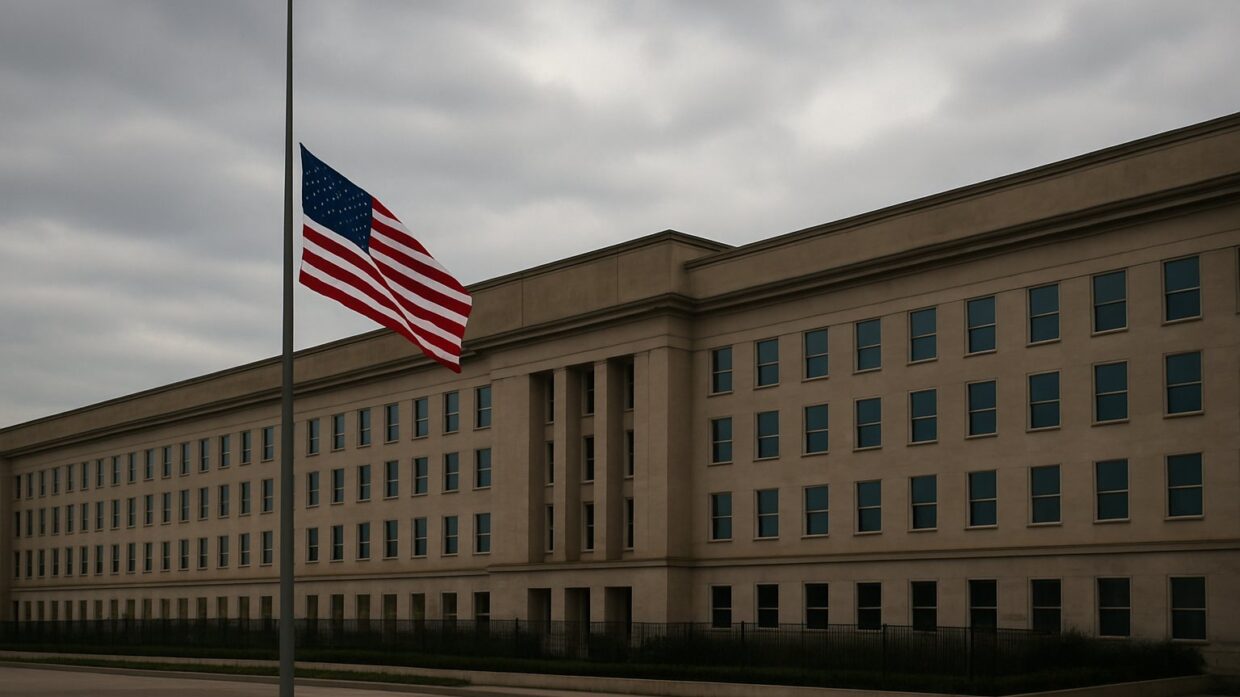
Photo: Well This Is News
Nation marks 9/11 anniversary as Americans grapple with divided memory of attacks and their legacy
Trump honors 9/11 victims at Pentagon while VP Vance joins ceremony at World Trade Center
Trump attends Pentagon 9/11 ceremony as nation marks 25th anniversary amid political divisions
Key Takeaways
- The sitting president and vice president split their 9/11 attendance between the Pentagon and the World Trade Center on the 25th anniversary, an unusual division that the public record does not clearly explain.
- Trump was initially scheduled to attend the World Trade Center ceremony in New York but shifted plans to the Pentagon, yet available reporting provides no explanation for why he made this change.
- 9/11 commemorations have become occasions where political figures manage competing symbolic demands rather than participate in a unified national ritual, leaving the actual mechanics of how these events are organized largely unreported.
The Analysis
President Trump attended a Pentagon ceremony on the 25th anniversary of 9/11, reading victims' names and delivering remarks alongside Defense Secretary Markwayne Mullin, while Vice President JD Vance participated in separate observances at the World Trade Center in New York. The split attendance itself reflects a question that neither major news framing directly addressed: why the sitting president and vice president did not attend the same ceremony at the attack's most symbolically significant location.
The left-leaning coverage, led by NPR and MSNBC, emphasized national division and competing interpretations of what 9/11 means. NPR's language called Americans "divided" about "the meaning and legacy" of the attacks. That framing positions disagreement over post-9/11 policy, military action, and national security measures as the central story, not the ceremony itself. What that coverage does not foreground is what Americans across the political spectrum agree on: the attacks killed nearly 3,000 people and first responders acted with documented heroism. The emphasis on division leaves out the substance of the disagreement, which matters. Americans disagree about whether the wars in Afghanistan and Iraq were justified responses, whether surveillance programs were appropriate, and whether immigration policies should tighten. Those are substantive policy questions, not merely matters of "memory."
The right-leaning coverage, led by Fox News and the Washington Examiner, emphasized Trump's attendance and Vance's participation, positioning both as honoring victims and first responders. That framing does not address why Trump chose the Pentagon over the World Trade Center, where both living former presidents and the sitting vice president gathered. The Washington Examiner's separate piece about Afghan vetting whistleblowers raised national security concerns directly, using the anniversary as a peg to argue that visa approval processes remain inadequate. That reporting introduced a material policy claim, but left out whether the vetting procedures described are the same ones currently in place or have been reformed since 2001.
What neither framing addresses directly is this: the sitting president and sitting vice president split their attendance between two 9/11 sites on the 25th anniversary. That is unusual. It is not inherently problematic, but it is logistically and symbolically notable and the public record does not clearly establish why this division occurred or who decided it. Trump had been "initially slated" to attend New York, according to the Washington Examiner, then "shifted plans." The available reporting does not explain the reasoning behind that shift.
The institutional implication is that 9/11 commemorations have become occasions where political figures navigate competing symbolic pressures rather than unified national ritual. The left emphasizes contested memory, the right emphasizes security vigilance and Trump's respect for fallen, but neither explains the mechanics of how the 25th anniversary was actually organized or why attendance was divided. A reader who only knows today's headlines does not understand whether this is standard practice or represents a specific political choice.
The 25th anniversary of 9/11 has become a test of whether the nation can maintain shared civic ritual or whether major commemorative events will fracture along partisan lines. Trump's shift from attending ceremonies at the World Trade Center to appearing at the Pentagon, combined with Vance's separate participation in New York, signals that the White House is now calibrating 9/11 observance as a political variable rather than treating it as an exception to normal partisan scheduling. If this division persists through future anniversaries, the precedent chips away at one of the few ceremonial moments where American political leadership has historically bracketed disagreement. The institutional casualty is not that people disagree about post-9/11 policy, but that the ceremony itself becomes another contested space where attendance decisions communicate political alignment rather than national unity.