Photo: Well This Is News
U.S. preemptively strikes Iranian sea mine launchers as tensions escalate in Strait of Hormuz
U.S. strikes Iranian rocket launchers preparing to mine Hormuz; Iran vows severe repercussions
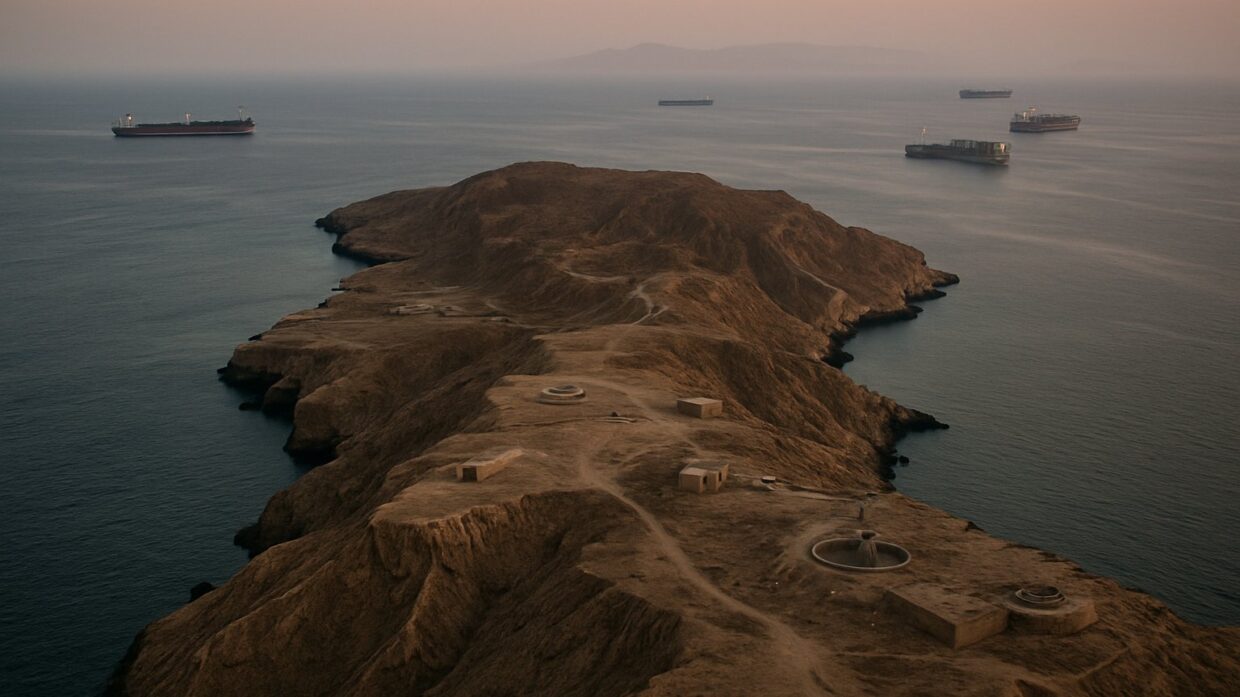
U.S. strikes Iranian launchers on Larak Island; Iran retaliates with missile strikes on Jordan bases
Key Takeaways
- Neither the left nor right reporting clarifies whether U.S. intelligence assessed the Iranian rocket launchers as prepared for imminent attack or as repositioned capability for future use, a distinction that separates legal preemption from preventive war.
- The U.S. withdrawal from the Iran nuclear deal in 2018 and subsequent sanctions are absent from both framings, even though Iran has cited economic pressure as justification for accelerating military capability development.
- The cycle of U.S. preemptive strike followed by promised Iranian retaliation now operates without declared war or congressional authorization, establishing a new precedent for direct military exchanges between the two powers.
The Analysis
The U.S. struck two Iranian rocket launchers on Larak Island after U.S. Central Command observed Islamic Revolutionary Guard Corps forces preparing to deploy sea mines into the Strait of Hormuz, the first American attack on Iranian military targets in over a month. Iran's Revolutionary Guard responded with ballistic missile strikes on U.S. military bases in Jordan hours later, which U.S. officials said were intercepted with no reported impacts. The factual sequence is established across all sources. What differs sharply is the framing of preemption versus provocation.
The left-leaning framing, used by The Guardian and MSNBC, emphasizes the U.S. as acting to prevent Iranian action. The Guardian's headline centers on U.S. strikes that prevented "sea mines" from being deployed, and MSNBC's language describes the U.S. military as having "observed" IRGC forces "preparing to fire rockets carrying sea mines." This framing establishes sequence: Iran was preparing an action, the U.S. intervened first. It omits whether the U.S. had attempted diplomatic or non-kinetic responses before striking, and whether the Iranian positioning constituted an imminent threat or a capability being moved into position. The phrase "preparing to put" allows readers to infer immediate launch was seconds away, though the reporting does not establish the specific timeline.
The right-leaning framing, used by Breitbart and the Washington Examiner, presents the strike as a justified defensive action and foregrounds Iran's "vow of severe repercussions." The Washington Examiner's language states U.S. Central Command "struck two rocket launchers" after "observing" IRGC forces "preparing to deploy sea mines," which mirrors the left's language but positions the American action as responsive to Iranian capability building. This framing adds context about U.S. concern over shipping lane access and emphasizes that Iranian retaliation confirms the regime's commitment to escalation. It does not examine whether the U.S. had alternative options short of kinetic strike.
What neither framing addresses directly is the context of prior agreements and U.S. policy shifts. The U.S. withdrew from the Iran nuclear deal in 2018 and imposed successive rounds of sanctions, which Iran has said limited its economic options and justified accelerated military capability development. Neither the left nor right framing foregrounds that the Strait of Hormuz, through which roughly one-third of global maritime oil trade passes, has been contested territory since the 1979 revolution, and that Iranian capability to threaten shipping has been a stated objective for decades. The reporting also does not establish whether U.S. intelligence assessed the Iranian positioning as preparation for imminent mining or as positioning for future contingencies.
What actually matters: the U.S. used force as a preemptive measure before Iranian action could materialize, and Iran responded with the exact retaliation it had publicly promised. Neither side claims the exchange changes the fundamental military balance or resolves the underlying dispute over shipping lane access and sanctions. The precedent this sets is that direct kinetic exchanges between U.S. and Iranian forces can now occur without declared war or congressional authorization, and that the cycle of preemption and retaliation appears mechanically self-reinforcing.
The unresolved question is whether the U.S. assessed Iranian positioning as preparation for an immediate attack or as repositioning of capability that posed a future threat. That distinction determines whether the strike was preemption against an imminent threat or a preventive strike against future capability, a legal and strategic distinction both framings are quietly leaving out.
The U.S. has now conducted preemptive strikes against Iranian military forces without congressional authorization or declared war, and Iran has matched America's strike with promised retaliation, establishing a new operational baseline for direct kinetic exchanges between the two powers. The critical distinction both left and right-leaning outlets avoid is whether U.S. intelligence assessed Iranian forces as preparing imminent action or merely repositioning future capability, a gap that separates legal preemption from preventive war doctrine. If the U.S. is now striking Iranian positions based on capability deployment rather than imminent threat, it has crossed a threshold in military doctrine that eliminates the requirement for either immediate danger or political authorization before using force. This precedent locks both nations into a cycle where observed military positioning triggers preemptive response, which triggers promised retaliation, which justifies further strikes. The Strait of Hormuz, through which one-third of global oil trade flows, has become