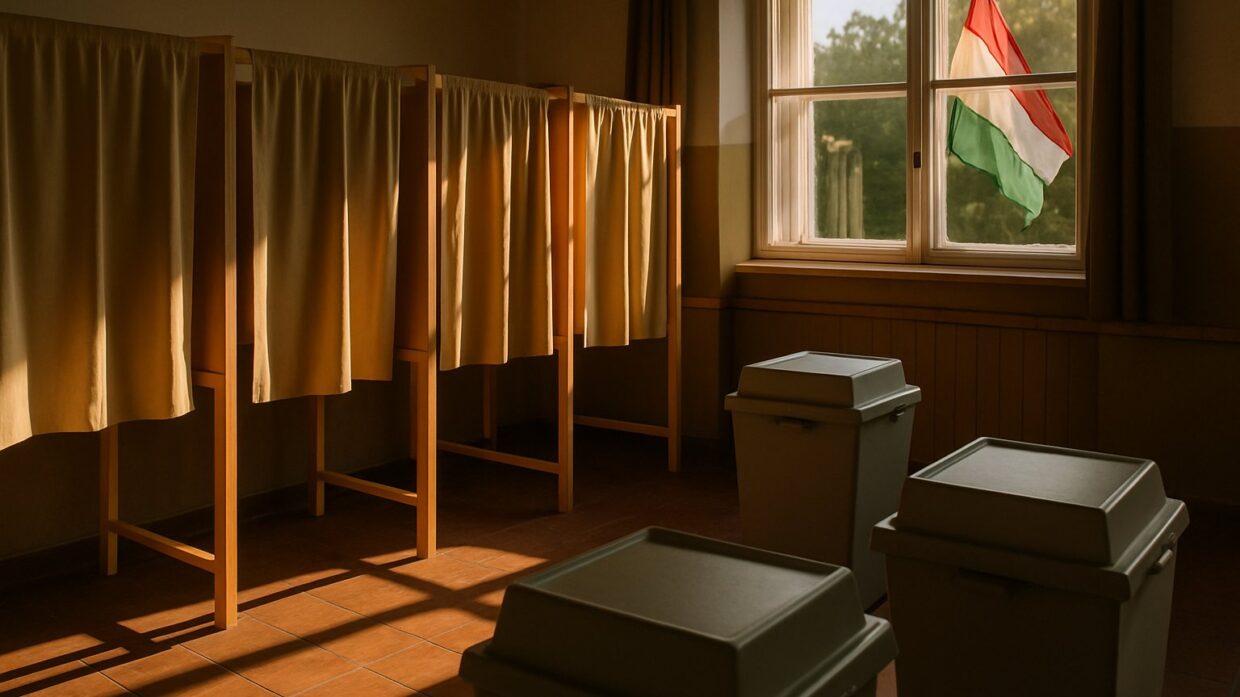
Voters head to polls in historic contest that could topple Europe's longest-serving populist leader
Hungary's pivotal election could unseat Orbán, reshaping Europe's balance of power
Hungary votes in election that could end Orbán's 16-year rule
The Analysis
Hungary's Sunday election is being portrayed as a democratic reckoning, but both the left and right are omitting the specific institutional machinery that makes this moment so consequential—and the degree to which Orbán has already made the outcome's significance less certain than headlines suggest.
The verified facts: Viktor Orbán's Fidesz party has governed Hungary since 2010. Challenger Péter Magyar's Tisza Party has led in recent polls. The Guardian, NPR, and Bloomberg all report record turnout expected. Washington Examiner describes Orbán as an "ally of President Donald Trump." The Guardian and NPR explicitly name Putin—Orbán has opposed EU sanctions on Russia, blocked NATO aid to Ukraine, and visited Moscow while the invasion was ongoing. Bloomberg calls him "Putin and Trump's closest ally in Europe." These are the named facts everyone agrees on.
The left's framing—deployed by The Guardian and NPR—uses the language "end of Orbán's rule" and emphasizes his 16 years in power as aberration. This language choice does specific work: it positions Orbán as an illegitimate interruption to Hungary's "normal" trajectory toward liberal democracy and EU integration. What this framing omits: Orbán has won every election since 2010, often by large margins, and commanded genuine voter support for his policies on immigration, national sovereignty, and EU authority. His consolidation of power happened through electoral victory, not coup. The left's language makes this institutional reality—that Orbán won repeatedly—disappear. It frames his tenure as something done *to* Hungary rather than chosen by it.
The right's framing—used by Washington Examiner—describes him as a "populist" and an "ally of Trump," which simultaneously legitimizes his voter base (populism implies popular will) while distancing him from mainstream conservatism. This language choice works to present him as an alternative rather than a threat. What it omits: Orbán's government has imprisoned journalists, gerrymandered electoral districts to concentrate power, weaponized the courts against opposition parties, and systematically degraded Hungary's institutions in ways measurable and named in European Commission reports. The right's framing allows readers to focus on policy disagreement without confronting the structural damage to democratic institutions.
Neither side emphasizes what the Hungarian Constitution actually is or how Orbán changed it. He passed a new constitution in 2011 that, specifically, expanded executive power and made supermajority changes harder. This is not opinion. This is named, written law. Neither The Guardian nor Washington Examiner leads with this fact, though it explains *why* this election matters more than a normal change of government: Orbán's successor will inherit a state apparatus fundamentally restructured toward executive dominance. Reversing it requires not just winning an election but commanding supermajority support—which even Magyar's momentum may not provide.
The real headline The Guardian, NPR, and Bloomberg are avoiding: Hungary's election may change the government but not the system Orbán built. And the one Washington Examiner avoids: Orbán's structural changes mean his successors may inherit tools that constrains genuine democracy regardless of who holds power.