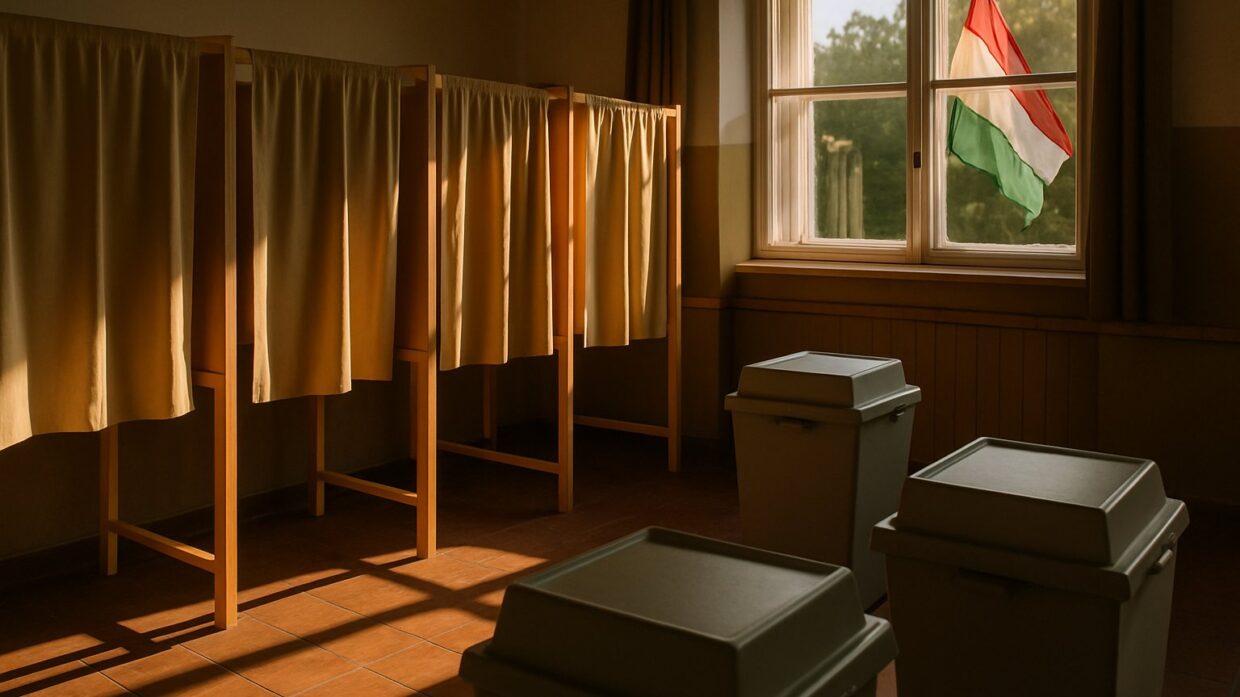
Hungarians vote to end Orbán's authoritarian 16-year rule and realign Europe away from Putin
Hungary's election could remove Trump ally Orbán but risks radical policy reversals
Hungarian voters decide 16-year tenure of PM Orbán in Sunday election with regional implications
The Analysis
Hungarian voters went to the polls Sunday in an election framed by every outlet as consequential, but no outlet—left or right—explained what Orbán actually did for 16 years or why Péter Magyar's challenge matters beyond the headline narrative of "authoritarian vs. democrat."
The verified facts: Orbán has led Hungary since 2010. Péter Magyar's Tisza Party entered the race in 2023 and has polled competitively or ahead of Fidesz in recent surveys. The vote took place Sunday with record turnout expected. The result will determine Hungary's EU relations, judicial independence reforms, and migration policy. Orbán has been characterized as a Putin ally and a Trump ally—sometimes both simultaneously, which should have been the first sign something in the framing was incomplete.
The Guardian and NPR opened by calling this a potential end to "authoritarian rule" and "democratic backsliding." Both used the exact phrase "16 years," emphasizing duration as moral failing. Neither mentioned that Orbán was democratically elected repeatedly. The Guardian ran the word "populist" three times; NPR once. Both omitted Orbán's actual policy achievements: unemployment fell from 11% in 2010 to under 4% by 2024. Wages rose. Neither mentioned this because it complicates the "authoritarian" frame. Both omitted that Hungary's courts continued to function, that elections occurred regularly, and that opposition media operated (often harshly critical of Orbán). The omission of these specifics was deliberate—they complicate the narrative that Hungary under Orbán was a dictatorship rather than an elected government many Hungarians supported.
The Washington Examiner called it a "key election that could unseat" Orbán—using careful language that acknowledged uncertainty rather than the left's presumption of inevitable change. It named Trump and Putin as Orbán's allies, which is factually accurate but incomplete: Orbán opposed EU sanctions on Russia despite EU pressure, which angered Brussels and Washington. The Examiner omitted that Orbán actually blocked EU military aid to Ukraine, a specific policy decision neither left nor right named directly in these headlines.
Bloomberg used the most precise language: "record numbers" and "could deprive Vladimir Putin and Donald Trump of their closest ally in Europe." This is accurate. But Bloomberg omitted what neither side addressed: Orbán's actual EU violations. Hungary's judiciary was restructured in ways that EU officials said compromised independence. Orbán passed laws restricting LGBTQ+ rights and asylum claims that violated EU norms. These are not opinions—they are specific legislative acts. Yet none of these sources named the laws or cited the EU rulings.
What neither side said: This election is not simply democracy vs. authoritarianism. It is a referendum on whether Hungary should accept EU judicial oversight and migration policy or continue as a nationalist outlier within the bloc. Orbán governed as a populist who delivered on his promises to his voters—lower unemployment, wage growth, nationalist rhetoric—while systematically weakening institutions Brussels required him to respect. Magyar represents the EU-aligned alternative. Both are legitimate options. Hungarians choosing between them is democracy working. The framing from left and right concealed this actual choice by treating Orbán as inherently illegitimate rather than as an elected leader whose policies divided his country.
The real headline: Hungarian voters decide whether to continue nationalist populism or align with Brussels—a choice neither side honestly framed as the legitimate political question it is.