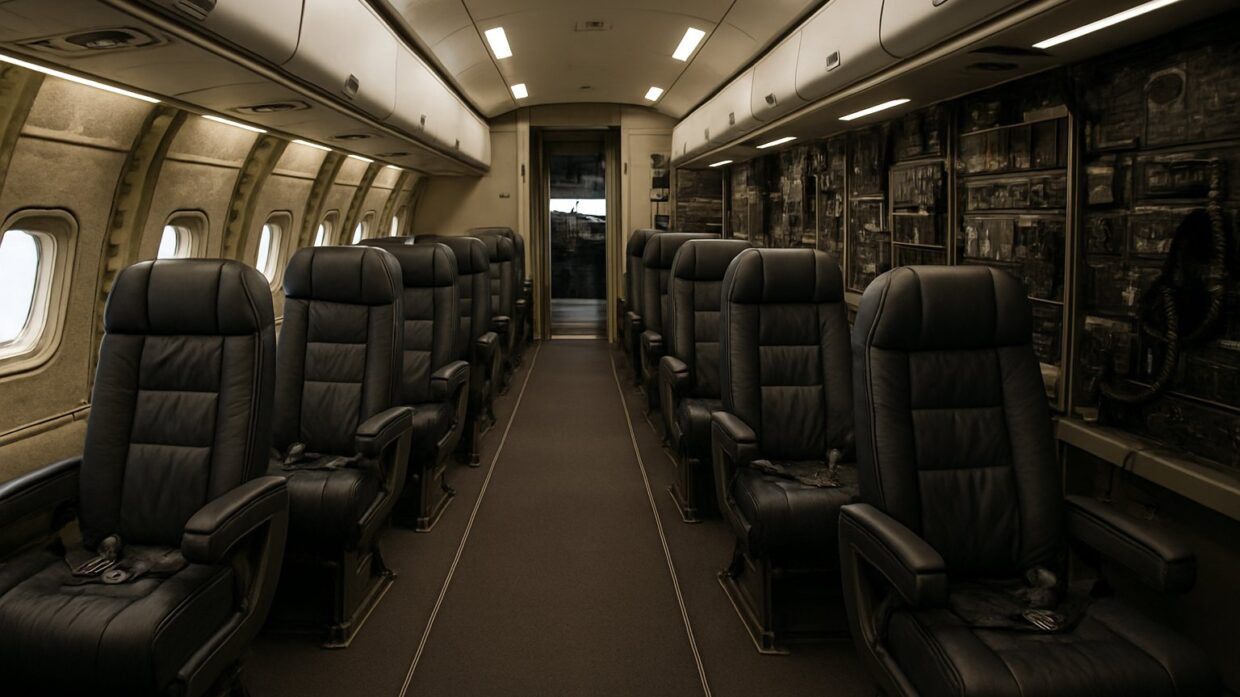
Photo: Well This Is News
Trump secretly swapped planes to evade Iranian missile threat during international summit
Trump followed Secret Service protocol when switching planes in Turkey for security reasons
Trump switched planes in Turkey due to Iranian missile threat, Secret Service directed move
Key Takeaways
- The reporting establishes that Iranian-aligned militias may possess shoulder-fired missile systems capable of threatening aircraft, but does not clarify whether this represents a new threat or a recurring feature of Middle East travel.
- Neither side's coverage explains what U.S. military or policy decisions in Iraq and Syria may have prompted Iranian militia activity near Turkish airspace or whether prior administrations faced similar threats.
- The available reporting cannot determine whether shoulder-fired missile threats during presidential departures are routine intelligence assessments or an escalation indicating genuinely heightened risk compared to previous years.
The Analysis
President Trump's secret plane swap in Turkey last month was prompted by U.S. intelligence indicating a credible Iranian threat involving a shoulder-fired missile, according to officials cited by NBC News, but the framing of what happened and what it reveals has split sharply along partisan lines.
The documented facts are these: While departing Turkey in early August after an international summit, Trump boarded an alternate military aircraft instead of Air Force One. According to reporting from multiple outlets, Secret Service agents directed the move. Trump himself stated he followed the agency's security protocol. The plane swap involved Trump moving through an airport catering container to board the alternate aircraft while Air Force One continued with staff, serving as a decoy. U.S. officials told NBC News the threat included the possibility of Iranian-regime targeting with a shoulder-fired missile. The timing connected to broader intelligence assessments about Iranian-aligned militia activity in the region.
The left framing, represented by NPR and MSNBC language, emphasizes the word "secret" and describes the maneuver as "elaborate" and the threat as direct and imminent. This language serves a specific function: it foregrounds the danger Trump faced and the extraordinary nature of the response required. By leading with the Iranian threat and the unprecedented catering-container element of the escape, this framing positions the incident as a dramatic security emergency. What this emphasis leaves out is whether shoulder-fired missile threats near Turkish airports represent routine intelligence assessments during this administration's tenure or if they are unusual. The reporting does not establish whether similar threats prompted comparable responses during previous presidencies.
The right framing, seen in Breitbart's coverage, emphasizes Trump's cooperation with Secret Service directives and his deference to professional protective measures. Trump's own quoted statement,"I do what Secret Service says",becomes the organizing principle of the narrative. This framing normalizes the plane swap by positioning it as routine presidential security protocol rather than as an extraordinary escape. What this emphasis downplays is any characterization of the Iranian threat as unusual or severe. The language shifts focus from the threat itself to Trump's responsible compliance with security professionals.
What neither side fully addresses is the underlying question: whether Iranian-aligned militias in the region currently possess or have recently acquired shoulder-fired missile systems that pose a genuine targeting risk to aircraft, and whether this represents an escalation from prior years. The reporting does not establish whether such threats are recurrent features of U.S. presidential travel in the Middle East or whether this particular incident reflects newly heightened risk. Additionally, neither framing discusses the policy decisions or military postures that may have prompted Iranian militia activity near Turkish airspace in the first place, or whether prior U.S. actions in Iraq or Syria created the conditions for such threats to emerge.
The real headline this story permits is narrower than either side suggests: Trump followed Secret Service protocol after intelligence indicated an Iranian threat during departure from Turkey, moving to an alternate aircraft while Air Force One served as a decoy. Whether this reflects routine caution or unprecedented danger remains a question the available reporting does not resolve.
The incident reveals a critical gap in presidential security transparency that will shape how future administrations handle threat assessments. When the Secret Service can execute elaborate diversionary maneuvers based on classified intelligence without public disclosure protocols, it establishes a precedent that future presidents will invoke to justify withholding information about their movements and the threats triggering those movements. This normalization of undisclosed security operations means Congress loses the ability to oversee whether threat assessments are genuine or inflated for operational convenience, and the public cannot evaluate whether Iranian missile capabilities near Turkish airspace represent a new regional development requiring policy response or a recurring feature that previous administrations managed through different means. The absence of established reporting standards for these incidents means each administration will unilaterally decide what constitutes a threat worthy of disclosure, creating institutional vulnerability to politicized threat inflation.