Photo: Well This Is News
Supreme Court weighs Trump's attempt to restrict mail-in voting in narrow case
Supreme Court faces difficult questions as Trump order clashes with overreaching judge
Supreme Court to review Trump mail-in ballot order amid competing legal overreach claims
Key Takeaways
- Congress may have already legislated on mail-in ballot procedures in federal elections, which would be the controlling legal fact but has been largely absent from both sides' public arguments.
- The Supreme Court appears positioned to rule narrowly on whether the district court had authority to block the order rather than deciding the larger question of whether mail-in voting restrictions are good policy or constitute executive overreach.
- Neither side has clearly articulated whether the actual legal dispute is about presidential power over election administration or about the scope of congressional authority over federal ballot procedures.
The Analysis
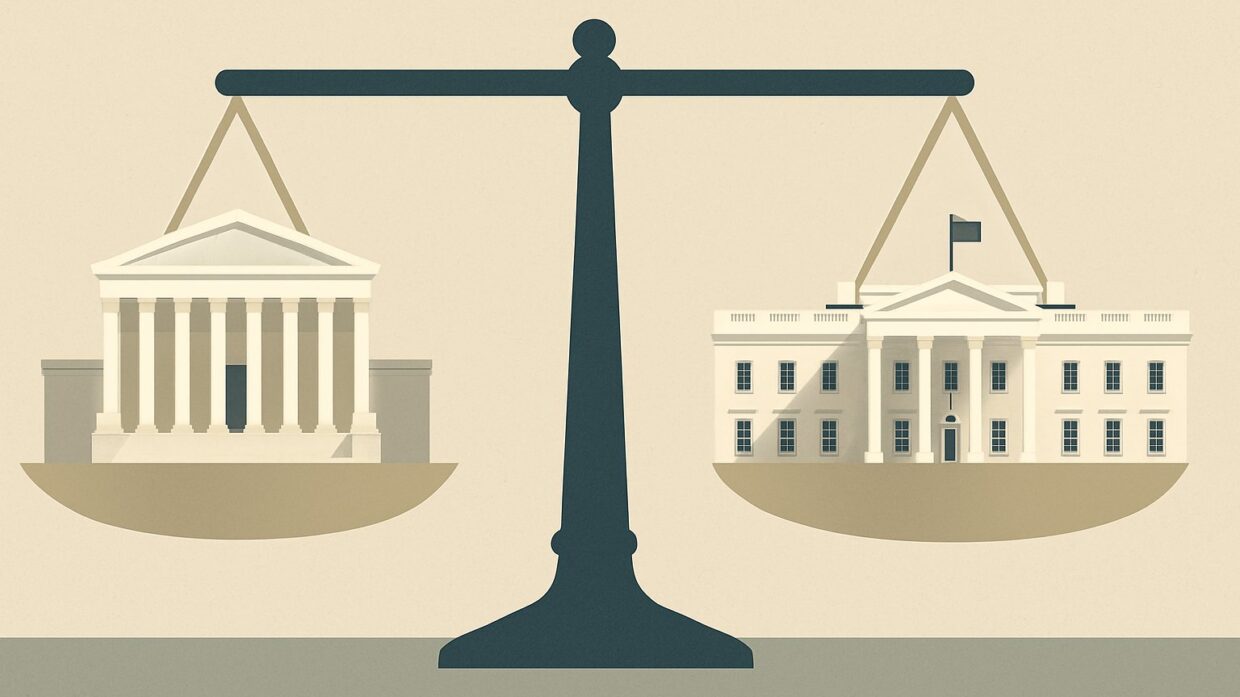
The Supreme Court is reviewing a case where both sides appear to have claimed more power than the law cleanly grants them, forcing the justices to choose between two forms of overreach rather than between clear legal principle and violation. The Trump administration issued an executive order targeting mail-in ballot procedures, which a district court then blocked in sweeping language. What neither the administration nor the lower court framed clearly is that the actual question before the Supreme Court involves the scope of presidential authority over federal election administration and the limits of a judge's power to enjoin executive action without fully examining whether the executive action was itself lawful.
The right's framing, articulated most clearly in National Review's coverage, emphasizes that the district judge went too far in blocking the Trump order without adequate legal foundation. The piece uses the word "overreaching" to describe both the original Trump order and the judicial response, a symmetrical criticism that serves a specific function: it suggests the problem is not what Trump did but that the lower court did not carefully examine it. This framing leaves out the substantive question of whether mail-in ballot restrictions actually exceed presidential authority, focusing instead on judicial procedure. By emphasizing the judge's overreach, the right avoids defending the substance of the mail-in ballot policy itself.
The left's case against the order focuses on voting access and disenfranchisement, language that appears in voting rights advocacy circles and Democratic arguments about ballot access. That framing treats the order as primarily a restriction on voter participation rather than an administrative regulation of ballot procedures. The emphasis on "affect" and on vulnerable populations serves to morally center voter access over administrative authority. What this framing underplays is that the actual legal authority for mail-in ballot procedures is contested between the executive and Congress, and the case may hinge less on voting rights principles than on separation of powers doctrine.
Neither side foregrounds what the available reporting suggests may be the actual legal issue: whether Trump's specific order falls within executive power over federal elections or whether Congress has already regulated mail-in ballots in ways that preclude unilateral executive action. The case may turn not on whether mail-in voting is good or bad policy but on whether the President can change it without Congressional action. If Congress has already legislated on mail-in ballot procedures in federal elections, that fact matters more than either side's framing acknowledges.
The Supreme Court's decision to take a "narrow look," as the right's framing describes it, suggests the justices may avoid the larger voting access question and instead decide only whether the district court had authority to block the order before it was fully litigated. That procedural path would disappoint both sides for opposite reasons: the right would win the immediate case but without a broad endorsement of presidential power, and the left would lose the mail-in ballot fight without a decisive ruling that protects voting access. What remains unclear from current reporting is whether the Court intends to address the substance of presidential authority or only the judge's procedural error.
The Supreme Court's decision to examine this case establishes whether presidents can unilaterally alter federal election administration procedures Congress has already regulated, a question that extends far beyond mail-in ballots. If the Court permits executive action to override Congressional legislation on election mechanics without explicit statutory authorization, future administrations gain sweeping power to reshape voting procedures across multiple states simultaneously. The ruling will determine whether separation of powers doctrine constrains executive power over elections or whether the breadth of "administration" allows presidents to rewrite established ballot access rules. Congress will either need to legislate more restrictively to preserve its authority or face systematic erosion of its control over federal election rules every presidential term.