Photo: Well This Is News
Escalating Tensions: Trump's Confrontational NATO Strategy Overshadows Europe's Climate Crisis
Trump's Hardball Tactics Deliver NATO Wins While Confronting Iranian Threats
Trump Pursues Hardline Diplomacy on NATO and Iran as June Heat Records Mount Globally
Key Takeaways
- The Trump administration is simultaneously pressuring NATO allies and escalating confrontation with Iran, but available reporting does not establish whether these are connected strategies or separate initiatives.
- Europe faces competing demands for resources between defense spending increases and climate adaptation, yet the relationship between Trump's NATO pressure campaign and European vulnerability during environmental crises remains completely unexplored.
- Neither side has documented the specific commitments or policy changes Trump achieved in Ankara, making it impossible to assess whether the NATO pressure strategy produced substantive security gains or rhetorical positioning.
The Analysis
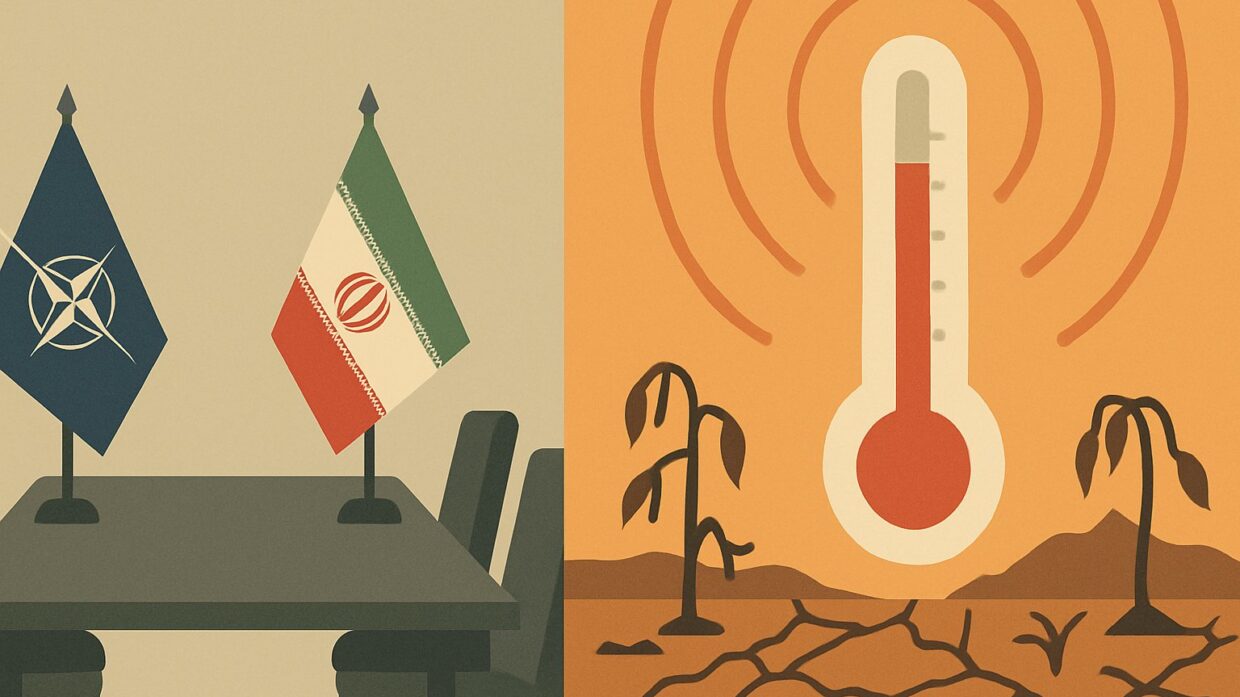
Trump is applying pressure tactics simultaneously across two separate foreign policy domains: NATO negotiations in Ankara and escalating confrontation with Iran. The Daily Wire frames this as successful leverage producing results, while National Review describes Iran as having reignited conflict with the U.S. The Guardian situates these diplomatic moves against Europe's concurrent climate crisis, where June 2026 became the continent's deadliest heat event on record, with estimates suggesting over 20,000 deaths across Europe during that month alone.
What actually occurred: The Trump administration deployed confrontational negotiating language with NATO allies, specifically challenging what it termed questionable loyalty from certain members. Simultaneously, the administration tightened pressure on Iran, with National Review reporting that Iranian actors may have reignited hostilities. Yale Climate Connections documented that June 2026 was Earth's second-hottest June on record, with the UK experiencing its third consecutive heatwave that year. The Guardian reported death toll estimates exceeding 20,000 across western Europe during June, with British heat alert systems expanding in response.
The right frames this through the lens of diplomatic effectiveness. The Daily Wire uses the phrase Trump's hardball approach gets results, implying that traditional methods had failed and confrontation produces movement. National Review characterizes Iran as having gotten back on Trump's bad side, treating the relationship as adversarial and suggesting Iran initiated the escalation. This framing leaves out the specific actions Iran allegedly took and the documented history of the 2015 Joint Comprehensive Plan of Action withdrawal in 2018, which preceded the current tensions. It also does not address whether escalation on Iran occurs alongside or because of the NATO strategy.
The left emphasizes Trump's confrontational style as a distraction from existential crises. The Guardian's reporting emphasizes the continental death toll and heat records, then implicitly contrasts that urgency with Trump's focus on NATO leverage and Iran pressure. The framing suggests diplomatic hardball is a misdirected priority when millions face immediate climate-driven mortality. This perspective leaves out whether NATO commitments to defense spending or support for Ukraine relate to European resilience, or whether confronting Iran's regional actions has security consequences independent of climate policy.
What neither side addresses: The relationship between Trump's NATO pressure campaign and potential European vulnerability during environmental crises is not explored. The timing of escalated Iran tensions relative to NATO negotiations is not established in the available reporting. Neither frame engages with whether heat-driven migration, resource scarcity, or state instability in Europe might make NATO coordination more or less urgent. The specific commitments or policy changes Trump achieved in Ankara are not detailed in these summaries. The Guardian does not address what NATO's role might be in managing climate-driven security consequences. The right does not establish whether the Iran escalation is a separate strategic initiative or connected to the NATO approach.
The unspoken context: Trump withdrew from the JCPOA in 2018, and U.S. sanctions on Iran remained in place throughout the Biden administration. The current escalation appears to occur within that existing framework, not as a new departure. European NATO members face competing pressures from defense spending demands and climate adaptation costs. The June heat deaths occurred months into Trump's second term, suggesting climate trends that predate these specific diplomatic initiatives. Whether Trump's hardline approach constrains or enables European governments to respond to dual security and climate demands remains undocumented in this coverage.
Trump's simultaneous pressure campaigns on NATO and Iran create immediate resource competition that European governments cannot ignore. As nations allocate defense budgets to meet his spending demands while managing climate adaptation costs that killed over 20,000 people in June alone, the institutional capacity for coordinated response to either crisis degrades. NATO's collective action depends on member states funding both military readiness and domestic resilience infrastructure. When confrontational diplomacy forces European treasuries to choose between alliance commitments and heat-wave response systems, institutional effectiveness in both domains suffers. The specific NATO concessions Trump extracts in Ankara will determine whether European defense coordination strengthens or fractures under dual pressure. That outcome shapes not just alliance cohesion but continental capacity to manage cascading crises.