Photo: Well This Is News
China's provocative Pacific missile test comes as Russia intensifies Ukraine strikes on NATO eve
Chinese military tests long-range missile while Russia demonstrates gaps in Ukraine's air defenses
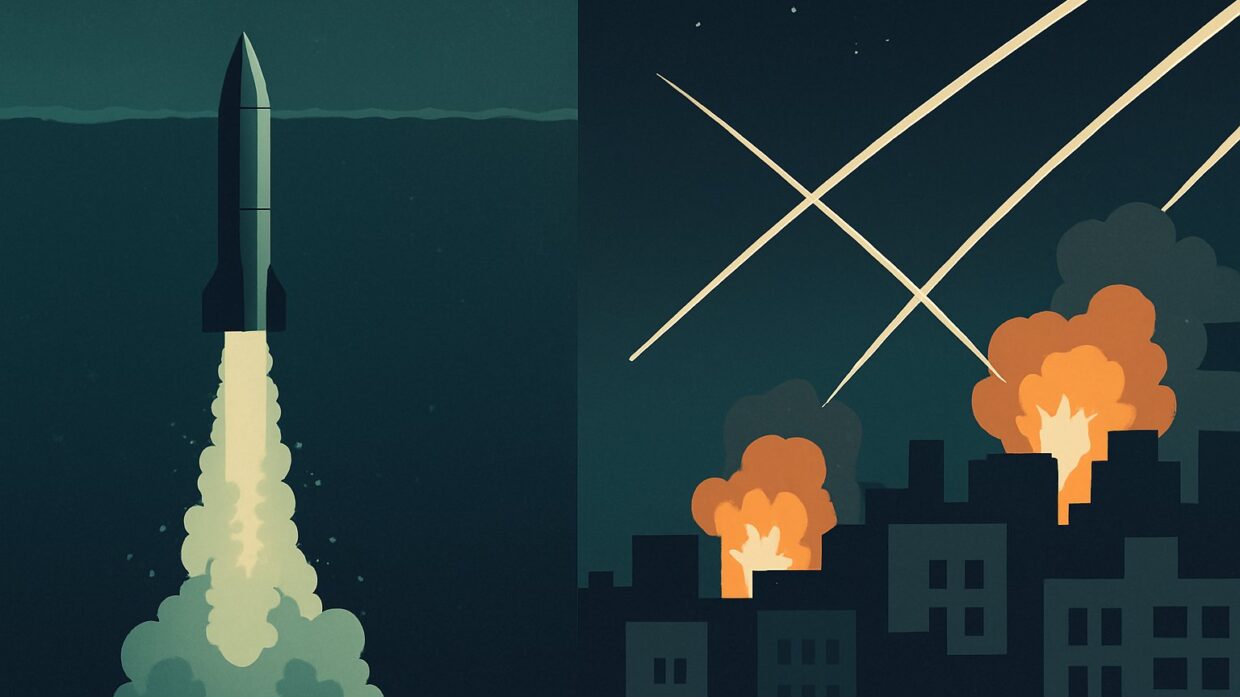
China tests submarine-launched missile as Russia strikes Kyiv ahead of NATO summit
Key Takeaways
- No available reporting discloses whether China and Russia coordinated the timing of their military demonstrations or independently executed pre-planned activities that happened to coincide.
- Both events occurred when Western institutions were consolidating regional relationships with their adversaries, raising the question of whether military demonstrations during moments of Western diplomatic gathering have become standard practice in great power competition.
- The pattern suggests multiple military powers are conducting high-visibility demonstrations on compressed timelines, indicating either that the window for such displays is narrowing as alliance structures harden or that demonstrating capability during Western diplomatic moments has strategic value.
The Analysis
China tested a submarine-launched ballistic missile in the South Pacific on July 6 while Russia launched sustained drone and missile attacks on Kyiv, killing at least 12 people. The near-simultaneous incidents expose a coordinated pattern of military pressure on U.S. allies, though the two events operate on separate strategic timelines and serve distinct regional purposes.
The verified facts establish the sequence clearly. China's test occurred hours after Australia and Fiji signed a defense agreement, according to multiple sources including The Guardian and NBC News. The Chinese military, through state media, confirmed the test but offered no official statement on timing. Russian forces launched waves of missiles and drones at Kyiv early Monday, July 6, according to Ukrainian authorities. All ballistic missiles struck their targets, according to the Washington Examiner. Ukrainian President Zelenskyy had warned of an imminent attack hours before it occurred. At least 12 people died in Kyiv, though The Guardian reported figures reaching 14 as authorities said the death toll would likely rise.
The left framing, deployed by The Guardian and MSNBC, uses the phrase "deliberately timed" and emphasizes that experts say the missile test's timing "is not a coincidence." This language attributes intentionality to Beijing's sequencing decision while leaving unexamined what constitutes proof of deliberate coordination versus coincidental timing of pre-planned military exercises. The left frame emphasizes China's "intensifying military activity" and frames the test as a direct response to the Australia-Fiji agreement, creating a narrative of escalation triggered by Western alliance-building. What this framing leaves out is whether China's missile test schedule had been set before the Australia-Fiji agreement was announced, or whether the test represents routine military readiness activity unrelated to the diplomatic event.
The right framing, reflected in the Washington Examiner's coverage, focuses on what Russia's attack reveals about Ukrainian capability gaps. The phrase "exposed widening gaps in Ukraine's air defenses" appears in the reporting, emphasizing the military outcome rather than the geopolitical message. This framing notes that all Russian ballistic missiles reached their targets, framing the strike as tactically effective. The right coverage does not engage with questions about timing or coordination; instead, it treats the attack as evidence of ongoing Russian military capacity despite battlefield losses elsewhere. What this framing downplays is the political significance of the strike's timing on the eve of the NATO summit, when Kyiv would be under maximum international attention.
What neither side fully establishes is whether China and Russia coordinated these military demonstrations or whether they independently pursued pre-planned activities that happened to align. The available reporting does not disclose communications between Beijing and Moscow regarding timing. What neither framing addresses is the broader pattern: both events occurred when Western institutions were moving closer to their respective regional competitors. Australia's Fiji defense pact represents expanded U.S. alliance presence in the Pacific. The NATO summit represents renewed Western commitment to Ukrainian defense. The missiles and drones may signal that China and Russia have chosen to respond to alliance consolidation with military demonstrations of their own reach and capability, regardless of whether the specific timing was coordinated.
The underlying question is not whether the timing was coincidental but what it signals about the strategic environment. Multiple military powers are now conducting high-visibility demonstrations on compressed timelines when their adversaries are consolidating relationships. This suggests either that the window for such demonstrations is narrowing as alliance structures harden, or that demonstrating capability during moments of Western diplomatic gathering has become standard practice in great power competition.
China and Russia's near-simultaneous military demonstrations on July 6 establish a new operational playbook for authoritarian powers responding to Western alliance expansion. When Australia signed its defense pact with Fiji and NATO prepared to strengthen Ukraine commitment at its summit, Beijing tested a submarine-launched missile while Moscow saturated Kyiv with coordinated strikes. Whether deliberately synchronized or not, this pattern signals that both powers now view moments of Western institutional consolidation as strategic opportunities for high-visibility capability displays. This creates institutional pressure on NATO and Indo-Pacific partners to accelerate military readiness commitments rather than deliberate them, compressing decision timelines and potentially locking in long-term defense spending trajectories across allied nations before cost and strategic alternatives receive full analysis.