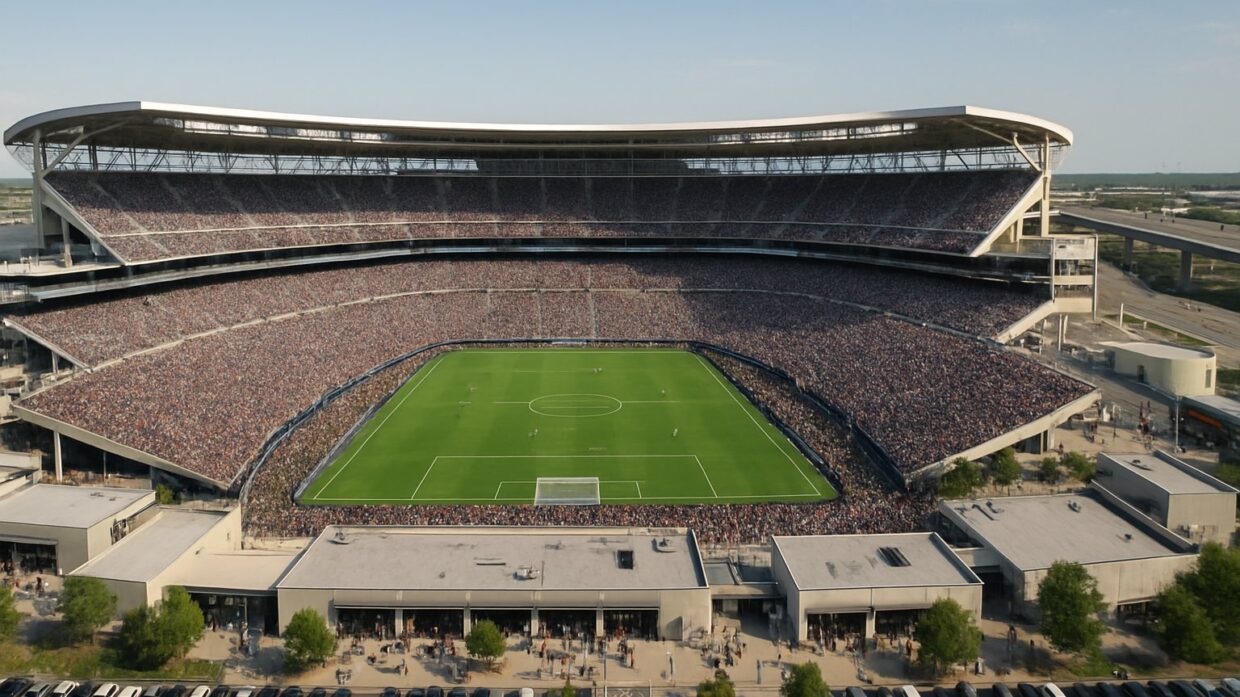
Photo: Well This Is News
World Cup shows America's best self to doubting world
World Cup visitors discover what makes America great
2026 World Cup in U.S. draws global visitors and revenue amid mixed economic signals
Key Takeaways
- The positive social media sentiment and tourism revenue from the World Cup do not establish whether visitor enthusiasm persists after the tournament ends or represents genuine perception shift versus temporary event novelty.
- The Department of Homeland Security's accommodation of Iran's national team and FIFA's commercial hydration breaks reveal that even universal moments at the World Cup reflect ongoing geopolitical tensions and revenue calculations beneath the surface.
- American hospitality and retail experience are generating measurable economic benefit and favorable international sentiment, but neither outcome has been connected to changes in how other nations engage with American foreign policy or strategic interests.
The Analysis
The 2026 World Cup in the United States is functioning simultaneously as a tourism spectacle, an economic stimulus, and a diplomatic moment, though the three framings emphasize different aspects of the same event. The left emphasizes transcendence and reconciliation, the right emphasizes discovery and genuine appeal, and the center emphasizes economic data with geopolitical caution. What all three perspectives share is evidence that the event is happening and drawing international attention. What they diverge on is what that attention means.
The documented facts are these: Foreign visitors, particularly from Europe, are attending World Cup matches in the United States. Social media shows these visitors expressing positive reactions to American hospitality, retail environments, food portions, and cultural offerings. The event is coinciding with a temporary decline in oil prices and is generating measurable tourism revenue. The Department of Homeland Security has modified security guidelines for Iran's national team to accommodate tournament rules equally applied to all nations. FIFA has introduced commercial hydration breaks during matches in response to heat concerns.
The left frame, articulated by MSNBC and Vox, uses the language of "belonging," "nostalgia," "yearning for home," and "soft power." This framing treats the World Cup as a redemptive moment for American image and values. The narrative suggests that international skepticism toward the United States is being actively reversed by direct exposure to American life and generosity. What this frame leaves out is scale: it does not establish how many visitors hold these views, whether these sentiments persist beyond the tournament, or whether the visitors' experience represents structural perception shift or temporary event enthusiasm. It also does not address the geopolitical tensions the Iran accommodations reflect.
The right frame, from Breitbart, uses the language of "discovery," "pleasantly surprised," and lists specific American commercial and cultural offerings as sources of appeal. This framing treats the World Cup as revealing what "actually exists" about America beneath political criticism. The emphasis is empirical: visitors are seeing retail, portion sizes, and hospitality firsthand. What this frame leaves out is whether the positivity derives from genuine admiration or from tourist novelty and economic advantage. It also does not engage with the environmental and commercialization questions the event has raised.
What neither frame adequately foregrounds is the conditional nature of the hospitality being offered. The MarketWatch reporting notes that the U.S. economy is still "feeling strain from the conflict with Iran." The Department of Homeland Security's accommodation of Iran's team is not neutral; it reflects a calculation about tournament legitimacy and diplomatic protocol amid ongoing geopolitical tension. The FIFA hydration breaks, which Mother Jones characterizes as "commercial," suggest that even moments of apparent universal human concern are filtered through revenue considerations.
The underlying question the coverage does not resolve is whether international sentiment shifted by temporary tourism exposure translates into sustained policy preference or shifts in how the world engages with American foreign policy. Tourists enjoying Buc-ee's and Target is not the same as allies trusting American treaty commitments or adversaries reconsidering sanctions calculations. The World Cup is generating revenue and positive social media content. What remains undisclosed is whether either of those factors actually affects American strategic position or whether this is one month of favorable sentiment in a tournament that will end.
The 2026 World Cup's economic impact will reshape how the U.S. justifies hosting future mega-events and frames soft power investments. Tourism revenue and positive visitor sentiment are being weaponized by the State Department to argue for expanded World Cup hosting, Olympics bids, and similar tournaments as substitutes for traditional diplomatic engagement. If this precedent sticks, American foreign policy will increasingly outsource relationship-building to commercial spectacle rather than treaty negotiation or institutional commitment. The Iran team accommodation, framed as neutral tournament logistics, actually demonstrates how even protocol decisions get absorbed into geopolitical calculation and marketed back to domestic audiences as evidence of American generosity. Once policymakers internalize that a month of positive international sentiment justifies enormous infrastructure spending and security resources, every future tournament becomes a justification for the last one, locking the U.S. into a cycle of event-based diplomacy that generates short-term approval but postpones the harder work of